




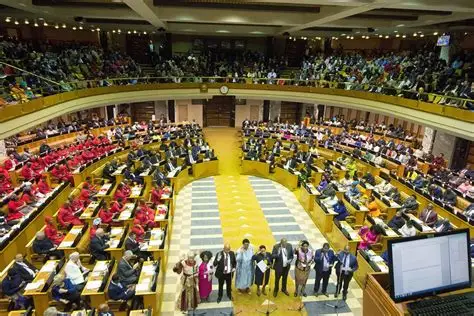
“The Democratic Alliance has launched a legal challenge against South Africa’s Expropriation Act, arguing that it threatens property rights and investor confidence. The case, now before the Western Cape High Court, is expected to have far-reaching consequences for land reform, governance, and economic stability.”
South Africa’s political landscape has entered a decisive moment as the controversial Expropriation Act faces a legal challenge in the Western Cape High Court. The Act, which allows the state to expropriate land without compensation under certain conditions, has been hailed by supporters as a necessary step toward addressing historical injustices in land ownership. However, critics argue that it undermines constitutional property rights, risks destabilizing the economy, and could deter much-needed foreign investment.
Background of the Expropriation Act
The Expropriation Act was passed earlier this year after years of heated debate in Parliament. It forms part of the government’s broader land reform policy, aimed at redressing apartheid-era dispossession. The Act empowers the state to seize land deemed “unused” or “abandoned” without compensating owners, while still requiring compensation in other cases. Proponents, including the ruling African National Congress (ANC), argue that this legislation is essential to accelerate redistribution and ensure social justice.
Opposition and Legal Challenge
The Democratic Alliance (DA), South Africa’s main opposition party, has taken the matter to court, claiming that the Act violates constitutional protections of property rights. DA Federal Council Chairperson Ashor Sarupen addressed supporters outside the Western Cape High Court, emphasizing that the party’s challenge is not against land reform itself, but against what it sees as a reckless and unconstitutional approach. The DA argues that the Act creates uncertainty for investors, undermines agricultural productivity, and risks triggering capital flight.
Economic Implications
Economists warn that the Expropriation Act could have significant consequences for South Africa’s already fragile economy. Investor confidence is closely tied to property rights, and uncertainty around land ownership could discourage both domestic and foreign investment. The agricultural sector, which contributes substantially to GDP and employment, is particularly vulnerable. Farmers fear that the Act could lead to reduced investment in land and infrastructure, ultimately threatening food security.
Political Ramifications
The legal challenge comes at a time when South Africa is preparing for local government elections later this year. The Expropriation Act has become a central campaign issue, with opposition parties framing it as evidence of the ANC’s disregard for constitutional principles. President Cyril Ramaphosa, however, has defended the policy, insisting that land reform is essential for long-term stability and social cohesion. The case is likely to influence voter sentiment, particularly in rural areas where land ownership remains a deeply emotive issue.
Governance and Institutional Oversight
Beyond the Expropriation Act, Parliament is also grappling with broader governance challenges. The Passenger Rail Agency of South Africa (Prasa) is under investigation for irregular security contracts, while committees are reviewing industrial development strategies and agricultural disease control measures. These parallel developments highlight the complexity of South Africa’s policy environment, where governance, economic reform, and political accountability intersect.
Public Reaction
Public opinion on the Expropriation Act remains divided. Supporters argue that land reform is long overdue and that the Act provides a framework for addressing inequality. Critics, however, warn of unintended consequences, including reduced agricultural output, investor flight, and constitutional erosion. Civil society organizations have called for greater consultation and transparency, urging the government to balance social justice with economic stability.
Regional and International Context
South Africa’s land reform debate resonates across the continent, where similar policies have been attempted with mixed results. Zimbabwe’s land seizures in the early 2000s serve as a cautionary tale, with devastating impacts on agricultural productivity and economic stability. International observers are closely watching South Africa’s approach, as the outcome of the legal challenge could set a precedent for other nations grappling with land inequality.
Conclusion
The legal challenge to the Expropriation Act marks a pivotal moment in South Africa’s policy trajectory. The Western Cape High Court’s ruling will not only determine the future of land reform but also shape investor confidence, economic stability, and political legitimacy. As the country prepares for elections, the debate over land expropriation underscores the delicate balance between social justice and economic sustainability.



