




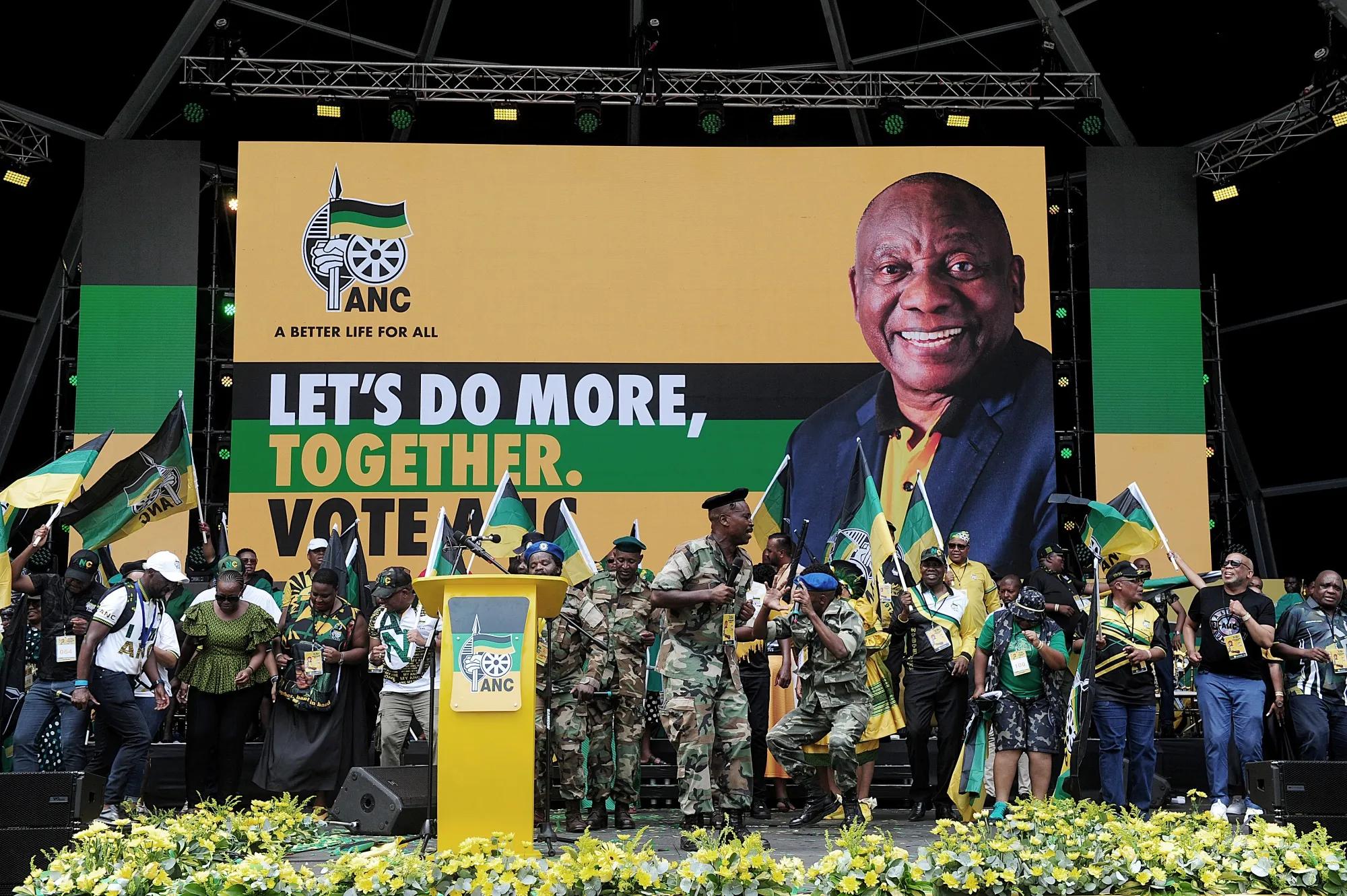
“South Africa’s political parties are entering the final phase of the 2026 local government election campaign amid growing voter fragmentation, declining support for the African National Congress (ANC), and increasingly competitive challenges from the Democratic Alliance (DA), Economic Freedom Fighters (EFF), and uMkhonto weSizwe (MK) Party. With voters preparing to elect municipal councils on 4 November, the possibility of coalition governments across major metropolitan areas has become central to political negotiations, campaign strategies and debates about service delivery, accountability and the country’s democratic future.”t
South Africa’s Political Parties Face a Defining Election as Coalition Politics Reshapes the Democratic Landscape
South Africa’s political parties are confronting a significant moment in the country’s democratic development as voters prepare to participate in the 2026 local government elections on Wednesday, 4 November. The contest has emerged against a backdrop of declining support for the African National Congress (ANC), increasing competition from opposition parties, and growing expectations that coalition governments will determine the future administration of several major municipalities. Political developments reported on 2 November highlight a changing electoral landscape in which established political dominance is increasingly challenged by fragmented voter preferences and demands for improved governance.
The ANC, historically South Africa’s dominant political organisation, faces substantial electoral pressure following years of dissatisfaction over unemployment, poverty, infrastructure challenges and municipal service delivery. Reuters reported on 2 November that polling projections suggest ANC support could fall to approximately 31%–34%, significantly below its historical electoral performance. Although the party is expected to remain the largest nationally, its declining support reflects broader dissatisfaction among voters who increasingly question whether established political leadership can adequately address their economic and social challenges.
This political environment has created opportunities for opposition parties to expand their influence. The Democratic Alliance (DA), Economic Freedom Fighters (EFF), and uMkhonto weSizwe (MK) Party are among the organisations competing for voters dissatisfied with the ANC. However, opposition growth has not translated into a unified alternative, as South Africa’s political landscape remains divided among parties with significantly different ideological positions, policy priorities and governing ambitions.
ANC Attempts to Defend Its Political Position
President Cyril Ramaphosa and the ANC have focused their campaign messaging on defending the party’s governing record while acknowledging shortcomings that have contributed to voter dissatisfaction.
At its final campaign rally in Mdantsane, Eastern Cape, on 1 November, Ramaphosa acknowledged that the ANC had experienced shortcomings but maintained that the organisation remained committed to addressing communities’ concerns. He emphasised the party’s historical contributions to education, healthcare, infrastructure and public services while urging voters to support accountable and capable municipal leadership.
Ramaphosa also highlighted improvements in electricity supply, including the end of load shedding, as evidence of the government’s ability to respond to national challenges. His campaign messaging sought to demonstrate that the ANC could still deliver meaningful improvements despite the criticism directed at its administration.
Nevertheless, the party faces considerable challenges in convincing voters that national improvements will translate into better municipal governance. Residents across several municipalities continue to complain about unreliable water supplies, deteriorating roads, sanitation problems, financial mismanagement and inadequate maintenance of public infrastructure.
The ANC’s election strategy therefore involves defending its historical achievements while attempting to persuade voters that renewed leadership, accountability and municipal reforms can restore public confidence.
Democratic Alliance Intensifies Its Challenge
The Democratic Alliance has positioned itself as the principal challenger to the ANC, presenting the local government elections as an opportunity to establish stronger opposition leadership across South Africa’s municipalities.
DA leader Geordin Hill-Lewis used the party’s final national rally in Mamelodi, Pretoria, on 31 October to encourage voters to support the organisation. He argued that the ANC’s declining support created an opportunity for the DA to become South Africa’s largest political party.
Hill-Lewis described the contest as a competition between the ANC and DA for national political leadership, while emphasising that municipal elections could influence the country’s political direction ahead of the 2029 national elections.
The DA has made infrastructure investment, corruption prevention, competent municipal administration and improved service delivery central to its campaign. The party argues that municipalities require professional management, stronger financial controls and greater accountability to residents.
However, the DA’s challenge extends beyond attracting dissatisfied ANC voters. South Africa’s fragmented political environment means that opposition support is divided among several organisations, including the EFF, MK Party, ActionSA and smaller political movements.
Consequently, even significant electoral gains may not guarantee the DA outright control of major municipalities. Coalition negotiations could remain essential to its governing ambitions.
EFF Emphasises Municipal Accountability and Service Delivery
The Economic Freedom Fighters has concentrated its campaign on municipal corruption, infrastructure failures and the economic difficulties experienced by communities.
At its final rally in Soweto, EFF leader Julius Malema criticised municipal administrations for failing to provide reliable water, maintain roads and ensure effective waste management. He argued that corruption and procurement irregularities had weakened municipal institutions and prevented public resources from benefiting residents.
The EFF has proposed strengthening municipal capacity by reducing dependence on contractors and employing municipal workers directly to maintain infrastructure. Its campaign priorities include repairing roads and water systems, improving public healthcare facilities, formalising informal settlements and expanding affordable housing.
Malema also criticised corruption affecting small businesses, arguing that contractors and entrepreneurs should receive payment for completed work without being subjected to bribery or improper demands.
The party’s campaign reflects its broader political position that public institutions should prioritise working-class communities and address structural economic inequality.
Nevertheless, the EFF must demonstrate that its political promises can translate into practical municipal administration, particularly in areas where coalition arrangements could limit its ability to implement its preferred policies.
MK Party Seeks to Expand Its Influence
The uMkhonto weSizwe Party, led by former president Jacob Zuma, has emerged as another significant force challenging the ANC’s traditional political dominance.
Zuma used the party’s final campaign rally in KwaZulu-Natal to criticise the Government of National Unity and argue that South Africa remained politically and economically unequal. His campaign messaging emphasised land ownership, economic transformation and the interests of historically disadvantaged communities.
The MK Party has attracted support from voters disillusioned with the ANC, particularly in KwaZulu-Natal. Its expanding influence has contributed to the fragmentation of the political landscape and complicated calculations about future municipal coalitions.
Zuma’s political influence remains an important factor in the country’s electoral dynamics, although the party’s long-term governing capacity and administrative experience remain questions that voters and political analysts continue to assess.
The MK Party’s participation also illustrates how South Africa’s political competition increasingly involves organisations emerging from historical political divisions rather than exclusively established opposition movements.
Coalition Governments Become Central to Political Negotiations
The possibility of coalition governments represents one of the most significant developments in South African politics ahead of the elections.
Reuters reported on 2 November that the fragmentation of voter support is likely to make outright municipal majorities difficult to achieve. As a result, political parties may need to negotiate agreements involving competing organisations to establish governing administrations.
Johannesburg provides an important example of the challenges associated with coalition governance. Political instability, changing alliances and repeated mayoral transitions have complicated municipal administration and contributed to concerns about financial management and service delivery.
The experience has strengthened arguments that coalition governments require clearer agreements, predictable decision-making processes and mechanisms for resolving disputes between political partners.
Meanwhile, polling conducted by eNCA and MarkData indicates that coalition preferences vary significantly across metropolitan areas. DA and ActionSA supporters in Johannesburg and Tshwane expressed preferences for cooperation between their parties, while Cape Town and eThekwini demonstrated different coalition possibilities.
These preferences suggest that voters increasingly recognise coalition politics as a practical reality rather than an exceptional arrangement.
Municipal Service Delivery Remains the Central Electoral Issue
Despite differences in ideology and political identity, municipal service delivery remains a central concern for South African voters.
Water shortages, electricity infrastructure, sanitation, waste management, housing shortages and deteriorating roads have become prominent campaign issues.
The Associated Press reported that Johannesburg’s fragile political administration has experienced repeated mayoral changes while infrastructure and financial difficulties remain persistent concerns.
Across the country, political parties have attempted to connect their campaign promises to residents’ everyday experiences. Voters increasingly evaluate political organisations through their ability to provide functioning public services, create economic opportunities and maintain municipal infrastructure.
The growing importance of these issues suggests that political credibility will depend increasingly on measurable administrative performance rather than historical party loyalty alone.
Electoral Fragmentation Signals a Changing Democracy
South Africa’s changing political environment reflects a broader transformation in democratic participation.
The ANC’s declining support does not necessarily mean that voters are moving collectively towards one opposition organisation. Instead, dissatisfaction is distributed across multiple political parties, each attracting voters through different ideological positions and campaign promises.
This fragmentation presents opportunities for smaller organisations to influence municipal administrations through coalition negotiations. However, it also creates risks associated with political instability, competing policy priorities and disagreements over executive appointments.
Political parties will therefore face increasing pressure to demonstrate their ability to negotiate responsibly and govern effectively.
The electoral process also highlights the importance of political participation, credible institutions and peaceful competition. The Independent Electoral Commission has encouraged registered voters to verify their special voting arrangements and prepare for election day.
Conclusion: South Africa Enters a New Era of Political Competition
The political developments unfolding on 2 November 2026 demonstrate that South Africa’s democratic landscape is undergoing substantial change.
The ANC remains a significant political organisation, but declining voter support has weakened its traditional dominance. Meanwhile, the DA, EFF and MK Party continue competing for influence, while smaller political organisations may become decisive participants in coalition negotiations.
The outcome of the local government elections will determine more than municipal leadership. It will provide an important indication of voter confidence, political accountability and the future direction of coalition governance in South Africa.
As voters prepare to cast their ballots, political parties face a common challenge: translating campaign promises into measurable improvements in people’s lives.
Ultimately, the success of South Africa’s democratic institutions will depend not only on electoral victories but also on the ability of political organisations to cooperate, maintain accountability and deliver reliable public services.
The 2026 local government elections therefore represent a defining opportunity for political renewal, institutional reform and a more competitive democratic system.



