




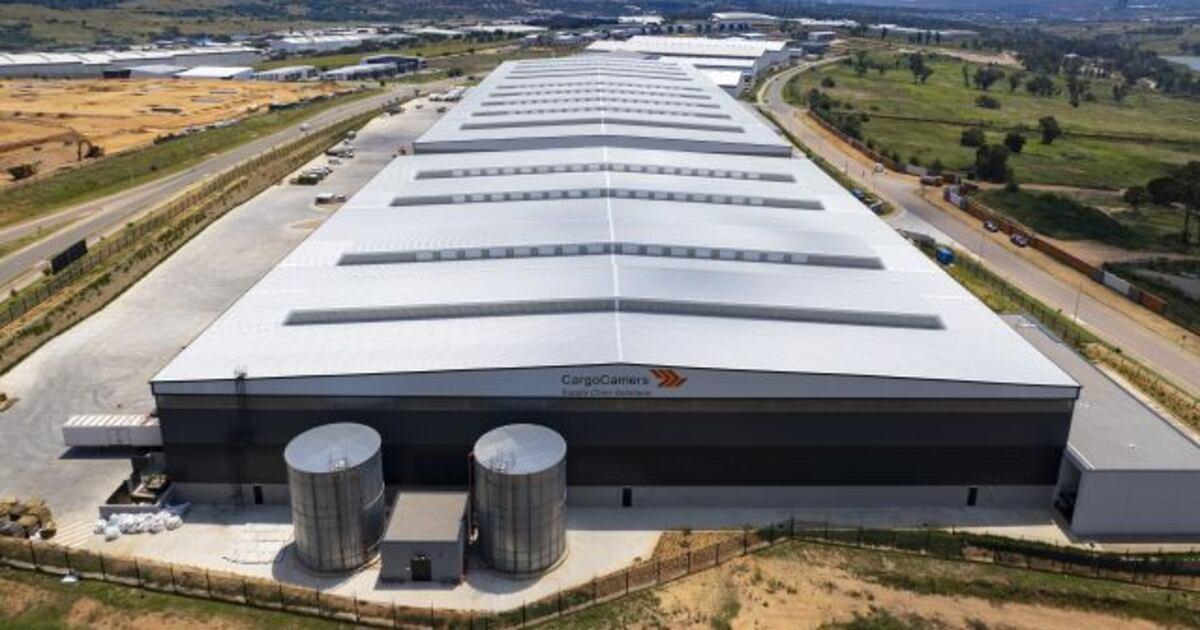
“South Africa’s industrial property market continues to attract attention as investors assess factories, warehouses, logistics facilities and income-producing industrial units in established commercial nodes. A recent Broll auction highlights opportunities ranging from a large portfolio of industrial units in Secunda to industrial and logistics assets in other parts of the country, while broader market data shows that low vacancies and continued logistics demand are supporting the sector.”
South Africa’s industrial property sector continues to demonstrate resilience despite a challenging economic environment, with factories, warehouses, logistics facilities and industrial investment properties attracting attention from buyers and occupiers. Recent market activity indicates that investors are increasingly looking beyond traditional commercial property categories and focusing on industrial assets that can benefit from logistics demand, manufacturing activity, supply-chain restructuring and the country’s strategic transport corridors.
One of the latest developments highlighting this trend is Broll Auctions and Sales’ October commercial property auction, which includes several industrial opportunities. Among the most notable is a portfolio of 29 freehold industrial units in Secunda, Mpumalanga. The properties occupy approximately 34,000 square metres of land and provide about 23,509 square metres of gross lettable area, incorporating warehousing, workshops and office accommodation. Around 80% of the portfolio is already let, while additional yard and parking space provides further operational flexibility.
The Secunda portfolio is particularly significant because its investment potential is linked to the wider industrial economy surrounding the town. Demand for industrial accommodation is supported by the Sasol Synfuels complex, mining activities and other industrial operations in the region. For investors, an established tenant base combined with vacant accommodation can create two potential sources of value: existing rental income and the possibility of increasing occupancy over time.
The development also illustrates an important characteristic of South Africa’s industrial-property market. Investors are not necessarily looking only for newly constructed, high-specification logistics parks. Older industrial properties can remain attractive when they are strategically located, have established tenants, offer large yards and provide opportunities for refurbishment, repositioning or improved leasing.
This is occurring against a broader backdrop of relatively strong industrial-property fundamentals. Data from the Rode Report for the second quarter of 2026 showed that national prime industrial rentals for 500-square-metre premises increased by approximately 7.2% year on year, while rentals for 1,000-square-metre properties increased by approximately 7.9%. Average industrial vacancies remained around 4%, indicating that well-positioned industrial properties continue to experience comparatively tight supply.
Cape Town has emerged as one of the strongest industrial markets. Industrial vacancy in the city averaged approximately 3.3% during the first half of 2026, while strong demand and limited developable land have supported rental growth. Central Witwatersrand has also remained resilient, recording vacancy of roughly 3.4%. These figures indicate that industrial landlords in well-established nodes continue to benefit from limited availability of suitable space.
The strength of industrial property is also reflected in broader commercial-property research. First National Bank’s second-quarter 2026 property insights identified industrial and warehousing as the strongest major commercial-property segment, even though activity moderated from the first quarter. Johannesburg, Cape Town and Nelson Mandela Bay remained important industrial and warehousing markets, supported by logistics optimisation, supply-chain restructuring and continuing demand for distribution space.
One of the major structural forces behind the industrial-property market is the changing nature of distribution. South Africa’s retailers, manufacturers and logistics companies increasingly require strategically located warehouses that can move products efficiently between ports, production centres, major highways, distribution hubs and consumers.
The expansion of online retail has added another layer to this demand. Warehouses are no longer simply storage facilities. Modern distribution centres need sufficient clear height, loading infrastructure, truck circulation, power reliability, security and efficient access to major transport routes. These requirements are pushing demand toward modern logistics parks and high-quality industrial facilities.
Gauteng remains central to this trend because of its access to the country’s largest consumer market, major highways and OR Tambo International Airport. Industrial nodes around Johannesburg, Midrand, Kempton Park and the East Rand continue to benefit from their ability to serve national distribution networks.
At the same time, coastal markets are becoming increasingly important. Cape Town benefits from strong demand and constrained land availability, while Durban’s position as a major port city provides an important foundation for logistics and warehousing activity. This geographic diversification is creating opportunities for investors who are prepared to identify the industrial nodes most closely connected to trade and supply-chain infrastructure.
Another important development is the increasing focus on the quality of industrial assets. Growthpoint’s latest investor information shows that logistics and industrial properties remain a strategic priority, with the company targeting premium logistics warehouses and distribution facilities. Its South African logistics and industrial vacancy rate improved from 4.1% at the 2025 financial year-end to 2.8%, while its Western Cape vacancy declined to just 0.2%.
This performance helps explain why institutional investors continue to allocate capital toward industrial property. When vacancy is low and tenants require specialised facilities, high-quality industrial assets can offer more stable income characteristics than weaker commercial-property categories.
However, the sector is not without challenges. South Africa’s manufacturing economy remains under pressure, and construction and financing costs can make new developments difficult to deliver. Industrial developers must therefore carefully assess tenant demand before committing significant capital. Infrastructure reliability, road conditions, electricity availability, municipal services and access to transport networks can also materially affect the attractiveness of an industrial property.
Development costs are another important consideration. Recent property-industry commentary has highlighted difficulties developers face with regulatory and tax processes, including delays involving VAT registration for newly established development companies. Because developers often incur substantial land, professional, construction and infrastructure costs before receiving sales revenue, administrative delays can place additional pressure on project cash flow.
For industrial investors, location therefore remains critical. A large warehouse in a poorly connected area may not perform as well as a smaller facility positioned near a major highway, port, airport or established industrial cluster. Tenant quality is equally important. Long-term leases with financially sound occupiers can improve income stability, while diversified industrial portfolios can reduce exposure to individual tenant failures.
The Broll auction activity demonstrates that investors can access opportunities at different points of the industrial-property spectrum. Some properties provide immediate income through existing leases, while others offer opportunities for redevelopment, refurbishment or improved occupancy. The Secunda portfolio, for example, combines existing rental income with vacant space that could potentially be leased to additional logistics, warehousing or contractor businesses.
The industrial market is also benefiting from growing interest in specialised facilities. Modern logistics buildings increasingly incorporate high clear heights, dock-level loading, large yards, energy-efficient systems, security infrastructure and solar-power capability. These features can improve operational efficiency for tenants while increasing the long-term competitiveness of the property.
Looking ahead, South Africa’s industrial-property market is likely to remain closely linked to the performance of logistics, manufacturing, retail distribution and infrastructure. The sector may not be immune to economic weakness, but its underlying demand drivers are different from those affecting offices. Businesses still need to store, manufacture and distribute physical products, making industrial property an essential part of the economy.
For investors, the central question is therefore not simply whether industrial property is performing well. It is whether a particular asset has the location, tenant quality, infrastructure, building specifications and rental potential necessary to remain competitive.
Recent market evidence suggests that the strongest properties are positioned to benefit from continued demand. With vacancy rates remaining relatively low in key markets, rental growth continuing in several major nodes and logistics requirements expanding, industrial real estate remains one of South Africa’s most closely watched commercial-property segments.
The latest auction activity adds another dimension by bringing factories, industrial units and logistics-oriented properties directly into the investment market. As buyers evaluate these opportunities, the industrial sector’s performance will increasingly depend on the quality of assets, strength of tenants and strategic importance of their locations. For now, the evidence points to a market that remains resilient, selective and increasingly important to South Africa’s wider economic recovery.



