




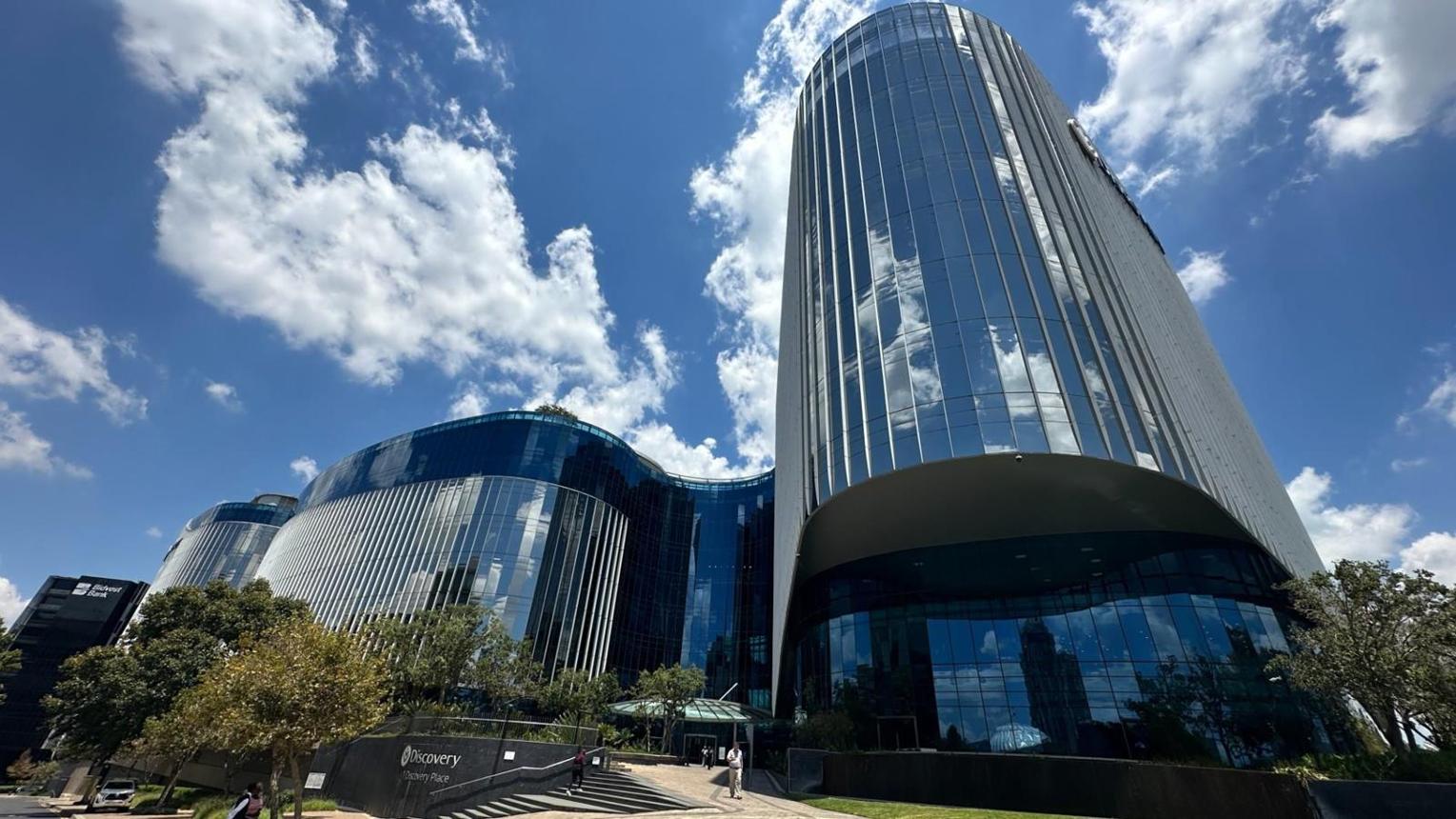
”South Africa’s commercial office market is showing stronger signs of recovery, with national office vacancies declining to 11.8% in the third quarter of 2026 from a peak of 16.8% in mid-2022. The improvement is being supported by positive tenant absorption, rising asking rentals and restrained new development, although major differences remain between cities, property grades and individual commercial nodes.”
South Africa’s commercial office property market is showing clearer signs of recovery, with national office vacancies falling to 11.8% in the third quarter of 2026, the lowest level recorded in more than six years. The latest South African Property Owners Association survey indicates that demand is strengthening while new supply remains limited, creating a more balanced environment for landlords, tenants, developers and investors.
The improvement is significant because the national vacancy rate had climbed to 16.8% in mid-2022 as the property sector absorbed the effects of the pandemic, changing workplace patterns, weak economic conditions and financial pressure. Since then, the market has gradually reduced excess space. In the third quarter, positive net absorption approached 70,000 square metres, while completed space available for occupation declined further.
For property owners, the figures suggest that the office market is moving away from the extreme oversupply seen after the pandemic. However, the recovery is not uniform. Location, building quality, tenant demand and the ability of landlords to reposition older properties remain decisive factors. Johannesburg, for example, has improved materially but still has one of the country’s highest vacancy rates.
Figures show that the national improvement is being shared across different grades of office space. A-grade vacancy declined to 9.5%, while B-grade vacancy eased to 15.9%. C-grade offices recorded the strongest quarterly improvement, falling by 80 basis points to 15.6%. Prime offices remain the tightest segment, with vacancy of only 4.7%.
The difference between prime and secondary space is important for understanding where investment opportunities and risks may emerge. Prime buildings in strong locations can command higher rentals because businesses continue to value accessibility, quality, security, reliable infrastructure and modern amenities. By contrast, older buildings may require substantial refurbishment, conversion or repositioning before they can compete effectively.
Rental performance is also beginning to reflect the improving balance between demand and supply. Average asking rentals across the market increased 7.2% year on year. Prime offices achieved an average asking rental of about R234 per square metre per month, compared with approximately R149 for A-grade, R123 for B-grade and R101 for C-grade offices.
These rental differences show that tenants are increasingly distinguishing between buildings rather than treating office space as a single market. A high-quality building in a well-connected node can therefore benefit from stronger tenant demand, while less competitive properties may continue to experience pressure even as the national vacancy rate improves.
Another feature of the recovery is the limited development pipeline. Around 70.4% of office space currently under development has already been pre-let, indicating that developers are becoming more cautious about speculative construction. This is significant because excessive new supply could otherwise undermine the gains made through tenant absorption.
The restrained pipeline also reflects a broader change in commercial property strategy. Developers and investors are increasingly focused on identifiable demand, flexible buildings and assets with strong long-term fundamentals. Instead of adding large quantities of speculative office space, capital can be directed towards refurbishing existing buildings, improving energy resilience, upgrading amenities or converting obsolete properties to alternative uses.
Conversions are already contributing to the reduction in surplus office space. Some older or less competitive buildings are being repurposed for residential and other uses, removing stock that might otherwise remain vacant. This trend can improve the quality of the remaining office market while giving owners another route to unlock value from underperforming assets.
The geographic picture is equally important. Cape Town recorded the lowest vacancy rate among the major markets at 6.9%, followed by Tshwane at 8.9% and Durban at 9.3%. Johannesburg stood at 14.7%, while Gqeberha recorded 15.7%. These differences demonstrate that national statistics can conceal very different local market conditions.
Cape Town’s performance points to strong demand in well-positioned decentralised commercial areas, while Durban and Tshwane have also moved below the 10% vacancy threshold. Johannesburg’s improvement is encouraging, but its remaining vacancy means landlords and developers must continue competing for tenants through quality, pricing, location and building performance.
The progress since early 2022 provides additional context. Durban has recorded the largest decline in vacancy, at 6.8 percentage points, followed by Cape Town at 6.1 percentage points. Johannesburg has improved by 4.8 percentage points, while Tshwane has improved by 3.2 percentage points. Gqeberha has seen a smaller 1.2 percentage-point decline.
For investors, the data suggests that the commercial office market is entering a more selective phase of recovery. Falling vacancies can support rental growth and improve property valuations, but investors still need to examine individual buildings, tenant quality, lease expiry profiles, operating costs and local infrastructure. A national recovery does not mean every office asset will perform well.
The market is also being influenced by changing expectations around the workplace. Companies continue to reassess how much space they need, how offices should be configured and which locations best support employees and customers. This places pressure on landlords to offer more than square metres. Connectivity, amenities, sustainability, backup services, security and flexible layouts can increasingly influence leasing decisions.
Infrastructure remains another major factor. Commercial property depends on reliable electricity, water, transport networks, telecommunications and municipal services. Where these systems are weak, owners may have to spend more on backup power, water resilience, security and maintenance. Such costs can affect both investment returns and the affordability of occupation.
The improving office figures therefore should not be interpreted as a complete return to pre-pandemic conditions. Instead, they indicate that the market is finding a new equilibrium. The strongest assets are attracting demand, weaker properties are being repositioned or converted, and developers are exercising greater discipline.
For South Africa’s economy, this matters because commercial property is closely connected to business activity, employment, construction and investment. A healthier office market can encourage refurbishment, development and transactions, while stronger occupancy can improve the financial position of property owners and support municipal rates bases.
The decline in vacancies also creates a stronger environment for development over the longer term. If economic growth improves and tenant demand continues to expand, the limited development pipeline could eventually create shortages in high-quality locations. Developers that can secure land, approvals, infrastructure and pre-commitments may therefore be better positioned for the next phase of the cycle.
At the same time, policymakers and municipalities have an important role. Efficient planning processes, reliable infrastructure, predictable regulations and reasonable operating costs can make commercial property more attractive to investors. Weak municipal performance can have the opposite effect by increasing costs and reducing the competitiveness of entire business districts.
SAPOA figures tell a story of recovery, but also of differentiation. South Africa’s office vacancy rate has moved substantially lower from its 2022 peak, demand is absorbing space, rentals are rising and new development is increasingly tenant-led. Yet millions of square metres remain available, and some markets continue to face structural challenges.
The commercial property sector is therefore entering a period in which quality, location and adaptability will matter more than ever. Investors and landlords with well-positioned assets may benefit as vacancy falls, while owners of obsolete or poorly located buildings may need to invest in upgrades, conversion or repositioning.
For tenants, the changing market could mean fewer bargains in the best locations as competition for high-quality space increases. For developers, disciplined supply and rising demand may create opportunities, but only where projects are supported by real occupier requirements. For investors, the key question is no longer simply whether the office market is recovering, but which buildings and nodes are positioned to benefit from that recovery.
South Africa’s commercial office market has not returned to its old normal. It is becoming a selective market in which strong assets can regain pricing power while weaker assets face pressure to adapt. The fall to an 11.8% national vacancy rate is therefore more than a positive statistic: it is evidence that the sector is moving from post-pandemic correction towards a new phase of commercial property recovery.



