




“South African farm workers and rural communities are renewing demands for access to public land for housing, secure tenure and economic opportunities, while Parliament is raising concerns about governance failures affecting land-reform beneficiaries. These developments highlight the need for government to turn land-reform commitments into practical outcomes through transparent administration, accountable institutions and faster implementation.”
South Africa’s Land Reform Challenge: Public Land, Housing Rights and Accountability Come Under Renewed Scrutiny
Introduction: Land remains central to South Africa’s development
Land continues to occupy a central position in South Africa’s economic development, housing policy and efforts to address the consequences of historical dispossession. For many rural households, farm workers and disadvantaged communities, access to land represents more than property ownership. It can determine whether families have secure accommodation, opportunities to grow food, access to livelihoods and the ability to build long-term economic stability.
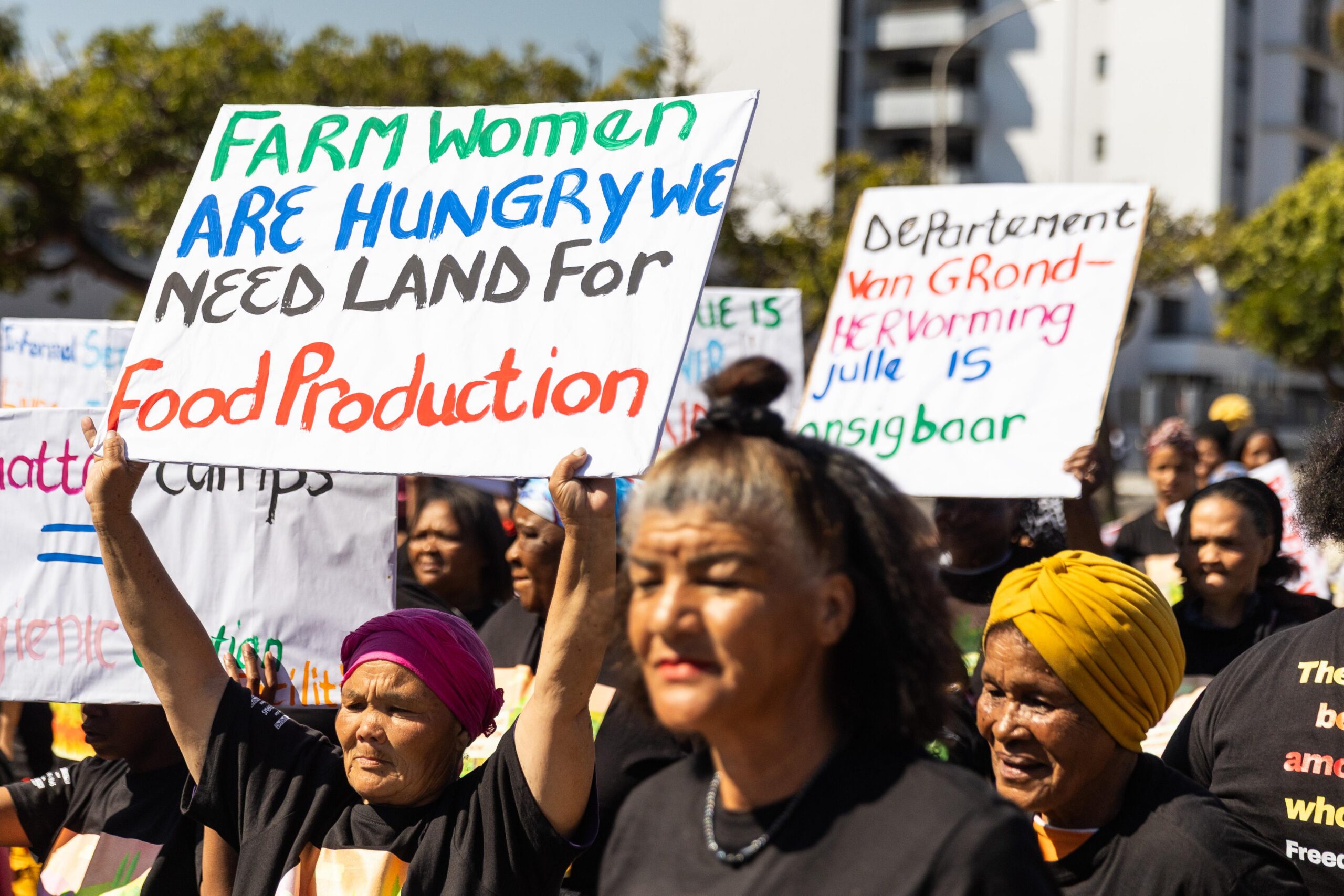
Recent developments have brought these challenges back into focus. On 8 October 2026, approximately 150 farm workers marched to Parliament in Cape Town, demanding that government make public land available for housing and redistribution. Their demonstration followed a three-day National Farm Worker Platform organised by the Women on Farms Project, which brought together organisations representing farm workers and rural communities.
At the same time, Parliament’s Portfolio Committee on Land Reform and Rural Development has expressed concern about governance, financial management and administrative problems affecting Communal Property Associations (CPAs), which are intended to support communities holding land collectively.
Together, these developments raise an important question for South Africa’s real-estate and land-reform sectors: how can public land and redistributed property be converted into secure homes, productive assets and sustainable community benefits?
Farm workers call for public land to be released
The Cape Town march placed the housing needs of farm workers and farm dwellers directly before national lawmakers. Participants called on the Department of Public Works and Infrastructure to release unused public land for housing and redistribution, particularly for people who have lived and worked on farms for many years.
The demonstration followed discussions involving approximately 15 farm-worker organisations from across South Africa. These included the Women on Farms Project, the Rural Women’s Assembly, the Casual Workers Advice Office and unions representing agricultural workers. Government representatives from employment and labour, as well as land reform and rural development, also participated in the preceding platform.
The organisations argued that limited access to land contributes to the difficult conditions experienced by families living and working in agricultural communities. Their demands included land for women small-scale farmers and housing for farm workers who may otherwise struggle to secure accommodation after retirement or the end of employment.
The issue is significant for the wider property market because housing insecurity cannot be addressed solely by increasing the number of houses constructed. Suitable land must also be identified, legally made available, connected to infrastructure and allocated through transparent procedures.
For farm workers, a plot of land can provide an opportunity to establish a permanent home, cultivate food and reduce dependence on employment that may end because of retirement, illness or changing labour requirements.
However, making land available requires coordinated decisions by government departments, municipalities and relevant public agencies. A public property may be vacant without necessarily being ready for housing development. Planning restrictions, environmental considerations, access roads, water, sanitation and electricity all influence whether a site can support a viable residential community.
Secure tenure and the threat of displacement
One of the most pressing issues raised by farm workers is the insecurity experienced by people whose homes are tied to their employment or continued residence on agricultural properties.
A report published by Eyewitness News on 9 October described the situation of Roos van Niekerk, a 58-year-old woman who faces eviction after living on a farm since childhood. The report followed the farm-worker march and highlighted concerns about what happens to long-term residents when their circumstances change and they are no longer considered active farm workers.
Such cases illustrate the human consequences of insecure land tenure. Families may establish their lives around a particular farm over several decades, developing social networks, raising children and relying on nearby employment. When they face eviction, relocating can mean losing both their homes and their access to familiar communities.
Secure tenure does not necessarily mean that every resident must receive ownership of the land they occupy. Depending on the circumstances, protection may involve legally recognised occupancy rights, appropriate rental arrangements, alternative accommodation or access to land through a properly administered public programme.
The broader policy challenge is to ensure that vulnerable households are treated lawfully and fairly, while disputes are resolved through established legal processes.
For South Africa’s real-estate sector, tenure security also matters because it influences whether people can invest in improving their homes, develop small enterprises and participate in local economic activity without constant fear of displacement.
Unused state land and the housing shortage
The debate about farm-worker housing forms part of a wider discussion about public land and the country’s housing needs.
In reporting published on 23 September 2026, GroundUp described demands by housing activists for the release of state-owned land. Communities had submitted applications concerning 24 parcels of public land, following earlier efforts to secure suitable sites for housing. The Housing Development Agency had identified 12 sites as suitable, although most remained vacant and undeveloped at the time of the report.
This earlier reporting provides important context for the October demonstrations. It suggests that the challenge is not simply identifying land that might be useful for development. It also involves moving applications through administrative processes and ensuring that decisions result in practical delivery.
Unused government property can potentially contribute to affordable housing, community facilities, small-scale agriculture and other development objectives. Nevertheless, public ownership alone does not establish that a site is immediately suitable for every proposed use.
Authorities need to determine whether land is available for disposal or transfer, whether competing public needs exist and whether development would be financially and environmentally sustainable. They must also establish clear responsibilities, realistic deadlines and effective communication with applicants.
When applications remain unresolved for extended periods, communities face uncertainty while public assets may continue to generate limited social value.
A more effective approach would connect land identification with detailed development plans, infrastructure budgets, transparent beneficiary selection and publicly reported milestones. Such measures would help residents understand what has been approved, what remains outstanding and when they can reasonably expect a decision.
Parliament raises concerns about communal land governance
The demands for access to land come amid parliamentary concerns about the management of property already transferred to communities through land-reform programmes.
On 8 October, Parliament’s Portfolio Committee on Land Reform and Rural Development expressed serious concern about persistent governance, financial-management and administrative challenges affecting Communal Property Associations across several provinces. The concerns followed briefings from the minister, deputy minister, director-general and departmental officials.
Communal Property Associations are intended to enable groups of beneficiaries to hold and manage land collectively. They can provide a mechanism for communities to obtain agricultural property, pursue development projects and exercise rights associated with land redistribution.
However, collective ownership requires effective administration. Disagreements over leadership elections, beneficiary verification, financial management and decision-making can undermine the ability of communities to use their property successfully.
Parliament’s concerns also covered mineral rights, court proceedings and the operation of interim governance structures. These issues demonstrate that transferring land is only one stage of a successful reform process.
Beneficiaries must also be able to manage the asset, resolve disputes, understand their legal responsibilities and make decisions about how the property will generate social or economic value.
Improving governance could help protect community assets and build confidence among beneficiaries, development partners and potential investors. Conversely, unresolved disputes can prevent agricultural projects from progressing, delay infrastructure investment and reduce opportunities for employment.
The committee’s intervention therefore highlights the importance of measuring land reform not only by the number of properties transferred, but also by whether communities can use those properties effectively.
Implications for real estate and rural investment
The developments have implications for residential property, agricultural investment and public-sector land management.
For the residential market, access to appropriately located public land could support affordable housing programmes, particularly where private land prices make development difficult. However, affordability depends on the complete cost of development, including infrastructure, construction, transport connections and ongoing municipal services.
For agricultural communities, access to land can create opportunities for small-scale farming and food production. Yet successful projects also require access to finance, equipment, agricultural knowledge, markets and reliable water supplies.
Collective landownership arrangements may similarly create opportunities for rural tourism, commercial agriculture and other community enterprises. Such opportunities depend on secure governance, sound business planning and clear agreements about the distribution of income.
Government must therefore coordinate land policy with housing, agriculture, infrastructure and economic-development programmes. Without that coordination, land may be allocated without the resources required to make it productive.
Private-sector participation may help deliver housing and infrastructure, provided agreements protect beneficiaries’ rights and establish transparent responsibilities. Public-private partnerships should complement, rather than replace, the government’s obligations to administer public land fairly and lawfully.
What should happen next?
The October developments point to several practical priorities for policymakers.
First, government should provide clear responses to communities seeking public land, including reasons for decisions, information about outstanding requirements and realistic implementation timelines.
Second, departments should publish accessible information about land allocations, development progress and the availability of suitable public properties. Transparent reporting would help communities and oversight institutions distinguish completed projects from proposals that remain under consideration.
Third, communal property organisations need appropriate administrative support, financial oversight and fair procedures for resolving disputes. These measures can help protect community ownership and improve the long-term performance of transferred land.
Finally, housing programmes must connect land allocation with infrastructure and services. A site is unlikely to provide a sustainable housing solution if residents cannot access water, sanitation, electricity, roads or essential public facilities.
These priorities require cooperation between national government, municipalities, community organisations and relevant development agencies.
Conclusion: Turning land commitments into measurable outcomes
South Africa’s renewed land debate reflects two connected challenges: many households continue to seek secure access to land, while some communities already involved in land-reform programmes face difficulties managing their property.
The farm workers’ march on 8 October brought renewed attention to demands for public land for housing and redistribution. Parliament’s concerns about communal property governance highlighted the equally important need to protect the rights and livelihoods of existing land-reform beneficiaries.
For the real-estate sector, these developments reinforce the importance of treating land as both an economic asset and a foundation for secure communities. Effective land policy requires more than identifying vacant properties or announcing redistribution commitments. It requires lawful allocation, accountable administration, appropriate infrastructure and sustained support for beneficiaries.
The next measure of progress will be whether government institutions can demonstrate tangible improvements: applications resolved, suitable land made available, communities protected from unlawful displacement and transferred properties managed productively.
Ultimately, successful land reform should deliver more than a change in ownership records. It should help people secure homes, build livelihoods and participate meaningfully in South Africa’s economic development.



