




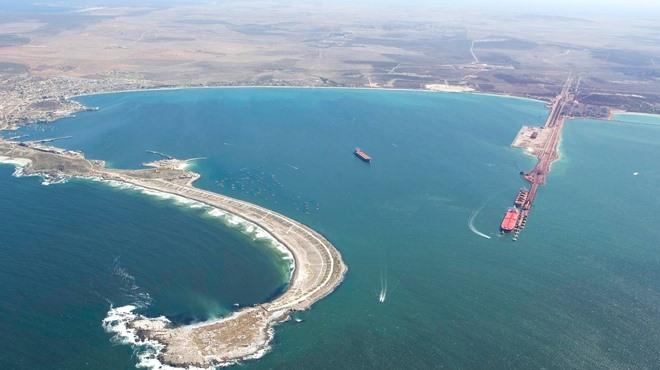
“The Transnet National Ports Authority (TNPA) and Freeport Saldanha have signed a 25-year lease covering approximately 55 hectares within the Port of Saldanha’s Southern Precinct, creating a long-term foundation for industrial development. The agreement supports an investment pipeline valued at approximately R6.9 billion, encompassing manufacturing, marine services, bunkering and energy infrastructure, although individual projects still need to progress towards investor agreements and construction.”
Saldanha Bay Industrial Real Estate: A R6.9 Billion Opportunity for South Africa’s Economic Growth
South Africa’s industrial property sector could receive a significant boost following a long-term lease agreement between the Transnet National Ports Authority (TNPA) and Freeport Saldanha. Announced in October 2026, the agreement provides a framework for industrial investment across approximately 55 hectares within the Southern Precinct of the Port of Saldanha in the Western Cape.
The proposed development pipeline is valued at approximately R6.9 billion and encompasses industrial manufacturing, marine services, bunkering and energy infrastructure. Consequently, the agreement has the potential to strengthen the relationship between port infrastructure, industrial real estate, logistics and export-oriented businesses.
However, the investment figure represents a pipeline of proposed opportunities rather than R6.9 billion in completed construction or confirmed expenditure. The next phase will depend on attracting investors, concluding individual leases, securing applicable approvals and progressing projects towards implementation.
Understanding the 25-Year Lease Agreement
The agreement between TNPA and Freeport Saldanha establishes a long-term arrangement for developing strategically located land within the Port of Saldanha. Its approximately 55-hectare footprint offers a platform for industrial activities that can benefit from direct proximity to maritime infrastructure.
For industrial property investors, long-term land tenure can be particularly important. Manufacturing facilities, energy installations, storage infrastructure and specialised industrial buildings often require substantial upfront capital. Investors therefore need reasonable certainty about their ability to occupy and use a site over an extended period.
A 25-year lease can help address this requirement by providing a longer planning horizon than short-term property arrangements. Nevertheless, the actual investment conditions will depend on the detailed lease provisions, development obligations, operating costs and approvals applicable to each project.
According to the announcement, the agreement follows the conclusion of a commercial terms framework between the two parties. It is intended to help coordinate industrial development with access to port facilities, allowing potential investors to consider land and port-linked opportunities as part of a connected investment proposition.
Why Saldanha Bay Matters to Industrial Real Estate
Saldanha Bay occupies a strategic position on South Africa’s west coast. Its port provides maritime infrastructure that can support industries handling bulk commodities, industrial materials, equipment and other cargo.
For businesses that import heavy equipment or export manufactured goods, the distance between a production site and a port can influence transport expenses, delivery schedules and overall competitiveness. Locating suitable industrial facilities near maritime infrastructure may reduce some logistical complications, although the actual benefits depend on the nature of the cargo, port charges and available transport connections.
Industrial real estate is therefore more than a collection of warehouses and factories. It forms part of a wider economic system that connects production, storage, freight handling, energy supply and domestic or international markets.
The proposed development could strengthen this system by encouraging businesses to establish operations near the port. Furthermore, a coordinated industrial precinct could help attract supporting service providers, including engineering firms, equipment maintenance businesses, logistics operators and specialised contractors.
Nevertheless, these benefits will materialise only if infrastructure, investment and commercial demand develop together. Long-term land access creates an opportunity, but successful industrial development requires businesses willing and able to operate profitably from the location.
R6.9 Billion Investment Pipeline: What It Could Mean
The estimated R6.9 billion pipeline is the central financial feature of the announcement. It indicates the scale of potential industrial activity associated with the lease, while also highlighting the importance of converting investment proposals into operational projects.
The pipeline spans several sectors, including marine and bunkering services, industrial development and manufacturing, and energy infrastructure. Liquefied natural gas (LNG) import and storage capacity is among the energy-related opportunities identified in reporting about the agreement.
If projects proceed, capital expenditure could support the development of industrial sites, specialised facilities, storage capacity and associated infrastructure. These investments may create demand for construction services, engineering expertise, equipment suppliers and property-related professional services.
Over time, operating facilities could also generate demand for security, cleaning, maintenance, transport, catering and other business services.
However, it would be premature to interpret the full pipeline as guaranteed spending. Projects may differ in their maturity, financing requirements, technical complexity and commercial viability. Some may progress faster than others, while certain proposals could be delayed or redesigned.
Investors and prospective tenants should therefore distinguish between the overall investment opportunity and individual projects that have secured funding, permits, signed commercial agreements and confirmed construction schedules.
Manufacturing Could Benefit From Port-Linked Development
Manufacturing is one of the important sectors identified in the investment pipeline. A stronger industrial precinct could create opportunities for businesses that require substantial sites, reliable transport access and proximity to imported materials or export markets.
Potential users of industrial property may include equipment manufacturers, industrial suppliers, engineering businesses and companies involved in processing or assembling products for domestic and international customers.
The suitability of Saldanha Bay for any particular manufacturer would depend on its production requirements. Businesses handling bulky materials may place a high value on port proximity, while other manufacturers may prioritise electricity availability, water infrastructure, workforce access and road connections.
The proposed development could also encourage industrial clustering. This occurs when related businesses establish operations near one another, enabling them to share suppliers, services, infrastructure and specialised skills.
For example, an industrial manufacturer may require nearby maintenance contractors, freight operators and equipment suppliers. If enough businesses establish operations in the area, these supporting services could become more commercially viable.
Nevertheless, manufacturing investment is influenced by wider economic conditions, including borrowing costs, domestic demand, electricity reliability, labour availability and export competitiveness. Industrial property development will need to respond to these factors rather than rely solely on the availability of land.
Marine Services and Bunkering Opportunities
Marine services and bunkering form another part of the proposed investment pipeline.
Bunkering involves supplying fuel to vessels, while marine services can include activities that support ships and port operations. Depending on the projects ultimately approved, these activities may require specialised storage, handling facilities, service infrastructure and industrial land.
Their location within a port environment could offer operational advantages by bringing services closer to maritime customers. It could also support demand for specialist contractors, maintenance providers, equipment suppliers and related industrial businesses.
However, marine and fuel-related activities require careful attention to safety, environmental protection and regulatory compliance. Storage, handling and transfer operations must be planned according to the relevant technical and legal requirements.
The development of these facilities would consequently require more than securing land. Investors would need to establish commercially viable operating models, meet applicable standards and coordinate with relevant port and regulatory authorities.
If successfully implemented, marine services could become an important part of the broader industrial ecosystem around Saldanha Bay.
Energy Infrastructure and LNG Development
Energy infrastructure is another important component of the announced pipeline. Reporting on the agreement identifies potential LNG import and storage capacity among the opportunities under consideration.
Energy projects can have significant implications for industrial property because they require specialised sites, substantial capital investment, technical expertise and reliable connections to supporting infrastructure.
For industrial businesses, energy availability and cost are major considerations when choosing where to establish or expand operations. Energy-intensive manufacturers may assess electricity reliability, fuel access and long-term operating expenses before committing to a new facility.
The proposed energy-related projects could therefore contribute to the area’s industrial investment proposition if they satisfy the necessary technical, environmental, financial and regulatory requirements.
However, LNG infrastructure should not be interpreted as an already completed facility or a guaranteed solution to South Africa’s broader energy challenges. The announcement identifies an investment opportunity, and individual projects must still advance through their applicable development processes.
Investors will need to consider infrastructure costs, market demand, contractual arrangements, environmental impacts and the long-term outlook for energy markets.
Potential Effects on Employment and Local Businesses
Industrial development can influence local economies through both construction and long-term operations.
During construction, projects may require civil engineers, construction workers, equipment operators, electricians, project managers and specialist contractors. Once operational, industrial facilities can support permanent roles in manufacturing, warehousing, engineering, maintenance, administration and logistics.
Additional economic activity may benefit businesses supplying food, transport, accommodation, equipment and professional services.
For communities around Saldanha Bay and the wider West Coast, the important question is whether the proposed investment translates into accessible employment and sustainable business opportunities.
The lease announcement establishes a platform for development, but it does not, by itself, confirm the number of jobs that will be created. Employment outcomes will depend on the projects implemented, their labour requirements, the level of local procurement and the skills needed by participating businesses.
To maximise local benefits, developers and investors could work with training institutions, local suppliers and community organisations. Skills development in engineering, technical maintenance, logistics and industrial safety may help local residents compete for opportunities as projects advance.
Small and medium-sized enterprises could also benefit by supplying construction materials, maintenance services, transport and other operational requirements.
Ultimately, the economic value of the pipeline will be measured not only by its headline investment estimate but also by the quality, accessibility and durability of the opportunities it creates.
Implications for Industrial Property Investors
For industrial property investors, the agreement highlights the potential importance of locations that combine industrial land with access to transport infrastructure.
Port-linked industrial property can attract businesses whose operations depend on importing equipment, moving bulk materials or exporting finished goods. Such occupiers may have different requirements from businesses seeking conventional warehouse space near major consumer markets.
Investors assessing opportunities around Saldanha Bay should examine land-use rights, infrastructure capacity, transport connections, utility availability and the development timetable. They should also evaluate the depth of tenant demand and the financial strength of prospective occupiers.
Long-term industrial leases can provide rental visibility, but returns depend on negotiated terms, construction costs, vacancy risks, maintenance expenses and the ability of tenants to sustain their operations.
Furthermore, specialised industrial properties may be more difficult to repurpose than standard warehouses. Facilities built for a particular manufacturing process or energy operation could require significant alterations before another tenant can occupy them.
Accordingly, due diligence should extend beyond the headline investment figure to include site-specific risks, tenant requirements, environmental considerations and realistic rental assumptions.
The proposed precinct may offer opportunities, but investors should evaluate each project independently rather than assume that every parcel of industrial land will deliver the same returns.
Infrastructure, Environmental and Regulatory Considerations
Large industrial projects depend on reliable supporting infrastructure. Roads, port facilities, utilities, telecommunications, drainage and waste-management systems can all affect whether a development proceeds on schedule and operates efficiently.
Where several projects are planned within one precinct, coordination becomes especially important. Developers must ensure that infrastructure capacity keeps pace with demand and that individual facilities can connect to the services they require.
Environmental management is equally significant. Industrial and energy-related activities can create risks involving emissions, waste, water use, hazardous materials and marine ecosystems.
Depending on the nature and location of individual projects, environmental assessments, operating licences, planning permissions and other approvals may be required. Their specific requirements will vary by project.
Investors must also consider the effects of coastal conditions, climate-related risks and potential interruptions to transport or utility services.
Effective planning can help limit avoidable delays and improve the long-term resilience of industrial assets. Conversely, unresolved infrastructure constraints or regulatory uncertainty could slow the conversion of the investment pipeline into completed developments.
The Importance of Turning Proposals Into Construction
The immediate significance of the lease is that it creates a longer-term framework for investment. The next stage is translating that framework into signed investor agreements, funded projects and actual construction.
Freeport Saldanha’s chief executive, Xola Sithole, indicated that the objective is to convert the agreement into investor leases, construction activity and employment. TNPA has also described the partnership as a means of strengthening port-linked investment and improving the use of strategic infrastructure.
These objectives point to several practical milestones.
First, prospective investors need to determine whether the proposed projects are commercially viable. Second, the relevant parties must finalise site-specific arrangements and secure financing. Third, projects must complete the applicable approvals and infrastructure planning before construction can proceed.
After that, progress will depend on project delivery, tenant commitments and the establishment of sustainable operating businesses.
Transparent reporting on these milestones would help property investors, local businesses and communities distinguish confirmed developments from proposals still being assessed.
Outlook for South Africa’s Industrial Property Market
The Saldanha Bay agreement reflects the relationship between industrial property and the infrastructure that supports production and trade.
Warehouses, factories, storage facilities and specialised industrial buildings can become more attractive when they are positioned near reliable transport links and commercially useful services. However, location alone does not guarantee demand or investment returns.
The success of the proposed precinct will depend on whether businesses choose to establish operations there, whether infrastructure can support their needs and whether the investment environment remains commercially sustainable.
For South Africa, the opportunity extends beyond the property market. Successfully developed industrial facilities could support export activity, improve supply-chain connections and encourage investment in related services.
At the same time, implementation will require careful attention to financing, environmental responsibilities, local skills development and infrastructure coordination.
The R6.9 billion pipeline is therefore best understood as a significant development opportunity rather than a completed economic outcome.
Conclusion
The 25-year lease between TNPA and Freeport Saldanha represents an important step towards developing approximately 55 hectares of port-linked industrial land in Saldanha Bay. With a proposed investment pipeline valued at R6.9 billion, the initiative creates opportunities across manufacturing, marine services, bunkering and energy infrastructure.
For industrial property investors, the agreement highlights the value of long-term planning, strategic location and integrated transport infrastructure. For local businesses and communities, its potential benefits include construction opportunities, industrial employment and demand for supporting services.
Nevertheless, the outcome will depend on implementation. Securing investors, concluding individual leases, obtaining approvals and commencing construction will be essential to transforming the pipeline into operational assets.



