




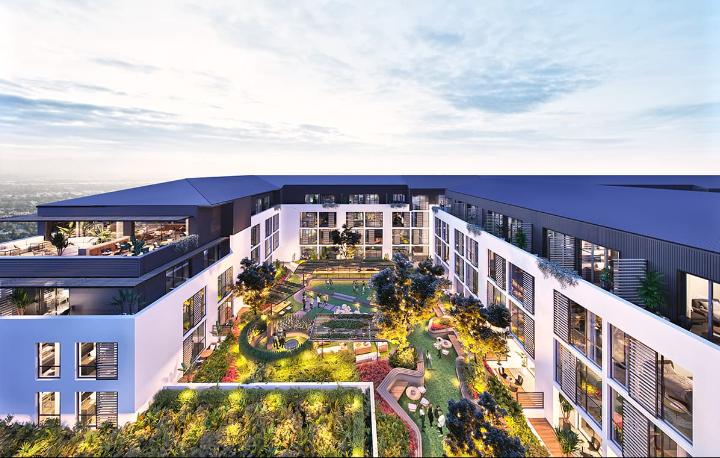
“Intersite Asset Investments, the property and investment subsidiary of the Passenger Rail Agency of South Africa (PRASA), has awarded six Western Cape property development opportunities to private-sector partners in a proposed investment pipeline worth R3.6 billion. The projects are expected to deliver 790 residential apartments and 4,466 student accommodation beds on strategically located railway-linked land, potentially strengthening housing supply, urban regeneration and transport-oriented development.”
PRASA’s R3.6 Billion Western Cape Property Development Pipeline Signals New Opportunities for Housing and Urban Renewal
Introduction: A major development announcement for the Western Cape
South Africa’s property development sector has received a significant boost following the announcement that Intersite Asset Investments (IAI), the property and investment subsidiary of the Passenger Rail Agency of South Africa (PRASA), has awarded six Western Cape development opportunities to private-sector partners. The proposed projects represent an investment pipeline of approximately R3.6 billion and are expected to deliver hundreds of residential apartments alongside thousands of student accommodation beds.
Announced on 9 October 2026, the initiative highlights the growing importance of strategically located public land in addressing South Africa’s housing needs, supporting urban regeneration and encouraging private-sector investment. The projects will be situated in Eerste River, Somerset West, Stellenbosch, Kalk Bay/Muizenberg and at Cape Town station.
The announcement is particularly relevant to the Western Cape, where demand for well-located housing, student accommodation and access to public transport continues to shape development decisions. By working with established private-sector partners, Intersite intends to transform underutilised railway-linked properties into productive real estate assets that can support communities and generate sustainable revenue.
Six development opportunities create a substantial investment pipeline
The proposed R3.6 billion investment represents a coordinated approach to property development rather than a single construction project. Intersite has awarded six development opportunities to private-sector partners, with the combined schemes expected to produce 790 residential apartments and 4,466 student accommodation beds.
The appointed development partners are Go-Group, Kromkrans JV, Growthpoint Properties and Eris Property Group. Their participation provides a foundation for bringing private-sector development expertise and capital into land associated with public transport infrastructure.
The scale of the proposed accommodation supply is an important feature of the announcement. Residential apartments can serve households seeking homes close to employment, services and transport connections, while student accommodation can address the particular needs of people studying in established education centres.
Nevertheless, the announced investment pipeline should not be confused with completed construction or housing already available to residents. The R3.6 billion figure describes proposed investment associated with the awarded opportunities. Delivery will depend on the relevant development processes, financing arrangements, project preparation and implementation.
For property investors, construction companies, professional consultants and suppliers, the announcement signals potential opportunities across the development value chain. However, the precise timing, construction schedules and commercial arrangements for individual projects should be confirmed through subsequent announcements.
Rail-linked land offers a different approach to urban development
A central feature of the programme is its focus on land connected to railway infrastructure. Intersite manages property associated with PRASA and seeks to unlock the value of these assets through partnerships and development initiatives.
The strategy recognises that land near public transport can offer advantages for residents, students and businesses. Where rail services are reliable, households may be able to reduce their dependence on private vehicles, while students can benefit from improved access to educational institutions and surrounding urban facilities.
Transport-oriented development can also help concentrate economic activity around existing infrastructure rather than encouraging disconnected expansion into undeveloped areas. Residential buildings, student accommodation, retail services and other complementary uses can potentially support more active neighbourhoods throughout the day.
However, the benefits depend on the quality of implementation. A development’s proximity to a station does not automatically guarantee convenient commuting. Rail service frequency, station safety, pedestrian routes, accessibility, maintenance and connections to other transport services all influence whether residents will use public transport regularly.
Consequently, the long-term value of the Western Cape programme will depend not only on the buildings delivered but also on how effectively those buildings connect with the surrounding transport network and communities.
Residential apartments could expand housing choices
The planned 790 residential apartments form one part of the proposed development pipeline. Additional housing in established urban areas can offer households alternatives to living far from employment, education and essential services.
Well-located apartment developments can also make more efficient use of land than lower-density housing, particularly where infrastructure and transport connections already exist. If designed appropriately, these projects could accommodate different household types, including young professionals, smaller families and people seeking to live closer to urban centres.
Affordability will be a critical consideration. New developments can increase housing supply, but additional units do not necessarily translate into homes that lower- and middle-income households can afford. Land costs, construction expenses, financing rates, municipal charges and developer returns all influence final selling prices and rental levels.
The announcement does not establish the prices, rents or income categories associated with the planned residential apartments. It would therefore be premature to describe the units as affordable housing without further information.
Future project details should clarify the intended market, apartment sizes, ownership models and rental arrangements. Such information will help prospective residents, investors and housing-sector organisations assess the projects’ likely contribution to the Western Cape’s housing needs.
Student accommodation is another important development priority
The expected delivery of 4,466 student accommodation beds represents a substantial component of the investment pipeline. Student housing has distinct operational and design requirements, including room layouts, shared facilities, security, reliable services and convenient access to education.
Stellenbosch is among the locations named in the announcement, making student accommodation particularly relevant to the area’s established educational role. The other proposed development locations may also provide opportunities for accommodation suited to different local markets, depending on the details of each scheme.
Purpose-built student housing can offer an alternative to conventional private rentals. When appropriately managed, it can provide more structured accommodation and facilities tailored to students’ needs.
However, the number of planned beds alone does not establish whether the accommodation will meet local demand or be financially accessible. Rental levels, transport costs, utility charges and the availability of bursary-supported accommodation can influence whether students are able to use the facilities.
Developers will also need to consider the academic calendar, operating costs, maintenance requirements and the long-term sustainability of their business models. High-quality management is essential because poorly maintained student accommodation can undermine both resident welfare and investment performance.
Further information on the accommodation standards, rental structures and intended student markets would help determine how significantly the projects could improve local housing options.
Private-sector partnerships aim to unlock public property
Intersite’s approach places cooperation between public property ownership and private development expertise at the centre of the programme. Rather than treating railway-linked land only as a passive asset, the strategy seeks to convert suitable properties into developments that can produce economic and social value.
The four named development partners—Go-Group, Kromkrans JV, Growthpoint Properties and Eris Property Group—have been awarded opportunities under the programme. Their involvement creates a route for private-sector participation in projects linked to public infrastructure.
For the public sector, successful partnerships can potentially mobilise capital and reduce the need to undertake every aspect of development directly. They can also bring expertise in project planning, construction management, leasing, sales and ongoing property operations.
For private investors, railway-linked properties may offer opportunities to develop accommodation in established urban locations. Nevertheless, investment decisions will depend on the terms of each opportunity, planning approvals, expected demand, infrastructure capacity, development costs and the allocation of financial risks.
Transparent governance will be equally important. Publicly associated land must be managed through processes that protect public interests while allowing commercially viable projects to proceed. Clear agreements, accountability and appropriate oversight can help maintain confidence among residents, investors and other stakeholders.
The available announcement does not provide all the commercial terms or detailed delivery milestones for the six projects. These should be assessed as further information becomes available.
Construction and the wider economic impact
If implemented successfully, the development programme could generate activity across several parts of the built environment sector. Construction projects require professional services such as architecture, engineering, quantity surveying, project management and environmental assessment.
They also create potential demand for building materials, transport, security, electrical installations, plumbing, landscaping and other construction-related services. Local businesses may benefit when procurement arrangements and employment opportunities enable them to participate.
The extent of employment creation cannot yet be quantified from the announced investment figure alone. Actual outcomes will depend on project duration, construction methods, labour requirements and the extent to which local suppliers participate.
The longer-term economic contribution could extend beyond the construction phase. Completed residential buildings can support property management and maintenance businesses, while student accommodation creates ongoing demand for cleaning, security, repairs and other services.
Retailers and service providers may also benefit when additional residents and students spend money in nearby neighbourhoods. These effects, however, will vary by location and depend on the integration of each development with existing economic activity.
Developers and public authorities should therefore assess local procurement, skills development and community participation as part of implementation rather than measuring success exclusively through investment value and completed floor space.
Infrastructure, planning and environmental considerations
Large-scale property development requires more than available land and financing. Water supply, electricity, sanitation, stormwater management, road access and public transport capacity all influence whether a project can be delivered successfully.
The Western Cape’s municipalities and relevant infrastructure providers will have important roles in ensuring that development proposals align with applicable planning requirements and service capacity. Projects must also address building regulations, land-use permissions and other relevant statutory obligations.
Environmental design can further influence long-term operating costs and the resilience of new buildings. Water-efficient fittings, energy-efficient lighting, appropriate insulation, responsible waste management and climate-sensitive landscaping can help reduce resource consumption.
For student accommodation and residential apartments, these measures can improve the quality of the built environment while helping property operators manage ongoing expenses.
Transport connections should be designed with pedestrians, cyclists and people with disabilities in mind. Safe routes to stations, accessible entrances and practical connections to surrounding services can make rail-oriented development more inclusive.
Community consultation is also important. Residents may have concerns about traffic, construction disruption, public-space access, noise or pressure on municipal services. Early engagement and transparent communication can help identify problems and improve the relationship between development teams and surrounding communities.
What the announcement means for South Africa’s property market
The proposed R3.6 billion programme illustrates how public property portfolios can contribute to housing delivery and urban development when suitable land is combined with private-sector capacity.
It also reflects broader questions facing South Africa’s property industry: how to provide accommodation close to economic opportunities, how to attract investment into established urban areas and how to ensure that infrastructure supports development rather than constraining it.
For investors, the announcement offers a reason to monitor opportunities associated with transport-oriented property. For developers and contractors, it highlights the potential role of public-private partnerships in creating a pipeline of future projects.
For residents and students, the most important measures of success will be practical outcomes: whether homes and accommodation are delivered, whether they are financially accessible, and whether residents can reach work, education and essential services safely and conveniently.
These outcomes cannot be assumed from the announcement alone. The six development opportunities must progress through the relevant implementation stages before their full impact can be evaluated.
Conclusion: Turning development opportunities into lasting public value
Intersite’s decision to award six Western Cape property development opportunities represents a significant proposed investment in residential and student accommodation. With approximately R3.6 billion in planned investment, 790 residential apartments and 4,466 student accommodation beds, the programme has the potential to contribute to housing supply and strengthen the productive use of railway-linked land.
The involvement of Go-Group, Kromkrans JV, Growthpoint Properties and Eris Property Group provides a framework for private-sector participation, while Intersite’s strategy places transport connections and mixed-use urban development at the centre of its approach.
Ultimately, the programme’s success will depend on delivery, affordability, infrastructure readiness, sound governance and meaningful benefits for surrounding communities. Continued monitoring of planning milestones, construction progress and accommodation costs will be essential to establish whether the proposed investment translates into lasting economic and social value for the Western Cape.



