




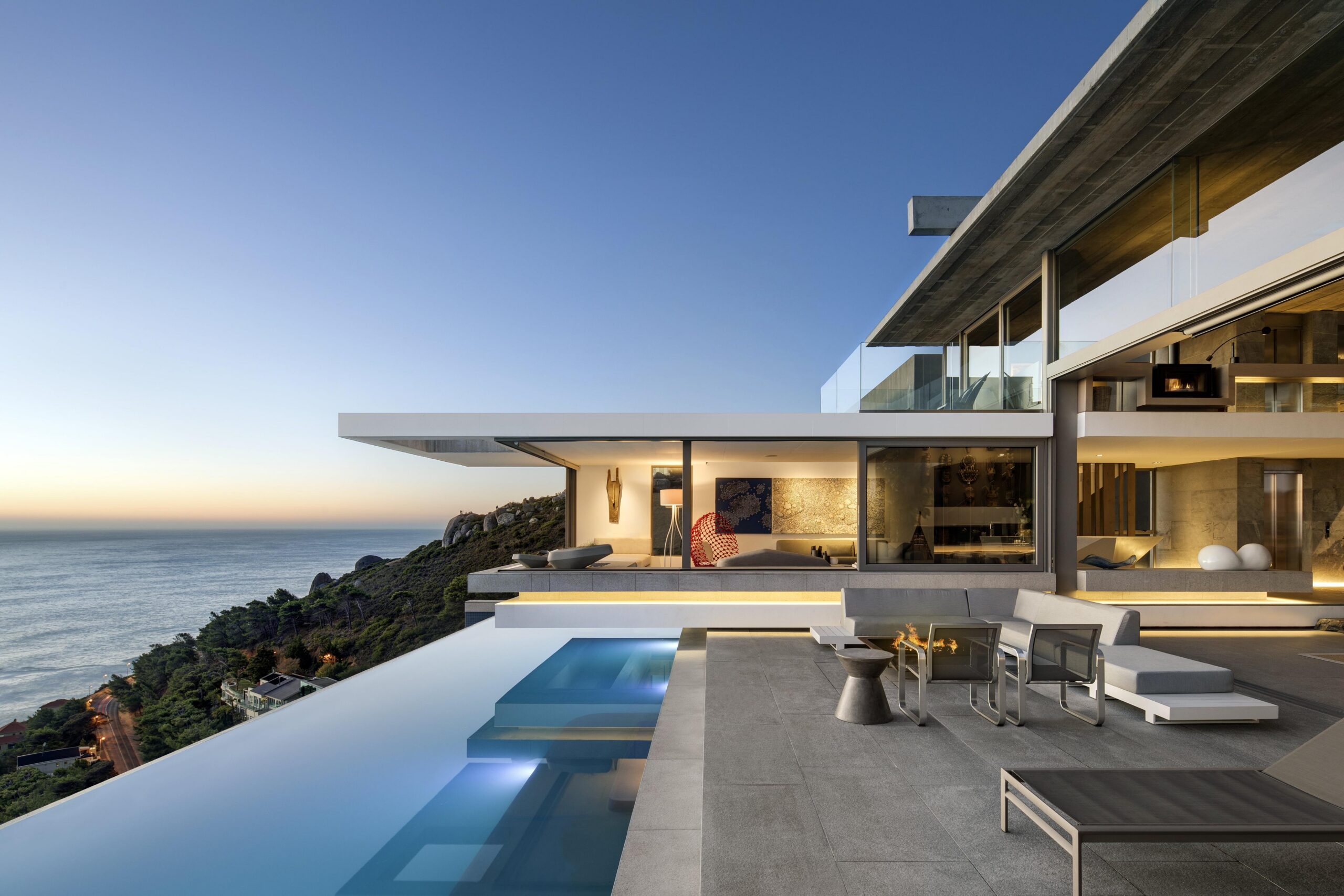
“South Africa’s luxury residential property market recorded an increase in transaction activity during the second quarter of 2026, with homes valued above R4.5 million accounting for 5.2% of transactions, compared with 4% a year earlier. The Western Cape remained a significant contributor to this segment, although affordability pressures, interest-rate uncertainty, security considerations and economic confidence continued to influence purchasing decisions.”
South Africa’s Luxury Property Market Gains Momentum as Wealthy Buyers Focus on Premium Homes
South Africa’s luxury real estate market continues to attract attention from property investors, high-net-worth individuals and buyers seeking premium residential lifestyles. New findings from Absa’s Homeowners Sentiment Index, published on 25 August 2026, indicate that the upper end of the residential market experienced an increase in purchasing activity during the second quarter of the year. However, economic uncertainty and affordability concerns mean that buyers are approaching high-value property decisions with greater caution.
The report provides insight into a market shaped by several competing forces. On one hand, luxury homes remain attractive to buyers seeking exclusivity, security, lifestyle benefits and long-term wealth preservation. On the other, elevated property prices, financing costs and ongoing ownership expenses require careful financial planning. These trends are particularly relevant in the Western Cape, which continues to attract buyers interested in coastal living, premium estates and high-value residential developments.
Luxury property transactions show growth
According to Absa’s findings, homes valued above R4.5 million represented 5.2% of South African residential property transactions in the second quarter of 2026. This compared with 4% during the corresponding period a year earlier.
The increase suggests that luxury housing has maintained a meaningful position within the national residential market despite pressure on household budgets and uncertainty surrounding economic conditions.
Although the figures demonstrate stronger activity in the high-value segment, they do not mean that every luxury property is selling quickly or appreciating at the same rate. Individual results depend on location, property condition, asking price, amenities and the number of suitable buyers.
For sellers, the findings provide a reason to examine current market conditions carefully rather than assume that premium properties will automatically attract offers. Accurate valuations, professional presentation and realistic pricing remain important when marketing expensive homes.
For prospective purchasers, the data suggests that opportunities may exist in selected areas, particularly where properties offer distinctive architectural features, attractive surroundings and practical long-term value.
Western Cape remains a major luxury property destination
The Western Cape emerged as an important contributor to South Africa’s luxury housing activity. Absa reported that properties in the luxury segment accounted for 9.9% of provincial transactions during the second quarter of 2026.
The province appeals to buyers for several reasons, including its coastline, established residential neighbourhoods, lifestyle amenities and access to tourism, business and leisure facilities.
Cape Town remains a prominent destination for buyers seeking ocean-facing residences, contemporary architectural homes and properties in established affluent suburbs. Areas such as Clifton, Camps Bay, Bantry Bay, Constantia and Bishopscourt are associated with premium residential offerings, although prices and demand vary considerably between neighbourhoods and individual properties.
Beyond Cape Town, the broader Western Cape provides alternatives for buyers who prefer quieter surroundings, larger properties or a different balance between lifestyle and investment. The Cape Winelands and Garden Route, for example, attract attention from purchasers interested in scenic environments, private estates and homes suitable for permanent residence or holidays.
Nevertheless, the popularity of these locations should not be confused with a guarantee of investment returns. Buyers must evaluate comparable sales, local demand, property maintenance requirements and future resale prospects before committing substantial capital.
Luxury housing increasingly reflects lifestyle preferences
The modern luxury property market is not defined solely by the size or price of a home. Buyers may also prioritise privacy, architectural quality, outdoor living, security, energy efficiency and proximity to amenities.
Properties with panoramic views, landscaped gardens, swimming pools, entertainment areas and carefully designed interiors can appeal to purchasers seeking both comfort and exclusivity. In coastal locations, access to beaches and attractive views may influence demand, while properties in established suburbs may benefit from mature gardens and convenient access to schools, restaurants and business districts.
Security is another important consideration in South Africa. Absa’s report identifies crime and area safety as factors affecting property decisions, with respondents expressing interest in secure estates and better-policed neighbourhoods.
For luxury developers, this creates an incentive to consider the overall residential experience rather than focus exclusively on impressive finishes. Access control, dependable infrastructure, carefully planned communal facilities and effective property management can influence buyer perceptions.
However, security features and estate facilities also carry costs. Purchasers should investigate levies, maintenance obligations, reserve funds and the performance of homeowners’ associations before buying into a managed development.
Economic uncertainty encourages more careful purchasing
Despite stronger activity in luxury housing, the wider property market faces several challenges.
Absa’s Homeowners Sentiment Index recorded an overall property-market confidence reading of 87% in the second quarter of 2026, down one percentage point from the previous quarter. Buying sentiment declined by seven percentage points, while confidence in renovating and investing also weakened.
These findings indicate that South Africans continue to value property ownership but are weighing their decisions against economic uncertainty and the cost of maintaining a home.
Luxury buyers may have greater financial resources than average purchasers, but high-value property transactions still involve substantial capital commitments. Bond repayments, insurance, security systems, municipal rates, utilities, landscaping and repairs can significantly increase the true cost of ownership.
Interest-rate changes may also affect affordability, particularly for purchasers using mortgage finance. Even buyers with substantial deposits must consider how borrowing costs and alternative investment opportunities influence the overall financial case for purchasing a property.
Consequently, a premium home’s attractiveness should be assessed against its total cost rather than its advertised price alone.
Investors examine property as a long-term asset
Luxury real estate can form part of a diversified investment strategy, particularly for buyers who understand the local market and can afford the associated risks.
High-value homes may offer potential capital appreciation, rental income or personal-use benefits. However, these outcomes depend on factors such as purchase price, demand, operating expenses, vacancy periods and eventual resale conditions.
Investors considering luxury rental properties should research the intended tenant market. Corporate executives, international professionals, holidaymakers and affluent local households have different requirements, and demand can vary by season and location.
A property suitable for short-term holiday accommodation may require more intensive management than a home rented under a long-term residential agreement. Owners must also investigate applicable municipal requirements, insurance conditions, tax obligations and estate rules.
Furthermore, expensive properties can take longer to sell when the pool of suitable purchasers is limited. This creates a liquidity risk for investors who may need access to their capital at short notice.
The most appropriate strategy therefore depends on investment objectives, financial resources, holding period and tolerance for uncertainty.
Ownership structures attract attention
Absa also reported that legal entities accounted for 27% of property-market activity during the second quarter of 2026, highlighting the role of structured ownership in the market.
For some high-net-worth individuals and entrepreneurs, purchasing through a company or another legal structure may form part of broader wealth-management and succession-planning arrangements.
Nevertheless, an ownership structure should not be selected solely because it appears popular among wealthy buyers. Companies, trusts and individual ownership arrangements can have different tax, financing, administration and transfer implications.
Purchasers should obtain independent advice from qualified legal and tax professionals before deciding how to acquire a luxury residence. They should also understand beneficial ownership disclosure requirements, compliance responsibilities and the consequences of transferring a property between entities.
The correct structure depends on individual circumstances, the intended use of the property and applicable South African law.
Developers face higher expectations
The changing luxury property market presents opportunities and challenges for developers.
Buyers paying premium prices generally expect quality construction, well-considered layouts, durable materials and reliable services. Properties that combine attractive design with practical functionality may be better positioned than homes that rely entirely on fashionable finishes.
Energy efficiency is another consideration. Solar installations, backup electricity, water-storage systems and efficient heating and cooling can help improve resilience and reduce exposure to certain service interruptions. However, purchasers should verify installation quality, maintenance requirements and actual operating costs rather than rely on marketing claims.
Developers must also consider the location’s infrastructure capacity, environmental constraints and planning requirements. Coastal properties, in particular, may require careful investigation of erosion exposure, stormwater management and relevant development restrictions.
These factors influence not only construction costs but also the long-term desirability and maintenance requirements of a property.
What buyers and sellers should consider
For buyers, the first step is to establish a realistic budget that includes transaction expenses and recurring ownership costs. Independent inspections, title checks, comparable sales research and financing assessments can help identify risks before an offer is made.
Prospective investors should also test different scenarios, including lower rental income, longer vacancy periods, unexpected repairs and weaker resale demand. Such assessments can provide a more balanced view of potential returns.
Sellers, meanwhile, should seek professional valuations based on relevant comparable properties. Overpricing may reduce interest, while appropriate staging, quality photography and transparent documentation can help buyers assess a home more confidently.
Both parties should understand the difference between an asking price and an achieved sale price. A property advertised at a premium does not necessarily establish the market value of neighbouring homes.
Outlook for South Africa’s luxury real estate market
South Africa’s luxury housing segment enters the final months of 2026 with evidence of increased transaction activity, particularly in the higher-value residential market. The Western Cape remains an important destination, supported by its combination of coastal living, established neighbourhoods and varied residential offerings.
However, the market’s longer-term direction will depend on more than demand from affluent buyers. Interest rates, economic confidence, safety, infrastructure, operating expenses and the supply of suitable homes will all influence purchasing decisions.
For investors, careful research and realistic financial assumptions remain essential. For developers, delivering quality, resilience and practical value will be important in attracting discerning purchasers. For sellers, understanding current local conditions is likely to matter more than relying on the prestige associated with a property’s address.
Ultimately, Absa’s findings point to a luxury property market that remains active but increasingly selective. South Africa continues to offer premium residential opportunities, yet successful purchases and investments will depend on matching property quality with sound pricing, careful due diligence and a clear understanding of long-term ownership costs



