




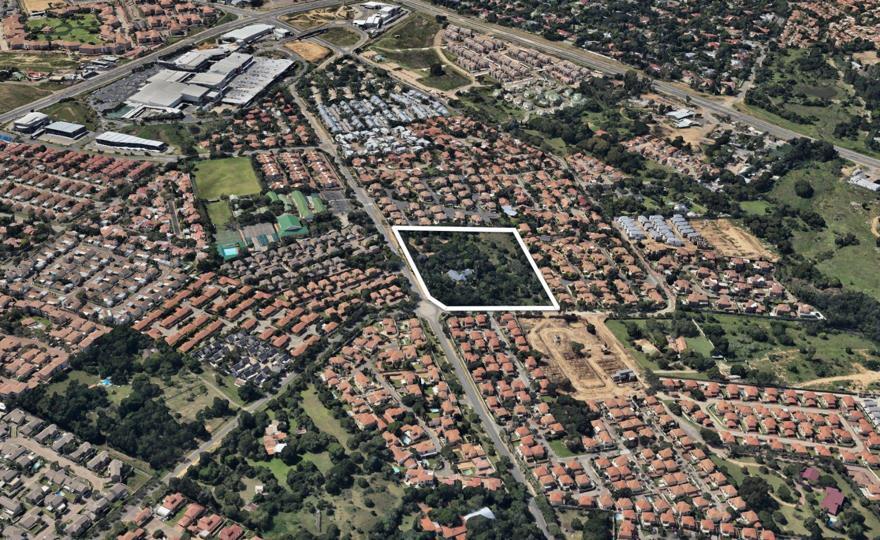
“A 7,382-square-metre development landholding at 18–22 Sparrow Drive in Fourways, Johannesburg, is being marketed for auction on 22 October 2026, offering investors an opportunity to explore residential, hotel and multi-family development. Existing development rights cover approximately 6,000 square metres of the site, while a proposed rezoning could increase the development potential, subject to municipal approvals and associated infrastructure requirements.”
Fourways Development Land Creates New Opportunities for South African Property Investors
A strategically located property enters the auction market
A prominent development landholding in Fourways, north of Johannesburg, is attracting attention as a potential investment opportunity in South Africa’s real estate market. The property, located at 18–22 Sparrow Drive, is being offered through Broll Auctions and Sales as part of its October auction programme, scheduled for 22 October 2026. The approximately 7,382-square-metre site offers visibility along Winnie Mandela Drive, a significant route serving Fourways and surrounding commercial and residential areas.
The land presents an opportunity for developers seeking property with existing development rights and the potential for additional permitted uses. However, the proposed expansion of those rights remains subject to municipal planning procedures and final approval. Consequently, investors must distinguish between what is already authorised and what may become possible after the necessary regulatory processes.
The listing reflects a broader property investment consideration: well-positioned land can offer considerable development flexibility, but its ultimate value depends on planning permissions, infrastructure capacity, financing and market demand.
Existing development rights and proposed expansion
According to the property’s marketing information, the landholding consists of four individual parcels, with an approved Surveyor-General consolidation diagram in place. Approximately 6,000 square metres of the site currently has Residential 3 zoning, providing an established planning basis for evaluating development options.
Under the existing development parameters, the property offers baseline development bulk of approximately 5,906 square metres. This figure provides an important reference point for prospective purchasers assessing the site’s potential and comparing it with other investment opportunities in Johannesburg.
The seller has applied to rezone the full landholding to a proposed Special zoning intended to accommodate hotel or multi-family residential development. If the application is approved as described, the proposed parameters could permit a five-storey development, a floor-area ratio of 1.2 and total development bulk of approximately 8,858 square metres.
The marketing information indicates an illustrative yield of around 118 rooms or suites under a potential hospitality or related development scenario. This is an indicative development concept rather than a guaranteed outcome, because the final design, approved land uses, building requirements and project economics will determine what can actually be constructed.
For prospective purchasers, the distinction is essential. Existing permissions can support initial feasibility calculations, whereas additional rights remain contingent on the outcome of the relevant municipal planning process. No investor should assume that the proposed rezoning will automatically be approved.
Location strengthens the investment proposition
Location is one of the defining considerations in property development. Fourways has developed into an established commercial, retail and residential node in northern Johannesburg, with connections to surrounding suburbs and major transport routes.
The Sparrow Drive property benefits from visibility along Winnie Mandela Drive, potentially offering advantages for developments that depend on accessibility, convenient customer access and prominent frontage. These characteristics may be relevant to hospitality operators, residential developers and investors evaluating opportunities in established urban growth areas.
The listing also identifies a signalised intersection at Leslie Avenue and Sparrow Drive, with existing turning infrastructure. Nevertheless, the presence of an intersection does not automatically confer unrestricted access to the site. Any proposed entrance, traffic arrangement or change in land use may require additional municipal and traffic approvals.
The site’s location therefore provides a useful starting point for investment analysis, rather than proof that every proposed development configuration will be feasible.
Developers should examine traffic volumes, pedestrian movement, public transport access and the surrounding mix of residential and commercial activity. These factors can influence tenant demand, building design and the attractiveness of a completed project.
Residential development and changing housing needs
Multi-family residential development is one potential direction for the property, subject to the necessary approvals. Such projects can provide multiple homes within a single development, potentially supporting more efficient land use than low-density residential construction.
However, successful residential investment requires more than identifying available land. Developers must establish which household groups are most likely to rent or purchase units, what prices the local market can support, and how much competing accommodation is available.
A feasibility study should assess the likely mix of apartments, expected occupancy, construction expenses, financing costs, municipal charges and ongoing property management requirements. It should also consider parking, access, waste management, security and communal facilities.
Furthermore, the development’s financial performance will depend on the relationship between construction costs and achievable rental or sales income. A prominent location may help attract prospective residents, but it cannot independently guarantee sufficient demand or profitability.
If the project proceeds as residential accommodation, its contribution to the local housing supply will depend on the number, size and affordability of the completed units. Developers should therefore evaluate the market carefully before committing to a particular residential concept.
Hospitality presents an alternative development possibility
The proposed rezoning also identifies hotel development as a potential use. A hospitality project could appeal to investors seeking to serve business travellers, visitors attending local events or people requiring accommodation close to Johannesburg’s northern commercial areas.
An illustrative yield of approximately 118 rooms or suites provides a preliminary basis for examining a hotel concept. However, this figure should not be interpreted as an approved room count or a guarantee of commercially viable operations.
Hospitality feasibility depends on anticipated room rates, occupancy levels, staffing expenses, operating costs and competition from existing hotels and alternative accommodation providers. Developers would also need to consider building configuration, parking, service areas and the facilities expected by their intended customers.
The choice between hotel and residential development would consequently require a comparison of expected income, capital expenditure, operating risk and financing requirements. Investors should test several scenarios before deciding which permitted use, if approved, would provide the strongest long-term return.
Infrastructure costs and municipal approvals remain important
Land acquisition represents only one component of the total cost of delivering a property development. Roads, water connections, sanitation, electricity, stormwater management and other infrastructure requirements can substantially influence the final project budget.
Broll’s listing states that applicable bulk-services contributions, development charges and municipal connection fees are excluded from the purchase price. Any required costs associated with consolidation, development or proposed rezoning would be for the purchaser’s account.
These expenses must be included in financial modelling before an investor establishes a maximum acquisition price. If infrastructure costs are higher than anticipated, the development’s expected returns could weaken even if the land is acquired at an attractive price.
Municipal planning requirements also influence project timing. Rezoning applications, traffic assessments, building-plan approvals and other permissions can involve additional professional fees and administrative processes.
A responsible purchaser should obtain the relevant planning documents, verify the property’s registered rights, investigate any servitudes and confirm the status of the rezoning application. Professional legal, planning, engineering and valuation advice can help identify risks before a binding investment decision is made.
What the auction means for prospective investors
The 22 October 2026 auction gives interested parties a defined opportunity to investigate the property and determine whether it fits their investment objectives. The advertised listing does not establish a final sale price, and prospective purchasers should contact Broll for the applicable auction conditions and detailed information pack.
Before participating, investors should calculate their maximum bid using conservative assumptions about development rights, construction expenses, funding costs and achievable revenue. They should also assess the time required to obtain approvals and complete construction.
A detailed due-diligence process should include a review of title conditions, zoning certificates, municipal records, existing services, access arrangements and any restrictions affecting the land. The approved consolidation diagram and the proposed additional development rights should be checked against the relevant official documents.
Financing is another critical consideration. Developers need to establish whether equity, commercial loans or development finance can cover the acquisition and construction stages. Funding arrangements should also account for possible delays and cost increases.
These precautions are particularly important when the investment case depends partly on future planning approvals. The most attractive theoretical development scenario may not necessarily be the most achievable or financially resilient option.
Implications for Johannesburg’s property market
The Fourways opportunity illustrates how land can become a focal point for competing development possibilities within an established urban area. Residential accommodation and hospitality projects may both be viable concepts in principle, but their suitability depends on demand, planning requirements and the availability of supporting infrastructure.
For Johannesburg, well-planned development can potentially contribute to additional housing, employment and economic activity. Construction can generate temporary work, while completed properties may support longer-term jobs in property management, hospitality and associated services.
Nevertheless, the benefits depend on whether a proposed project responds to actual market needs and complies with applicable planning requirements. Responsible development also requires consideration of traffic, environmental impacts, service capacity and the relationship between new buildings and existing communities.
The Sparrow Drive site should therefore be evaluated not simply as a parcel of vacant land, but as a potential component of Fourways’ continuing urban development.
Conclusion: Opportunity depends on feasibility
The proposed auction of the 7,382-square-metre Fourways landholding highlights the opportunities and uncertainties involved in acquiring development property in South Africa. Its prominent location, existing residential development rights and potential for additional hotel or multi-family residential uses create several avenues for investigation.
However, the proposed expansion of development rights remains subject to approval, and infrastructure expenses could materially affect the project’s financial outcome. Investors should therefore base their decisions on verified planning information, detailed cost estimates and realistic demand forecasts.
The auction on 22 October 2026 offers prospective purchasers an opportunity to examine the land and assess its suitability for their strategies. Ultimately, the site’s investment value will depend on the permissions secured, the quality of the development proposal and the ability to deliver a commercially sustainable project.
For buyers prepared to undertake rigorous due diligence, the property provides a case study in evaluating the balance between location, development potential and regulatory risk in Johannesburg’s evolving real estate market.



