




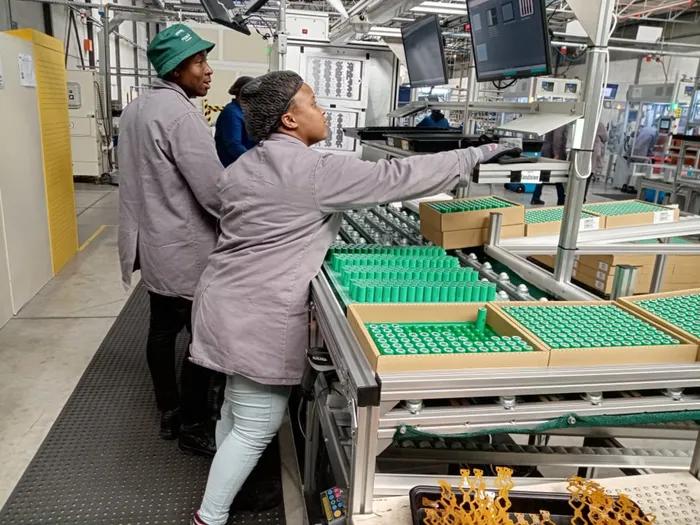
“South Africa’s manufacturing production declined by 4.3% year-on-year in August 2026, reversing July’s 1.1% increase, while output fell 3.1% month-on-month after rising 2.2% in the previous month. The figures highlight renewed weakness in industrial activity at a time when South Africa faces subdued economic growth, persistent inflation risks and pressure on businesses to manage production costs.”
South Africa’s Manufacturing Sector Suffers a Sharp Decline as Economic Challenges Persist
Manufacturing output reverses July’s improvement
South Africa’s manufacturing sector has experienced a significant setback after industrial production declined sharply in August 2026, highlighting the challenges facing an economy seeking stronger, more sustainable growth. Manufacturing output fell by 4.3% compared with August 2025, reversing the 1.1% year-on-year increase recorded in July. The latest figures, reported by Reuters on 8 October, point to renewed weakness in one of the country’s important productive industries.
The monthly figures also reveal the scale of the reversal. Factory production declined by 3.1% in August after increasing by 2.2% in July. This movement indicates that the previous month’s improvement did not translate into sustained momentum across the manufacturing sector.
Manufacturing performance matters beyond the factories themselves. Industrial production contributes to employment, exports, business investment, household incomes and government revenue. Manufacturers also purchase inputs from other industries, including mining, agriculture, transport, energy and business services. Consequently, a significant production decline can affect a much wider network of economic activity.
However, the August figures alone do not establish that every manufacturing industry contracted or that South Africa has entered a recession. They provide evidence of a substantial setback in factory production that must be considered alongside other indicators, including gross domestic product, retail sales, employment and investment.
The broader economy is already facing weak growth
The manufacturing decline comes against a difficult macroeconomic background. Statistics South Africa reported that gross domestic product contracted by 0.2% in the second quarter of 2026, following growth of 0.4% in the first quarter. Manufacturing, mining and trade-related activities contributed to the weakness.
These developments illustrate the difficulty of building a consistent economic recovery. When production expands, businesses may increase investment, hire workers and purchase additional materials. When output contracts, companies can instead reduce shifts, delay equipment purchases or become more cautious about recruiting.
The South African Reserve Bank’s October 2026 Monetary Policy Review forecasts average economic growth of approximately 1.2% for the year, down from its earlier projection of 1.4%. The forecast reflects an economy dealing with external shocks and domestic structural constraints.
Growth of this magnitude would leave the economy facing a challenging task in creating enough additional economic opportunities for a growing population and reducing unemployment substantially. The manufacturing figures therefore matter because stronger industrial activity could help broaden growth beyond a limited number of sectors.
Nevertheless, the outlook will depend on developments throughout the remainder of the year. One month of weak production cannot determine the full-year outcome, and subsequent data may show whether August represented a temporary interruption or part of a more persistent downturn.
Why manufacturing matters for employment and investment
Manufacturing occupies an important position in South Africa’s economic structure. Factories transform raw materials and intermediate goods into products such as processed food, chemicals, metals, machinery, vehicles, clothing and household products.
This activity creates direct employment for production workers, engineers, technicians, supervisors and logistics staff. It also supports indirect employment among suppliers, maintenance contractors, transport operators, wholesalers and service providers.
A sustained decline in output can therefore place pressure on employment across several connected industries. Businesses experiencing weaker orders may initially respond by reducing overtime, slowing production schedules or postponing recruitment. If the downturn continues, some firms may consider more significant cost reductions.
These are potential consequences rather than confirmed outcomes of the August figures. The available Reuters report does not establish how many jobs, if any, were lost because of the latest production decline.
Investment is another important consideration. Manufacturing companies often need substantial capital to purchase machinery, modernise facilities, improve energy efficiency and meet changing customer requirements. Executives are more likely to approve major investments when they expect demand to remain sufficiently strong.
Conversely, uncertainty about sales, operating costs and the economic outlook can encourage companies to postpone expansion. Lower investment may then limit future productive capacity and reduce the economy’s ability to generate higher-value employment.
For South Africa, improving manufacturing performance could help strengthen domestic supply chains and support exports. However, achieving that outcome requires firms to remain competitive in terms of price, quality, productivity and reliability.
Inflation and interest rates complicate the outlook
South Africa’s manufacturing difficulties are unfolding alongside concerns about inflation. The South African Reserve Bank’s October monetary policy review highlighted the effects of higher energy prices and risks associated with food costs and inflation expectations. It also reported that the policy rate had been raised by a cumulative 50 basis points to 7.25% over the April–October review period.
Higher interest rates can help contain inflation by making borrowing more expensive and moderating demand. However, they can also increase financing costs for companies that depend on loans to fund working capital, purchase machinery or expand their operations.
Manufacturers may face a particularly difficult combination when production weakens while operating costs remain high. A company dealing with lower orders may find it harder to pass additional costs on to customers, especially when competitors offer similar products.
Higher financing costs can also influence customers’ purchasing decisions. Businesses may delay equipment purchases, while households may reduce spending on durable goods if debt repayments consume a greater share of their income.
Nevertheless, monetary policy is not the only influence on manufacturing performance. Demand from domestic and international customers, infrastructure reliability, logistics costs, exchange-rate movements and access to skilled labour can all affect production.
The challenge for policymakers is to manage inflation without unnecessarily weakening an already fragile recovery. At the same time, stronger productivity and reliable infrastructure can help businesses increase output without generating excessive cost pressures.
Energy, logistics and operating costs remain important
Manufacturers rely on dependable electricity, transport networks, ports, telecommunications and efficient supply chains. Disruptions or high operating costs in any of these areas can reduce production efficiency and weaken competitiveness.
Energy-intensive businesses, including those producing metals, chemicals and other industrial materials, can be particularly sensitive to electricity prices and interruptions. Companies may need to spend additional money on backup systems or operational adjustments when energy supplies are unreliable.
Transport infrastructure is equally important. Manufacturers need to receive raw materials on time and deliver finished products to customers at competitive prices. Delays at ports, congestion on freight routes and inadequate rail capacity can increase costs and disrupt production schedules.
These challenges can also affect export performance. International buyers frequently assess suppliers according to delivery reliability, product quality and price. If South African producers cannot consistently meet these requirements, they may struggle to retain orders against overseas competitors.
However, the latest manufacturing release does not identify any single infrastructure problem as the cause of August’s 4.3% decline. It would therefore be premature to attribute the entire contraction to electricity, railways, ports or any other individual factor.
Instead, the figures reinforce the importance of examining detailed industry data and business surveys to understand which sectors experienced the largest declines and what constraints firms reported.
Global demand and international uncertainty
South African manufacturers also operate within an interconnected global economy. Changes in international demand, commodity prices, shipping costs and geopolitical conditions can influence both production and investment.
When major trading partners experience slower growth, they may purchase fewer South African goods. This can affect manufacturers producing metals, machinery, chemicals, vehicles and other products for export markets.
International supply disruptions can also increase the cost of imported components, fuel and industrial equipment. Businesses may respond by holding additional inventories, seeking alternative suppliers or delaying production until materials become available.
Currency movements create another layer of uncertainty. A weaker rand can increase the domestic price of imported machinery and production inputs, although it may also make some South African exports more competitive when foreign-currency earnings are converted into rand.
The final effect depends on the company’s cost structure, pricing power and exposure to international markets. Exporters using substantial imported inputs may not benefit as much from currency depreciation as firms with more locally sourced materials.
The Reserve Bank’s October review identifies global energy pressures and uncertainty as important risks to the domestic inflation and growth outlook.
For manufacturers, these conditions make careful planning increasingly important. Businesses need to monitor customer demand, manage foreign-exchange exposure where appropriate and assess whether their supply chains can withstand sudden disruptions.
Implications for small and medium-sized businesses
The effects of weaker manufacturing activity can extend to small and medium-sized enterprises that supply larger factories. These businesses may provide packaging, repairs, cleaning, security, transportation, catering and specialist components.
When major manufacturers reduce production, they may order fewer supplies or renegotiate delivery schedules. Smaller suppliers can then experience slower revenue growth, delayed payments and increased pressure on cash flow.
Companies with limited access to credit may be especially vulnerable because they have fewer resources to absorb a prolonged decline in demand. Even a temporary reduction in orders can make it difficult to meet wages, rent, supplier invoices and loan repayments.
At the same time, economic weakness may create opportunities for firms capable of supplying cost-effective alternatives, improving efficiency or meeting specialised customer requirements. Companies that invest in technology, worker training and quality control may be better positioned to compete when demand improves.
Supportive policies can help smaller manufacturers access finance, develop technical skills and participate in domestic supply chains. However, support programmes are most effective when they encourage viable production and productivity rather than simply maintaining inefficient operations indefinitely.
The latest figures underline why the health of manufacturing should be assessed through more than headline output alone. Orders, capacity utilisation, business confidence, investment intentions and supplier payments can provide additional information about the sector’s underlying condition.
What policymakers and investors should watch next
The next stage of economic analysis will involve determining whether the August decline continues into subsequent months. A rebound would suggest that at least part of the setback was temporary, while further contractions could indicate more persistent weakness.
Investors and analysts will also examine whether manufacturing performance is consistent with developments in mining, electricity production, retail sales, business confidence and export demand.
Gross domestic product figures will remain particularly important because they measure economic activity across the broader economy rather than manufacturing alone. The second-quarter contraction already demonstrates that South Africa’s challenges extend beyond a single monthly industrial release.
For the government, improving the environment for productive investment remains an important priority. Predictable regulation, effective public administration, reliable infrastructure and efficient logistics can help businesses make longer-term decisions with greater confidence.
The Reserve Bank, meanwhile, must continue assessing whether inflation pressures are likely to persist. If inflation remains elevated, policymakers may have limited room to ease monetary conditions quickly. If price pressures moderate while economic weakness continues, the balance of risks could change.
Investors should also distinguish between temporary market movements and improvements in the economy’s underlying productive capacity. A stronger currency or rising commodity prices can provide short-term support, but lasting growth requires investment, higher productivity and expanding demand.
The path towards a more resilient economy
South Africa’s manufacturing contraction is a warning that the economic recovery remains vulnerable. The 4.3% year-on-year decline and 3.1% monthly fall demonstrate how quickly industrial momentum can reverse following a period of improvement.
However, the figures should not be interpreted as proof that a broader economic crisis is inevitable. Manufacturing performance can fluctuate, and subsequent releases will help clarify the duration and extent of the setback.
A durable recovery will require cooperation across several areas of economic policy. Government efforts to improve infrastructure and regulatory efficiency need to complement private-sector investment in equipment, skills, innovation and production processes.
Manufacturers also need access to competitive financing, reliable supplies and markets that reward productivity. Expanding opportunities for smaller suppliers and increasing the competitiveness of locally produced goods could help spread the benefits of industrial development across the economy.
Ultimately, South Africa’s challenge is to turn isolated improvements into sustained growth. Stronger manufacturing activity can contribute to employment, exports and business confidence, but these benefits depend on a supportive operating environment and consistent demand.
The August results provide a clear reminder that progress remains uneven. As policymakers, businesses and investors assess the outlook for the remainder of 2026, the critical question is whether the decline will prove temporary or signal deeper weakness in the country’s productive economy.
The answer will depend on forthcoming production figures, broader economic indicators and the ability of South Africa’s public and private sectors to address the structural obstacles limiting growth.



