




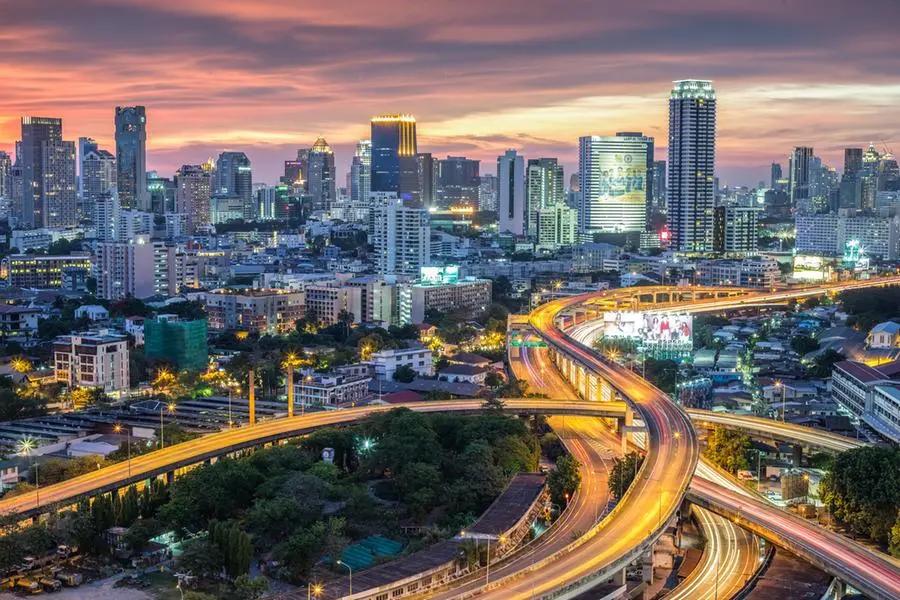
“South Africa’s economic recovery is struggling to gain momentum as weak fixed investment, delayed infrastructure projects, expensive electricity and inefficient transport networks undermine business confidence, despite reforms intended to improve the investment climate. The economy contracted by 0.2% in the second quarter of 2026, highlighting the urgency of turning investment commitments and policy announcements into completed projects, higher productivity and sustainable job creation.”
South Africa’s Economic Recovery Faces a Critical Test as Investment and Growth Remain Weak
A recovery that has yet to deliver stronger growth
South Africa is facing a crucial test of its economic recovery as persistent structural weaknesses continue to limit growth, investment and employment. Although government reforms have started addressing longstanding problems in electricity supply and logistics, the country has yet to translate these improvements into sufficiently strong economic expansion. A report published by the Financial Times on 14 October highlights the growing gap between the government’s economic ambitions and the investment needed to achieve them.
The challenge is significant because South Africa is one of Africa’s largest and most diversified economies. Its industrial base, financial markets, mineral resources and established business institutions provide important advantages. Nevertheless, years of weak investment, infrastructure deterioration, policy uncertainty and unemployment have constrained its ability to expand production and generate sufficient employment.
The economy contracted by 0.2% in the second quarter of 2026, interrupting six consecutive quarters of expansion, according to the South African Reserve Bank’s September assessment. The contraction illustrates how vulnerable the recovery remains to international shocks and domestic structural constraints. The Reserve Bank projected annual growth of approximately 1.2% for 2026.
Investment commitments are not the same as investment delivered
A central concern is the difference between announcing investments and implementing them. Government investment conferences have attracted substantial commitments from businesses, but pledged amounts do not automatically become factories, warehouses, mines, renewable energy facilities or transport infrastructure.
South Africa’s investment mobilisation programme has accumulated commitments across several conferences since 2018. However, the conversion of those commitments into operational projects remains essential to improving economic performance. Official investment-drive information reported that R634 billion from the first investment drive had entered the economy by March 2026, demonstrating progress while also highlighting the importance of tracking implementation.
The proposed Stellantis automotive assembly plant at Coega in the Eastern Cape illustrates these difficulties. Announced in 2023 with a planned investment of R3 billion, the project had not progressed to an operational factory by the time of the Financial Times report. The company was reassessing its business case and expected to make a final investment decision in the coming months.
Such delays matter beyond individual companies. A new automotive plant could create direct employment, support local component manufacturers, increase demand for transport services and strengthen industrial supply chains. When a major project remains on hold, these potential economic benefits are postponed as well.
South Africa therefore needs to measure investment performance through completed projects, actual capital expenditure, productive capacity and jobs created, rather than relying exclusively on headline commitments.
Infrastructure remains central to economic performance
Electricity, railways, ports and municipal infrastructure are fundamental determinants of productivity. When these systems operate inefficiently, companies face higher costs, unpredictable delivery schedules and reduced competitiveness.
South Africa has made progress in improving electricity reliability and addressing logistical bottlenecks. However, the persistence of infrastructure problems means that reforms must continue before businesses can plan confidently for long-term expansion.
Ports are particularly important because South African manufacturers and mining companies depend on reliable export routes. Delays in moving goods increase storage costs, disrupt production schedules and can weaken relationships with international customers. Businesses competing in global markets may redirect investment to countries where logistics are more dependable.
Rail transport presents a related challenge. A functioning freight network can reduce road congestion, lower transport costs and support the movement of minerals, agricultural products and manufactured goods. Conversely, inadequate capacity places additional pressure on road infrastructure and raises the cost of doing business.
The government’s reform programme must therefore prioritise practical improvements in service delivery. Regulatory changes and new operating arrangements will only produce lasting economic benefits if they lead to more reliable infrastructure and measurable reductions in business costs.
Electricity costs continue to pressure industry
The reduction in load-shedding has removed one of the most visible obstacles facing South African businesses. Nevertheless, electricity affordability remains a concern, especially for energy-intensive industries such as mining, metals, chemicals and manufacturing.
According to the Financial Times report, electricity tariffs have risen sharply over the longer term, while Eskom continues to face financial and operational pressures. Although dependable electricity supply is essential, high costs can discourage production expansion and weaken the competitiveness of local manufacturers.
For companies considering new factories, the decision to invest depends on the total cost of operating a facility. Electricity prices, transport expenses, labour costs, financing conditions and regulatory requirements all influence expected profitability.
South Africa must therefore pursue a balanced energy strategy that improves reliability while supporting affordability and financial sustainability. Investment in generation, grid infrastructure, storage and competitive electricity markets could help diversify supply and strengthen resilience.
The challenge is to ensure that reforms improve the operating environment for businesses without undermining the financial stability needed to maintain and expand the electricity system.
Mining investment and regulatory delays
Mining remains important to South Africa’s export earnings, industrial supply chains and employment. The country possesses substantial mineral resources, yet attracting new exploration and development capital requires predictable regulation, efficient permitting and dependable infrastructure.
The Financial Times reported that delays in processing mining rights applications were holding up potential investment. A backlog of approximately 4,000 applications was associated with more than R30 billion in investment awaiting progress, according to industry figures cited in the report.
These delays can affect the entire mining value chain. Exploration companies need timely decisions before committing significant funds, while operating mines require regulatory certainty to expand production or develop new deposits.
If approvals take too long, investors may redirect capital towards competing jurisdictions. This can reduce future production, constrain export growth and limit opportunities for suppliers, contractors and surrounding communities.
Improving application systems, publishing clear processing timelines and strengthening administrative capacity could help address these obstacles. Effective oversight must remain in place, but transparent and predictable procedures can make it easier for legitimate projects to proceed.
Weak growth and the employment challenge
Slow economic expansion has serious consequences for South African households. When businesses delay investment, fewer new production facilities are established, limiting demand for workers and reducing opportunities for young people entering the labour market.
Economic growth of around 1% to 2% is unlikely to generate sufficient employment to resolve the country’s deep labour-market challenges quickly. The Financial Times report cited estimates suggesting that growth closer to 3% or 3.5% would be needed to begin bringing unemployment down meaningfully.
The relationship between growth and employment is not automatic. Expanding industries must also be capable of creating productive jobs, while workers need access to relevant skills and reliable transport to employment centres.
Manufacturing, tourism, agriculture, construction, digital services and renewable energy could all contribute to broader job creation if investment conditions improve. Small and medium-sized businesses are particularly important because they can create employment across communities and sectors.
However, entrepreneurs also need reliable electricity, affordable financing, simpler administrative processes and confidence that contracts will be enforced. Reducing these obstacles could help businesses expand and employ more workers.
Global pressures complicate the domestic outlook
South Africa’s economic difficulties are occurring against a challenging international backdrop. Geopolitical tensions, energy-market disruptions and changes in global financial conditions can affect fuel prices, inflation, exchange rates and investor sentiment.
The Reserve Bank has warned that international supply shocks are increasing inflationary pressures while weakening growth prospects. Its September assessment projected inflation above 5% later in 2026 and into early 2027 before easing towards the 3% target near the end of 2027. It also maintained a cautious monetary policy stance, with the policy rate at 7.25%.
Higher inflation can reduce household purchasing power and raise operating costs for businesses. Meanwhile, elevated interest rates increase borrowing expenses and may discourage investment in projects that depend on long-term financing.
These conditions create a difficult policy balance. Authorities must protect price stability while supporting the structural improvements needed to raise productivity and potential growth.
South Africa cannot control global energy prices or international geopolitical developments. It can, however, strengthen domestic resilience through reliable infrastructure, credible economic institutions, sustainable public finances and a predictable regulatory environment.
Restoring investor confidence through implementation
Investor confidence depends on more than optimistic forecasts. Businesses need evidence that announced reforms are being implemented, infrastructure is improving and regulatory decisions are becoming more predictable.
South Africa retains important advantages, including sophisticated financial markets, established industrial capabilities and a strong institutional framework. These strengths provide a foundation for recovery, but they cannot compensate indefinitely for slow implementation and weak capital formation.
Government can improve confidence by publishing transparent project milestones, clarifying regulatory responsibilities and reporting whether announced investments have reached construction or production. Collaboration with private companies can also help mobilise capital and technical expertise, provided that contracts and accountability arrangements are clear.
Municipal infrastructure deserves particular attention. Businesses depend on functioning roads, water systems, electricity distribution and local services. Deteriorating urban infrastructure can increase operating costs even when national economic policies improve.
Ultimately, investors must be able to see tangible improvements in the places where they operate. Faster decisions, reliable public services and completed projects are more persuasive than repeated announcements.
Conclusion: Turning reform into measurable economic progress
South Africa’s stalled recovery demonstrates that macroeconomic stability and structural reform are necessary but insufficient on their own. Sustainable growth requires productive investment, reliable infrastructure, competitive energy costs and an environment in which businesses can plan confidently.
The second-quarter contraction is a warning that progress remains vulnerable. Investment commitments must translate into actual spending, delayed projects need practical solutions, and regulatory systems must support productive activity without sacrificing accountability.
For President Cyril Ramaphosa’s reform agenda, the central test is implementation. Stronger growth will depend on whether government and business can turn policy improvements into functioning infrastructure, expanding industries and employment opportunities.
South Africa has significant economic potential. Unlocking it will require consistent execution, measurable results and sustained cooperation between the public and private sectors. The ultimate measure of success will not be the number of investment pledges announced, but whether more South Africans gain access to productive work and whether the economy develops the capacity to grow faster over the long term.



