




“Minister of Electricity and Energy Dr. Kgosientsho Ramokgopa has called on South African youth to position themselves at the forefront of the country’s decarbonisation drive, which includes building 14,500km of transmission lines and adding 102GW of new generation capacity. With R2.2 trillion in investment required, he emphasized that South Africa’s critical mineral wealth places the nation at the center of the global green economy.”
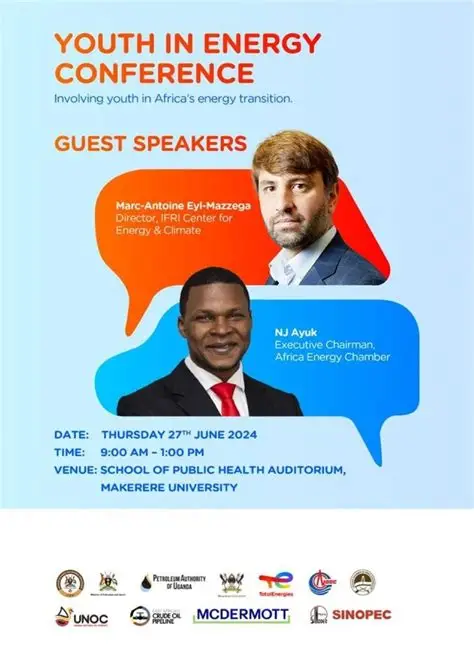
South Africa’s energy sector is undergoing one of the most ambitious transformations in its history, and the government is urging young people to take advantage of the opportunities this transition presents. Speaking at the Youth in Energy Conference and Awards in Johannesburg on June 23, 2026, Minister of Electricity and Energy Dr. Kgosientsho Ramokgopa outlined the scale of the country’s decarbonisation agenda and the critical role youth can play in shaping its future.
The government has set a target of 102GW of new generation capacity by 2030, alongside the construction of 14,500km of transmission lines to expand the national grid. This infrastructure expansion is not only essential for meeting South Africa’s energy needs but also represents a massive economic opportunity. Ramokgopa revealed that the investment required for transmission lines alone stands at R440 billion, while the broader investment in new generation capacity is estimated at R2.2 trillion. To put this in perspective, he noted that the energy sector’s transformation over the next 12 years will account for 30% of South Africa’s economy.
For young entrepreneurs, engineers, and innovators, this represents a once-in-a-generation chance to participate in building the future of South Africa’s energy landscape. Ramokgopa urged youth to “understand what components are required” for transmission line construction and renewable energy infrastructure, and to position themselves strategically within the supply chain. From manufacturing components to providing services, the opportunities are vast and varied.
A key advantage for South Africa lies in its abundance of critical minerals, which are indispensable for renewable energy technologies such as solar panels, wind turbines, and battery storage systems. Ramokgopa highlighted that 70% of the minerals needed for global decarbonisation are found in South Africa, placing the country at the center of the international green economy. This mineral wealth provides South Africa with the potential to not only supply raw materials but also to develop industries that add value along the entire renewable energy value chain.
The Minister emphasized that the youth must “choose their place in the entire value chain,” whether in mining, manufacturing, logistics, or innovation. He stressed that the transition is not just about energy but about creating sustainable jobs, fostering entrepreneurship, and ensuring that South Africa remains competitive in the global economy.
Beyond the economic opportunities, the energy transition is also critical for addressing South Africa’s longstanding challenges with electricity supply. Load shedding has plagued the country for years, undermining economic growth and public confidence. By investing in renewable energy and modernizing the grid, the government aims to stabilize electricity supply, reduce reliance on coal, and meet international climate commitments.
The Youth in Energy Conference served as a platform to inspire and mobilize young South Africans. Awards were presented to outstanding youth leaders in the energy sector, showcasing examples of innovation and resilience. Ramokgopa’s message was clear: the future of South Africa’s energy sector depends on the active participation of its youth, who must seize the opportunities presented by the green economy.
In conclusion, South Africa’s energy transition is not just a technical or economic project—it is a generational mission. With trillions of rand in investment, vast mineral resources, and a clear government mandate, the stage is set for young South Africans to lead the way. As Ramokgopa noted, “That’s the opportunity before you… and as young people, you must position yourselves to participate in this space.”



