




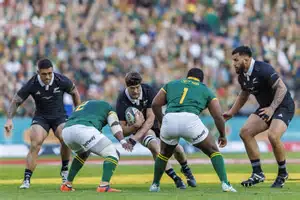
“The Springboks are gearing up for their highly anticipated clash against the All Blacks at Ellis Park, the first of four Tests in rugby’s greatest rivalry. Head coach Rassie Erasmus faces a selection headache as captain Siya Kolisi and prop Ox Nché battle injuries, raising questions about South Africa’s depth and adaptability.”
South African rugby is once again at the center of global attention as the Springboks prepare to face the All Blacks in Johannesburg on Saturday, August 22, 2026. This fixture, the opening clash of a four-Test series, is more than just another match—it is the renewal of rugby’s greatest rivalry, a contest steeped in history, pride, and fierce competition. For the Springboks, the stakes are immense: defending their reputation as world champions while navigating injury concerns that threaten to disrupt their preparations.
The Rivalry Returns
The Springboks vs. All Blacks rivalry is arguably the most iconic in rugby. Ellis Park, the venue for Saturday’s clash, has witnessed some of the most memorable battles between these two giants. The atmosphere promises to be electric, with fans eager to see whether South Africa can impose their physical dominance or whether New Zealand’s attacking flair will dictate the tempo.
Injury Concerns and Squad Depth
Head coach Rassie Erasmus has delayed naming his match-day squad, awaiting medical updates on captain Siya Kolisi and prop Ox Nché. Kolisi, managing a hamstring issue, remains central to the team’s leadership and tactical execution. His absence would be a significant blow, though Erasmus has emphasized the depth of the 43-man squad assembled for the series. Players like Sacha Feinberg-Mngomezulu, returning from injury, add attacking options, while experienced campaigners such as Eben Etzebeth and Handré Pollard provide stability.
Tactical Battles Ahead
Erasmus has rejected suggestions that the Springboks will attempt to slow the game down. Instead, he insists South Africa will bring their own brand of rugby—physical, structured, but adaptable. The All Blacks, meanwhile, face their own challenges, with injuries mounting in their camp. Analysts like Johan Ackermann have suggested that the Springboks could exploit New Zealand’s high-risk style, particularly if the Boks maintain defensive discipline and capitalize on turnovers.
The Four-Test Format
This series is unique: four Tests in four weeks, played across Johannesburg and Cape Town. Such intensity places enormous demands on squad rotation, recovery, and tactical flexibility. For Erasmus, managing player workloads will be as crucial as devising strategies to counter New Zealand’s unpredictability. The series could redefine modern rugby scheduling, testing the limits of endurance and adaptability.
Broader Impact on South African Rugby
Beyond the immediate contest, this series carries symbolic weight. Rugby remains deeply embedded in South African culture, shaping national identity and unity. Victories against the All Blacks resonate far beyond the field, reinforcing the Springboks’ role as ambassadors of resilience and excellence. The series also highlights the strength of South Africa’s development pathways, with U18 and U20 squads recently delivering impressive performances against international opposition.
Key Players to Watch
- Siya Kolisi – Inspirational captain, fitness uncertain.
- Ox Nché – Powerful scrummager, battling a knee niggle.
- Sacha Feinberg-Mngomezulu – Young flyhalf returning from injury, offers attacking spark.
- Eben Etzebeth – Veteran lock, cornerstone of physical dominance.
- Handré Pollard – Experienced flyhalf, tactical kicker.
Conclusion
As Saturday approaches, anticipation builds. The Springboks enter the clash with questions over fitness but confidence in their depth and tactical nous. The All Blacks, wounded yet dangerous, remain formidable opponents. Ellis Park will once again bear witness to rugby’s greatest rivalry, a contest that transcends sport and embodies the spirit of two nations.



