




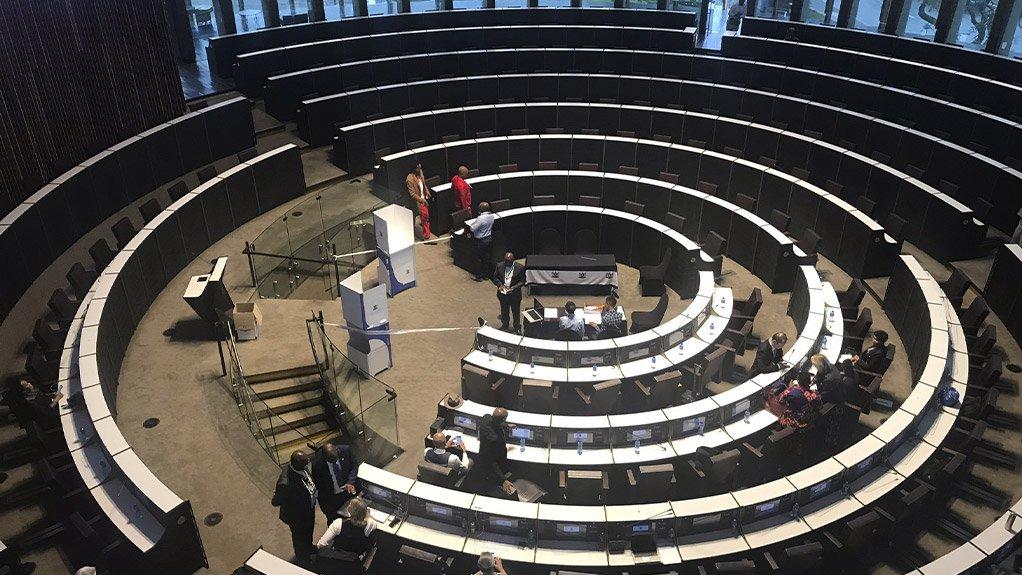
“South Africa’s proposed Municipal Structures Amendment Bill, intended to stabilise coalition governments and prevent constant changes of municipal leadership, will not become law before the 4 November 2026 local government elections. The delay means political parties forming governing coalitions after the elections will initially operate without the comprehensive statutory framework proposed to make coalition agreements transparent, formal and legally enforceable.”
Municipal Structures Amendment Bill Delay Leaves Coalition Governance Reform Hanging as South Africa Votes
South Africa’s local government elections on 4 November 2026 are taking place against an important legislative backdrop: the country’s proposed Municipal Structures Amendment Bill, designed to improve the stability and accountability of coalition governments, has failed to reach the statute books before voters cast their ballots. The delay means municipalities potentially facing hung councils will continue to rely on existing local government legislation and political negotiations while Parliament works towards a new framework for coalition administration.
The proposed legislation has emerged as one of the significant governance reform measures in South Africa’s municipal political landscape. Its central objective is to address recurring instability in councils where no political party secures an outright majority, forcing parties to negotiate agreements to establish governing coalitions.
The legislation is intended to formalise coalition arrangements, strengthen municipal leadership and reduce political disruptions that have repeatedly affected local administrations. However, with the legislative process continuing beyond the elections, the immediate challenge will be ensuring that newly elected councils establish functioning governments capable of delivering services.
Coalition instability remains a major municipal governance challenge
South Africa’s increasingly fragmented political environment has transformed coalition government into a central feature of municipal administration.
In the 2021 local government elections, the African National Congress lost outright majorities in several important metropolitan municipalities, while opposition parties also struggled to secure sufficient support independently. Consequently, political parties entered negotiations to establish governing arrangements in councils including Johannesburg, Tshwane and Ekurhuleni.
Although coalition governments provide opportunities for political cooperation and broader representation, their stability has frequently been undermined by disagreements between participating parties.
Leadership changes, disputes over municipal budgets and competing political priorities have repeatedly disrupted council operations. In Johannesburg, political instability has been particularly visible, with successive mayoral changes illustrating the difficulty of maintaining a durable governing majority.
The proposed Municipal Structures Amendment Bill seeks to address these challenges through a legislative framework that would establish clearer rules for coalition formation, administration and accountability.
According to reporting published in October, the bill had undergone public participation and received certification from the Office of the State Law Adviser but remained before Parliament. The Department of Cooperative Governance and Traditional Affairs indicated that enactment would not occur before the November elections.
Proposed legislation seeks legally enforceable coalition agreements
One of the most significant proposed changes concerns the formalisation of coalition agreements.
Under existing arrangements, political parties frequently negotiate agreements outlining their governing partnerships, allocation of leadership positions and policy priorities. However, these agreements have generally operated primarily as political arrangements rather than through a dedicated statutory framework expressly regulating municipal coalition governance.
The Municipal Structures Amendment Bill, identified as B23-2026 in parliamentary and civic reporting, proposes establishing clearer legal requirements for such agreements.
Under the proposed framework, parties forming coalitions in municipalities where no party holds a majority would be required to conclude written agreements regulating their participation in government.
These agreements would need to be signed by authorised representatives and submitted to the municipal manager. They would also be provided to the relevant provincial MEC responsible for local government and published in the Provincial Gazette.
The publication requirement is particularly important because it would enable residents to understand the political arrangements underpinning their municipal administrations.
Public access to coalition agreements could strengthen transparency by making it easier for voters, civil society organisations and journalists to scrutinise the commitments made by political parties.
It could also help establish a clearer basis for evaluating whether coalition partners fulfil their promises concerning municipal development, financial management and service delivery.
My Vote Counts and the Joburg Crisis Alliance have previously highlighted the importance of transparent coalition arrangements, explaining that the proposed framework would move municipal coalition agreements towards greater legal enforceability while ensuring they remain subordinate to constitutional and statutory requirements.
Restrictions on motions of no confidence aim to protect stability
Another important feature of the proposed legislation concerns motions of no confidence against municipal office-bearers.
In unstable coalition councils, motions of no confidence have sometimes become instruments of political bargaining. Small changes in party alliances can trigger leadership challenges, resulting in repeated changes of mayors, speakers and other office-bearers.
The bill proposes restricting motions to remove municipal office-bearers to once within a 12-month period, except where specified exceptional circumstances justify an earlier challenge.
These circumstances reportedly include constitutional violations, relevant criminal convictions, financial misconduct, serious breaches of conduct and circumstances in which an office-bearer cannot perform the functions of the position.
The proposed provisions would also introduce procedural safeguards, including notice requirements and an opportunity for affected office-bearers to respond.
The objective is not necessarily to protect leaders from legitimate accountability. Instead, the legislation seeks to distinguish between justified leadership removal and repeated political challenges that undermine municipal administration.
Supporters of the reform argue that office-bearers need sufficient stability to implement approved programmes, supervise municipal departments and respond to residents’ needs.
Nevertheless, limiting motions of no confidence also raises important questions about democratic accountability.
Opposition parties and independent councillors must retain meaningful opportunities to challenge misconduct, poor performance and abuses of authority. Consequently, the effectiveness of the proposed exceptions will be important in determining whether the framework balances stability with oversight.
Municipal elections increase the urgency of legislative reform
The timing of the bill’s delay is especially significant because South Africans are voting in local government elections on 4 November 2026.
The elections will determine the composition of councils responsible for municipal services, infrastructure maintenance, local economic development and administration.
However, the electoral process does not automatically determine which political party will govern every municipality.
Where no party secures a majority, coalition negotiations will become essential. Parties may need to negotiate agreements covering leadership positions, policy priorities, budget approval and cooperation within council structures.
The absence of the proposed legislative framework means these negotiations will initially take place without the complete set of formal requirements envisaged by the bill.
The risk is particularly pronounced in metropolitan municipalities where political competition is intense and governing majorities are difficult to establish.
Johannesburg, Tshwane and Ekurhuleni are among the areas where coalition negotiations could shape municipal leadership and governance after the election.
In Johannesburg, instability has repeatedly affected political leadership while the city confronts major infrastructure and service-delivery challenges.
The municipality’s council is responsible for approving budgets, municipal policies, by-laws and its Integrated Development Plan. It also exercises oversight over the executive mayor and mayoral committee.
These responsibilities make political stability important, but stability alone cannot guarantee effective administration.
The next councils will also need to address revenue collection, infrastructure investment, municipal debt, water losses and electricity-related challenges.
Service delivery remains the ultimate test of coalition governance
The legislative debate ultimately connects directly to the everyday experiences of South African residents.
Municipalities are responsible for providing essential services, including water, sanitation, refuse removal, electricity distribution in relevant areas, roads and local infrastructure.
Where councils become consumed by political disputes, administrative priorities can suffer.
South Africa’s municipal financial crisis has further increased pressure on local government institutions. Reuters reported on 3 November that municipalities owed Eskom approximately R122.5 billion, while households and businesses owed municipalities R484.5 billion. Weak revenue collection has contributed to financial difficulties and threatens the sustainability of municipal services.
These financial pressures demonstrate why the coalition legislation is more than an internal political reform.
A stable governing arrangement could help municipalities approve budgets, implement infrastructure programmes and maintain consistent oversight of administrative departments.
However, coalition stability must be accompanied by competent leadership, responsible financial management and effective accountability mechanisms.
Political parties entering negotiations will therefore need to consider not only how to distribute positions but also how to develop realistic governing programmes.
Parliament faces continued responsibility after the elections
The delay in passing the Municipal Structures Amendment Bill leaves Parliament with an important legislative responsibility after the elections.
The bill’s eventual consideration will require lawmakers to balance competing interests concerning democratic accountability, political representation and administrative continuity.
Legislators will also need to ensure that the final framework accommodates different municipal circumstances.
A coalition arrangement in a large metropolitan municipality may involve numerous political parties and complex administrative responsibilities. A smaller municipality may face different challenges involving limited financial resources, councillor representation and administrative capacity.
The legislation must therefore provide sufficient consistency without unnecessarily restricting local democratic decision-making.
Public participation will remain important as lawmakers consider the implications of the proposed provisions.
Civil society organisations, municipal stakeholders, political parties and residents have an interest in ensuring that coalition governance becomes more transparent and effective.
The parliamentary process also offers an opportunity to address potential weaknesses identified during the elections and subsequent coalition negotiations.
The implications for South Africa’s democratic future
South Africa’s changing political environment has made coalition governance increasingly important.
The 2024 national elections demonstrated that the African National Congress could no longer govern nationally with an outright parliamentary majority. The 2026 municipal elections represent another important stage in the country’s political transformation.
As political competition intensifies, the ability of parties to negotiate stable governing arrangements will become increasingly important.
The proposed Municipal Structures Amendment Bill represents an attempt to establish clearer rules for this changing political environment.
Its provisions could help reduce uncertainty, improve transparency and create stronger incentives for political cooperation.
However, the legislation’s success will ultimately depend on how effectively its requirements are implemented and whether political parties genuinely respect their commitments.
Even a comprehensive legal framework cannot prevent political disagreements entirely. Parties will continue to have different priorities, electoral interests and policy positions.
The challenge is to ensure that disagreements are managed through democratic processes without unnecessarily disrupting municipal administration.
Conclusion
The delay in passing the Municipal Structures Amendment Bill has placed South Africa’s coalition governance reform agenda under renewed scrutiny as voters participate in the 4 November 2026 local government elections.
The proposed legislation seeks to introduce written and publicly accessible coalition agreements, strengthen municipal leadership arrangements and establish safeguards against repeated motions of no confidence.
Although these measures are intended to improve stability and accountability, their immediate implementation will depend on Parliament completing the legislative process after the elections.
The coming coalition negotiations will therefore provide an important practical test of South Africa’s existing municipal governance arrangements.
Ultimately, the success of the reform will not be measured solely by whether political parties remain in government together. It will be measured by whether municipalities become more accountable, financially sustainable and capable of delivering reliable services to residents.
As South Africa enters another period of political negotiation, the Municipal Structures Amendment Bill remains an important legislative proposal with potentially significant consequences for local democracy, municipal administration and the country’s governance future.



