




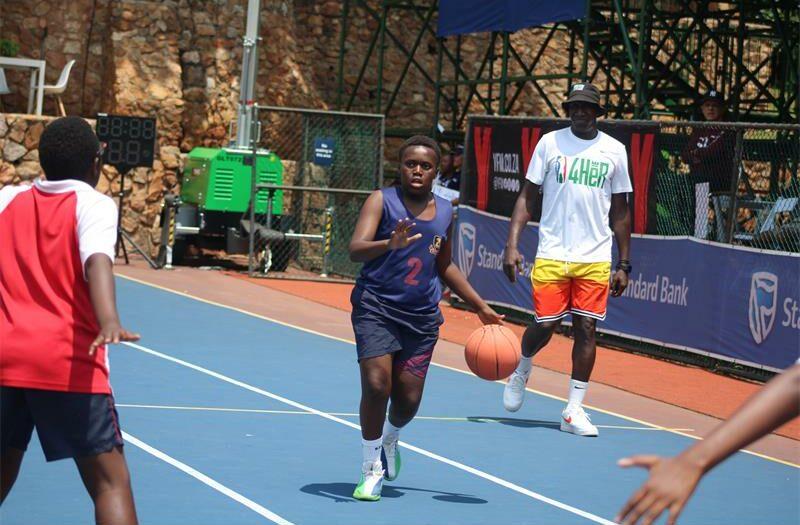
”St Boniface High School won the Frances Baard High School basketball championship after defeating Boys’ High School 41–33 in a competitive final at Kimberley Skate Plaza. Emmanuel High School secured third place, highlighting the contribution of school-level competition to basketball development in the Frances Baard district.”
St Boniface Triumph in Frances Baard Basketball Final as School Competition Highlights Northern Cape Talent
St Boniface High School emerged as the champions of the Frances Baard High School basketball competition after defeating Boys’ High School 41–33 in a closely contested final at Kimberley Skate Plaza. The victory, reported on 9 October 2026, represents a significant achievement for the school and places the spotlight on the role of school sport in developing basketball talent in South Africa’s Northern Cape province.
The final brought together two schools determined to secure the district title. Although the result ultimately favoured St Boniface, the eight-point margin reflected a competitive encounter in which both teams had to work hard to establish themselves. Emmanuel High School completed the tournament in third place, adding another achievement to the district’s school basketball programme.
The championship offers an opportunity to examine the importance of grassroots basketball, the development of young athletes, the role of schools in nurturing sporting talent and the potential for regional competitions to strengthen the wider South African basketball community.
A championship decided by determination
The meeting between St Boniface High School and Boys’ High School was the defining contest of the Frances Baard competition. Both teams reached the final with the opportunity to claim the championship, making the game an important occasion for their players, school communities and supporters.
St Boniface eventually secured a 41–33 victory. While the reported score confirms the outcome, detailed quarter-by-quarter statistics, individual scoring totals and technical breakdowns were not available in the source reviewed. Consequently, the result should not be used to make unsupported claims about particular players or specific tactical decisions.
Nevertheless, the final score establishes that St Boniface finished ahead in a competitive championship match. In basketball, a final requires teams to combine attacking execution, defensive discipline, communication and composure. Maintaining those qualities across a full game can be particularly challenging for school teams, whose players are still developing their physical abilities and understanding of the sport.
For St Boniface, winning the final provides a tangible reward for the preparation and commitment required to compete successfully. For Boys’ High School, finishing second offers a foundation on which the team can build as it continues developing its players and preparing for future tournaments.
Why school basketball matters
School basketball provides young people with an organised environment in which to learn the fundamentals of competition. Players develop ball-handling skills, passing accuracy, shooting technique, defensive positioning and an understanding of how to work within a team.
However, the benefits extend beyond the court. Basketball encourages communication, responsibility, perseverance and respect for opponents. Players must make decisions quickly, respond to changing situations and understand that individual performance contributes to a collective objective.
Competitions such as the Frances Baard championship also give students opportunities to represent their schools in front of fellow learners, teachers, families and other community members. These experiences can strengthen school pride and encourage greater participation in extracurricular activities.
For young athletes, a tournament final can become a valuable learning experience regardless of the result. Winning provides motivation, while defeat can reveal areas that require additional practice. Both outcomes can contribute to long-term improvement when players receive constructive coaching and continued opportunities to compete.
St Boniface’s victory therefore has significance beyond the final score. It demonstrates the value of creating competitive opportunities where school players can test their abilities and experience the demands of organised basketball.
Kimberley provides a stage for local sporting talent
Kimberley, the capital of the Northern Cape, served as the setting for the final at Kimberley Skate Plaza. Hosting school basketball competitions in accessible community venues can help connect sporting activities with the people who live in the surrounding area.
Local venues provide a place where players can demonstrate their abilities and supporters can follow school teams. They can also help raise the visibility of basketball in communities where the sport competes with football, rugby, cricket and other popular activities for attention and resources.
A successful school competition can encourage learners who have not previously considered basketball to participate. Watching peers compete may help newcomers recognise that the sport is accessible through school programmes and local clubs.
The reported championship also gives the Frances Baard basketball community a concrete achievement around which to build future activities. Continued competitions, coaching opportunities and school partnerships could help convert the excitement surrounding a final into sustained participation throughout the year.
However, long-term progress depends on more than a single tournament. Regular training, suitable facilities, access to equipment and consistent competition are essential if young players are to improve and remain involved.
Emmanuel High School secures third place
While attention naturally focused on the finalists, Emmanuel High School also finished the competition with a notable result by securing third place. Its position confirms that the tournament involved competitive school basketball beyond the championship matchup.
Third place can provide an important benchmark for a developing team. It recognises the ability to compete within the tournament while giving players a clear incentive to pursue further improvement.
For coaches, tournament participation can reveal strengths and weaknesses that may not be obvious during routine training sessions. Players experience different opponents, unfamiliar defensive approaches and situations in which they must adjust their decisions under pressure.
A structured review after the competition could help Emmanuel identify the skills that need attention before its next fixtures. Similar reviews would benefit both St Boniface and Boys’ High School, ensuring that the lessons from the championship contribute to future performance.
The three schools’ finishes also offer an opportunity for the local basketball community to recognise the players and teams involved, rather than concentrating exclusively on the champions.
Coaching and preparation remain essential
School basketball development requires a combination of technical instruction, physical preparation and tactical understanding. Coaches help players learn how to move without the ball, create passing opportunities, defend responsibly and select appropriate shots.
Teamwork is especially important because basketball rarely rewards isolated individual efforts over the course of an entire game. Players need to recognise their teammates’ movements, communicate effectively and understand their roles in both attack and defence.
Preparation can also include conditioning, mobility, recovery and injury prevention. Young athletes need age-appropriate training programmes that support their development without placing unnecessary physical demands on them.
Equally important is the mental side of competition. Players must learn to recover from mistakes, remain composed after conceding points and maintain concentration during close games. These abilities can influence how effectively a team responds when momentum changes.
Although the available report does not provide details of St Boniface’s training programme, the championship result gives the school an opportunity to celebrate its achievement and continue investing in the structures that support player development.
Building stronger pathways for young players
One of the wider questions raised by school championships is how promising players can progress beyond local competition. South Africa needs sustainable pathways that connect school teams with community clubs, provincial structures and higher levels of organised basketball.
Such pathways allow talented players to receive more advanced coaching and experience stronger opposition as their skills develop. They can also help athletes understand the commitment required to pursue basketball while maintaining their education.
Schools, clubs, provincial associations and basketball administrators each have a potential role in creating these opportunities. Collaboration can help identify promising players, coordinate competitions and improve access to qualified coaches.
Talent identification should also account for late developers and players who have limited access to specialised facilities. A single tournament cannot provide a complete assessment of an athlete’s potential. Consistent performance, willingness to learn, teamwork and improvement over time are equally valuable considerations.
The Frances Baard competition provides a local example of why these structures matter. When schools compete in organised tournaments, they create opportunities for young athletes to gain experience and demonstrate their abilities in a meaningful sporting environment.
Keeping participation inclusive
Basketball development is strongest when participation is accessible to learners from different backgrounds and when opportunities extend to both boys’ and girls’ teams. Schools can contribute by encouraging broad participation, supporting beginners and ensuring that selection and training practices are fair.
Facilities and equipment remain important considerations. Access to safe playing surfaces, basketballs, hoops and appropriate training space can determine how regularly learners practise. Partnerships with community organisations and local businesses may help schools address some of these needs.
Academic commitments must also remain central to school sport. Young athletes benefit when coaches and teachers communicate about schedules, workload and attendance, allowing students to balance training with their studies.
Moreover, a positive sporting culture should reward respect, discipline and fair play alongside victories. Championship success is worth celebrating, but the broader purpose of school basketball includes helping learners develop skills and relationships that remain valuable outside sport.
What the result means for South African basketball
South African basketball benefits from attention at professional, provincial, community and school levels. National competitions attract interest in elite performance, while grassroots tournaments create the foundations on which future players and supporters can emerge.
The Basketball National League, for example, provides a professional competition, while school tournaments introduce younger athletes to organised basketball. These different levels serve distinct purposes but can contribute to a stronger sporting ecosystem when development pathways connect them.
The Frances Baard championship is a local school competition, not evidence on its own of a nationwide change in basketball participation. Nevertheless, reporting its outcome brings attention to the schools and communities that help sustain the game beyond major professional events.
Greater visibility may encourage schools to establish teams, parents to support participation and local organisations to consider partnerships that improve access to facilities and coaching. These outcomes would require continued effort and investment rather than following automatically from a single championship.
For now, St Boniface has earned the immediate recognition associated with winning the final. Boys’ High School can build on its runner-up finish, while Emmanuel High School has a third-place result to carry into its next phase of development.
Conclusion: A victory worth celebrating
St Boniface High School’s 41–33 victory over Boys’ High School secured the Frances Baard High School basketball championship at Kimberley Skate Plaza. Emmanuel High School finished third, completing the reported top three in the district competition.
The result gives St Boniface a reason to celebrate while highlighting the wider value of school basketball. Competitions provide young athletes with opportunities to test their skills, learn teamwork, develop resilience and represent their schools.
The next challenge is to sustain that progress. Regular fixtures, effective coaching, accessible facilities and pathways into club basketball can help ensure that school competitions contribute to long-term player development.
For the Frances Baard district, the championship is both a sporting achievement and a reminder of the potential within school communities. As young players continue learning and competing, tournaments such as this can help strengthen the foundations of basketball in the Northern Cape and contribute to the sport’s future in South Africa.



