




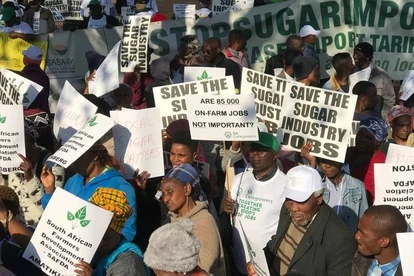
“Tongaat Hulett has successfully avoided liquidation through an IDC-Vision agreement, safeguarding 250,000 jobs and securing the livelihoods of over a million South Africans. The company is now calling for stricter measures against sugar imports, which it argues are undermining local producers and threatening long-term industry sustainability.”
Tongaat Hulett, one of South Africa’s most prominent agribusiness firms, has narrowly avoided liquidation in a dramatic turnaround that carries significant consequences for the country’s economy, labor market, and trade policy. The announcement, made on June 18, 2026, confirmed that an agreement between the Industrial Development Corporation (IDC) and Vision Group has secured the company’s future, preserving 250,000 jobs and supporting the livelihoods of more than 1 million South Africans who depend directly or indirectly on the sugar industry.
The sugar sector has long been a cornerstone of South Africa’s agricultural economy, but in recent years it has faced mounting challenges. Chief among these are cheap sugar imports, particularly from countries with lower production costs and government subsidies. Tongaat Hulett has argued that these imports distort the market, erode local competitiveness, and threaten the survival of domestic producers. The company’s call for a crackdown on sugar imports is not merely a protectionist stance; it reflects broader concerns about food security, rural employment, and industrial resilience.
The IDC-Vision agreement represents a lifeline for Tongaat Hulett, which has been grappling with debt, mismanagement scandals, and declining profitability. By stepping in, the IDC has demonstrated the government’s willingness to intervene in strategic industries to prevent systemic collapse. This intervention echoes past state-led rescues in sectors such as steel and energy, underscoring the importance of safeguarding industries that underpin rural economies and export potential.
From a labor perspective, the preservation of 250,000 jobs is monumental. South Africa’s unemployment rate remains stubbornly high, hovering around 32%, and the loss of such a large employer would have been catastrophic. Beyond direct employment, the sugar industry sustains smallholder farmers, transport operators, and suppliers, creating a multiplier effect across the economy. The agreement thus provides not only financial stability for Tongaat Hulett but also social stability for communities reliant on sugar production.
Economically, the deal signals cautious optimism. Analysts suggest that while Tongaat Hulett’s immediate crisis has been averted, the long-term viability of the sugar industry hinges on structural reforms. These include modernizing production methods, diversifying product lines (such as biofuels and specialty sugars), and strengthening trade protections. The company’s insistence on curbing imports highlights the tension between free trade principles and domestic industry protection—a debate that resonates across multiple sectors in South Africa.
Politically, the development comes at a time when the government is under pressure to demonstrate effective economic stewardship. President Cyril Ramaphosa’s administration has faced criticism for sluggish growth and policy uncertainty. The IDC’s intervention in Tongaat Hulett may be framed as evidence of proactive governance, but it also raises questions about the sustainability of state bailouts. Critics argue that without robust corporate governance reforms, such rescues risk perpetuating inefficiency and dependency.
Looking ahead, Tongaat Hulett’s survival offers a window of opportunity. If the company can leverage this reprieve to restructure operations, enhance competitiveness, and align with global sustainability trends, it may yet reclaim its position as a leader in African agribusiness. However, failure to address underlying inefficiencies could see the company back in crisis within a few years.
In conclusion, Tongaat Hulett’s escape from liquidation is more than a corporate turnaround—it is a pivotal moment for South Africa’s Biz-Econ landscape. It underscores the fragility of key industries, the importance of state intervention, and the ongoing struggle to balance global trade pressures with domestic economic priorities. For workers, farmers, and policymakers alike, the agreement represents both relief and responsibility: relief that disaster has been averted, and responsibility to ensure that the sugar industry evolves to meet future challenges.



