




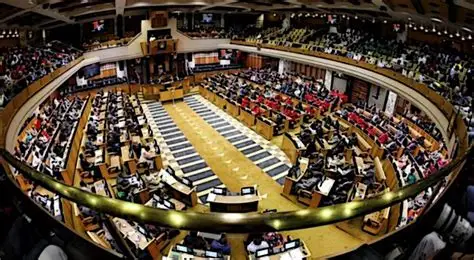
“South Africa’s Parliament is grappling with the fallout of Treasury’s decision to withhold municipal transfers, prompting urgent calls from the Cooperative Governance and Traditional Affairs (COGTA) Committee for compliance and reform. The move has ignited a broader legislative debate on accountability, service delivery, and the balance of power between national and local government.”
On July 9, 2026, South Africa’s legislative agenda was dominated by a critical governance crisis: the National Treasury’s withholding of transfers to municipalities due to non-compliance with financial regulations. This decision has triggered intense debate in Parliament, with the COGTA Committee demanding urgent corrective measures. The issue underscores the fragile balance between fiscal discipline and service delivery in South Africa’s evolving political landscape.
Background
Municipal transfers are a cornerstone of South Africa’s governance system, enabling local governments to deliver essential services such as water, sanitation, and housing. Treasury’s decision to freeze funds was based on widespread non-compliance with reporting requirements and financial mismanagement. This action, though legally justified, has immediate consequences for millions of South Africans dependent on municipal services.
Legislative Response
The COGTA Committee issued a strong statement urging municipalities to comply with Treasury regulations. Members emphasized that withholding funds, while necessary to enforce accountability, risks exacerbating service delivery failures. Parliamentarians debated whether stricter oversight mechanisms or legislative amendments are required to prevent future crises.
Political Context
The funding freeze comes at a politically sensitive time, with the Government of National Unity (GNU) under pressure to demonstrate effective governance ahead of the 2026 Local Government Elections. Smaller coalition partners and opposition parties have seized on the issue, framing it as evidence of systemic dysfunction. The debate reflects broader tensions within the GNU, where fiscal discipline often clashes with populist demands for expanded service delivery.
Impact on Municipalities
Municipalities across South Africa face immediate operational challenges. Without transfers, many cannot pay staff salaries or maintain infrastructure. The crisis highlights structural weaknesses in local governance, including inadequate financial management capacity and corruption. Analysts warn that prolonged funding freezes could lead to service delivery protests, further destabilizing the political environment.
Oversight and Reform
Parliament is now considering legislative reforms to strengthen municipal accountability. Proposals include:
- Enhanced reporting requirements for municipalities.
- Automatic sanctions for non-compliance.
- Expanded powers for the Auditor-General to intervene directly.
- Capacity-building programs to improve municipal financial management.
These reforms aim to balance fiscal discipline with the constitutional mandate to deliver services equitably.
Judicial Dimension
Legal experts note that municipalities may challenge Treasury’s decision in court, arguing that withholding funds violates constitutional obligations to ensure service delivery. The judiciary has increasingly become a “third actor” in South Africa’s legislative process, mediating disputes between Parliament, Treasury, and local governments.
Public Reaction
Civil society organizations have expressed concern that ordinary citizens will bear the brunt of the funding freeze. Advocacy groups are calling for Parliament to prioritize service delivery over punitive measures. At the same time, watchdog organizations support Treasury’s stance, arguing that financial mismanagement must be addressed to restore public trust.
International Perspective
South Africa’s handling of municipal funding is being closely watched by international investors and development partners. The crisis raises questions about the country’s fiscal stability and governance capacity. However, Treasury’s firm stance on compliance may reassure investors that fiscal discipline is being enforced.
Conclusion
The withholding of municipal transfers has thrust legislative oversight into the spotlight, forcing Parliament to confront the tension between accountability and service delivery. The outcome of this debate will shape South Africa’s governance trajectory ahead of the 2026 elections. Whether through legislative reform, judicial intervention, or political compromise, the resolution of this crisis will be a defining moment for the GNU and the country’s democratic institutions.



