




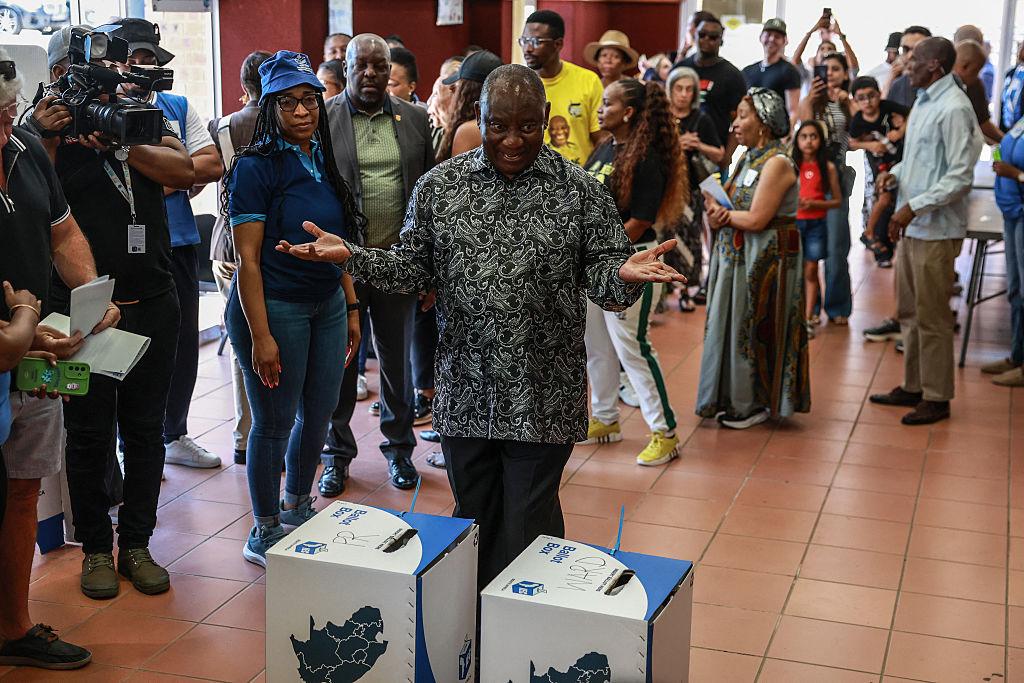
“South Africa’s 2026 local government elections have significantly weakened the African National Congress, accelerating the country’s transition towards coalition-based municipal governance as voters increasingly demand accountability, reliable public services and improved government performance. The results have strengthened opposition parties and smaller political formations, placing coalition negotiations, municipal policy implementation and public-service delivery at the centre of the country’s political and administrative future.”
South African Voters Rebuke ANC, Accelerating Shift to Coalition Politics
Election Results Signal Major Policy Changes as Coalition Negotiations Reshape Municipal Governance
JOHANNESBURG, 9 November 2026 — South Africa is entering a significant political and policy transition following the 2026 local government elections, which delivered a historic setback to the African National Congress (ANC) and strengthened opposition parties across several major municipalities. The results have intensified demands for accountable leadership, effective municipal administration and improved public-service delivery, while placing coalition negotiations at the centre of the country’s immediate governance agenda.
The election outcome represents more than a change in political representation. It signals an increasingly competitive democratic environment in which voters are becoming less willing to maintain traditional political loyalties when confronted with persistent problems involving water shortages, electricity interruptions, inadequate infrastructure, corruption allegations and municipal financial management.
According to Reuters reporting published on Monday, November 9, the ANC received less than one-third of the national vote in the November 4 local government elections. The result constitutes the party’s worst performance in local elections since the democratic transition, substantially weakening its bargaining position in municipalities where political parties must negotiate partnerships to establish governing majorities.
Electoral Results Reshape Municipal Policy
The election has substantially altered South Africa’s municipal political landscape. Although the ANC remains an important political force, it failed to secure outright control of major cities and finished behind opposition parties in several significant metropolitan areas.
The Democratic Alliance (DA) emerged as a stronger contender, finishing ahead of the ANC in Johannesburg and Tshwane. Meanwhile, uMkhonto weSizwe (MK), associated with former president Jacob Zuma, obtained the largest share of votes in eThekwini, which includes Durban.
These results illustrate the increasingly fragmented character of South African politics. Instead of a single dominant party controlling municipal administrations, several political organisations must negotiate agreements, establish governing coalitions and coordinate policy priorities.
The DA reportedly finished first in five of eight metropolitan areas, giving it greater flexibility when negotiating potential partnerships. Smaller political parties, meanwhile, could exercise considerable influence in municipalities where their representation determines whether a coalition achieves a majority.
The emerging political configuration could influence the priorities of municipal administrations, particularly concerning budgets, infrastructure investment, procurement oversight, employment practices and service-delivery programmes.
Coalition Negotiations Become a National Policy Priority
Coalition negotiations are expected to determine the composition of municipal governments during the coming weeks. According to Reuters, parties have approximately two weeks to negotiate agreements in municipalities where no organisation secured an outright majority.
These discussions will be particularly important in Johannesburg, South Africa’s commercial centre, where political parties must demonstrate that they can establish stable administrations capable of delivering practical improvements.
Coalition agreements frequently involve negotiations over executive responsibilities, mayoral positions, committee appointments and policy commitments. However, the significance of the current negotiations extends beyond political appointments.
Municipal coalition arrangements will determine how local governments approach infrastructure maintenance, housing development, electricity distribution, water management, waste collection and financial accountability.
Consequently, the quality of coalition agreements could directly affect residents’ experiences of government.
Civil society organisations have already warned that coalition negotiations must prioritise public interests rather than political bargaining alone. Reuters quoted representatives of the Budget Justice Coalition expressing concern that poorly designed agreements could produce unstable administrations and weaken accountability.
The challenge facing political parties is therefore to establish partnerships that are sufficiently stable to govern effectively while maintaining transparency and democratic accountability.
Public-Service Delivery Emerges as the Central Electoral Issue
The election results have reinforced the importance of municipal service delivery as a determining factor in political support.
Communities across South Africa have repeatedly expressed dissatisfaction with inadequate water services, unreliable electricity, neglected roads, waste-management problems and deteriorating public infrastructure.
The ANC itself acknowledged shortcomings following the election, including communities experiencing water shortages and failures in refuse collection. The party also recognised that municipal funds had not always been appropriately spent on public needs.
These admissions highlight a broader policy challenge: the relationship between government expenditure and measurable improvements in citizens’ living conditions.
Municipalities receive public resources to provide essential services, maintain infrastructure and support local economic development. When residents experience persistent failures despite government spending, questions arise concerning administrative capacity, procurement practices, financial oversight and accountability.
The electoral consequences suggest that voters increasingly expect political parties to demonstrate practical results.
For incoming municipal administrations, this creates pressure to establish measurable service-delivery targets, improve maintenance programmes, strengthen financial controls and communicate progress transparently.
The success of coalition governments may consequently depend less on political messaging and more on their ability to deliver reliable services.
Accountability and Transparency Under Renewed Pressure
The changing political landscape also presents opportunities to strengthen democratic accountability.
Competitive elections can encourage political organisations to improve governance practices because voters have greater opportunities to remove underperforming representatives.
Nevertheless, electoral competition alone does not guarantee institutional reform.
Municipal administrations must establish effective mechanisms for monitoring expenditure, investigating irregularities, preventing corruption and ensuring that procurement decisions serve legitimate public purposes.
Transparent budgets, independent oversight, accessible municipal information and credible complaints mechanisms are important components of effective local government.
Coalition governments may introduce stronger accountability arrangements by distributing responsibilities among multiple political organisations. However, fragmented leadership can also create disagreements over responsibility when programmes fail.
Clear coalition agreements and publicly available performance commitments could help address these risks.
Civil society organisations have therefore emphasised the importance of accountability, transparency and service delivery in the negotiations following the election.
Municipal Finance and Infrastructure Investment
Municipal financial management is another important policy area affected by the election.
Local governments must balance revenue collection, operational expenditure, infrastructure investment and maintenance obligations while responding to the needs of rapidly growing communities.
Financial weaknesses can undermine essential services even where municipalities possess substantial infrastructure assets.
For example, insufficient maintenance funding can contribute to deteriorating roads, water networks and electricity infrastructure. Poor revenue collection can also reduce municipalities’ capacity to finance operations and capital projects.
Coalition governments will need to assess municipal financial conditions carefully before introducing new spending commitments.
This includes reviewing expenditure priorities, strengthening revenue administration, improving procurement oversight and ensuring that infrastructure budgets are supported by realistic implementation plans.
The political transition could encourage municipalities to reconsider their spending priorities and place greater emphasis on measurable results.
However, meaningful improvements will require competent administrators, adequate funding and consistent political support.
Implications for Economic Development and Investment
Municipal governance is closely connected to South Africa’s broader economic development prospects.
Businesses depend on reliable electricity, water, transportation infrastructure, waste management and predictable administrative processes.
When municipal services deteriorate, businesses face higher operating costs, reduced productivity and greater uncertainty.
Improved municipal administration could therefore support investment, employment creation and local economic activity.
Coalition governments may also influence economic development strategies through decisions involving industrial infrastructure, business licensing, urban planning, transport systems and local procurement.
Johannesburg’s coalition negotiations will attract particular attention because of the city’s economic significance.
The commercial capital requires effective coordination between municipal leadership, infrastructure providers, businesses and communities.
Political stability alone will not guarantee economic recovery, but credible administration and reliable public services can create a more supportive environment for investment.
The election therefore presents municipal leaders with an opportunity to connect political reform with economic performance.
ANC Leadership Challenges and National Political Consequences
The electoral setback also has implications for the ANC’s internal political direction.
The party faces questions concerning leadership, organisational renewal and its ability to rebuild public confidence.
Reuters reported that the election result could influence the ANC’s 2027 leadership contest, particularly as President Cyril Ramaphosa is expected to step aside as party leader and the succession question remains unresolved.
The ANC’s declining electoral support creates pressure on its leadership to examine organisational weaknesses and improve its political responsiveness.
Internal divisions could complicate efforts to introduce reforms, particularly if competing factions disagree over leadership appointments, policy priorities or the appropriate response to electoral losses.
The party’s future competitiveness will depend partly on whether it can translate its acknowledgement of service-delivery failures into credible administrative and organisational improvements.
At the same time, opposition parties must demonstrate that electoral gains can translate into successful governing performance.
The transition therefore creates challenges for both established political organisations and emerging alternatives.
Democratic Participation and Changing Voter Expectations
The results also indicate a changing relationship between South African citizens and political parties.
Voters increasingly appear prepared to evaluate political organisations according to their performance rather than relying exclusively on historical affiliations.
Reuters quoted Wade Manning of Defend Our Democracy describing the outcome as evidence of democratic maturity and declining acceptance of unconditional political support.
This development could strengthen electoral accountability over time.
However, democratic participation requires more than voting. Citizens also need opportunities to participate in municipal planning, scrutinise budgets, raise service-delivery concerns and monitor government commitments.
Community organisations, civic associations and independent oversight institutions can play important roles in maintaining accountability between elections.
Political parties that establish meaningful engagement with communities may be better positioned to understand local priorities and respond effectively.
The Road Ahead for South African Municipal Governance
The coming weeks will be critical in determining whether the electoral transition produces stable municipal administrations.
Coalition partners must negotiate agreements that establish clear governing responsibilities, practical policy priorities and mechanisms for resolving disputes.
Municipal administrations will also need to address immediate service-delivery concerns while developing longer-term infrastructure and economic development strategies.
The most important indicators of success will include improvements in water reliability, electricity infrastructure, waste collection, municipal financial management and public accountability.
South Africa’s political transition provides an opportunity to strengthen democratic competition and improve the relationship between government and citizens.
However, the election results alone cannot resolve the country’s municipal challenges.
Political organisations must demonstrate that they can govern responsibly, cooperate across party lines and use public resources effectively.
Ultimately, the significance of the 2026 local government elections will depend on whether the new political environment delivers meaningful improvements in residents’ daily lives.
Conclusion: South Africa’s municipal elections have accelerated the transition towards coalition politics and intensified demands for accountable government. The resulting policy challenge is to transform electoral competition into stable administration, stronger public institutions and better services. For communities, businesses and political organisations alike, the coming months will provide an important test of whether democratic change can produce tangible governance improvements.



