




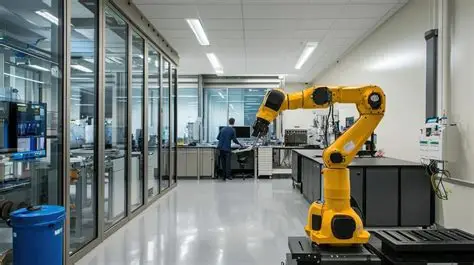
“The University of Johannesburg has introduced Africa’s first autonomous mining robot, engineered to navigate hazardous underground environments and reduce risks to human workers. This development positions South Africa as a leader in robotics innovation for resource extraction, with potential global applications.”
South Africa’s mining industry has long been both a cornerstone of its economy and a source of significant safety challenges. With deep-level mines stretching several kilometers underground, workers face risks ranging from rockfalls to toxic gas exposure. On June 25, 2026, the University of Johannesburg announced a groundbreaking solution: Africa’s first autonomous mining robot. This innovation represents a convergence of robotics, artificial intelligence, and industrial engineering aimed at reshaping the future of mining.
Background: Mining and Safety Challenges
Mining contributes nearly 8% of South Africa’s GDP and employs hundreds of thousands of workers. However, the industry has historically struggled with safety. According to the Minerals Council South Africa, over 50 fatalities were recorded in 2025 due to underground accidents. The new autonomous mining robot is designed to address these challenges by performing tasks traditionally requiring human presence in dangerous zones.
Technical Features of the Robot
The robot, named UJ-MinerBot, integrates advanced sensors, AI-driven navigation, and modular arms capable of drilling, sampling, and transporting materials. Key features include:
- LIDAR-based mapping for real-time underground navigation.
- Thermal and gas sensors to detect hazardous conditions.
- AI algorithms for autonomous decision-making in complex environments.
- Remote monitoring capabilities, allowing operators to oversee operations from surface-level control rooms.
These features make UJ-MinerBot not just a tool but a potential game-changer in mining automation.
Economic and Social Impact
The introduction of autonomous robotics in mining could significantly reduce operational costs. Analysts estimate that automation could cut labor-related expenses by 15–20% while improving productivity. More importantly, the robot is expected to reduce fatalities and injuries, addressing one of the industry’s most pressing concerns.
For workers, this shift raises questions about employment. While some fear job losses, experts argue that automation will create new roles in robotics maintenance, programming, and oversight. The University of Johannesburg has already announced plans to establish a Robotics Training Centre to reskill miners into technical positions.
South Africa’s Position in Global Robotics
Globally, countries like Australia and Canada have pioneered mining automation. South Africa’s entry into this field signals its intent to compete on the world stage. By leveraging robotics, the country could attract foreign investment and partnerships, particularly in resource technology.
The breakthrough also aligns with South Africa’s broader Sci-Tech innovation agenda, which emphasizes AI, robotics, and sustainable industry practices. Government officials have praised the project, noting its potential to enhance both economic resilience and worker safety.
Environmental Considerations
Beyond safety and efficiency, the robot could contribute to more sustainable mining practices. Its precision drilling reduces waste, while its sensors help monitor environmental conditions underground. This aligns with global calls for greener mining operations, particularly as demand for critical minerals like platinum and rare earths continues to rise.
Expert Opinions
Dr. Thabo Mokoena, lead engineer on the project, stated: “UJ-MinerBot is not about replacing workers but about protecting them. Our vision is a future where robots handle the most dangerous tasks, while humans focus on oversight and innovation.”
Industry analysts echo this sentiment, suggesting that South Africa’s mining sector could become a model for balancing automation with social responsibility.
Future Prospects
The University of Johannesburg plans to deploy pilot versions of UJ-MinerBot in two major mines by late 2026. If successful, widespread adoption could follow, transforming mining operations across the country. There are also discussions about exporting the technology to other African nations facing similar mining challenges.
Conclusion
The launch of Africa’s first autonomous mining robot marks a historic milestone for South Africa. It demonstrates the country’s ability to innovate in robotics while addressing critical safety and economic issues. As UJ-MinerBot begins its journey underground, it symbolizes not just technological progress but a commitment to safeguarding human lives in one of the world’s most dangerous industries.



