




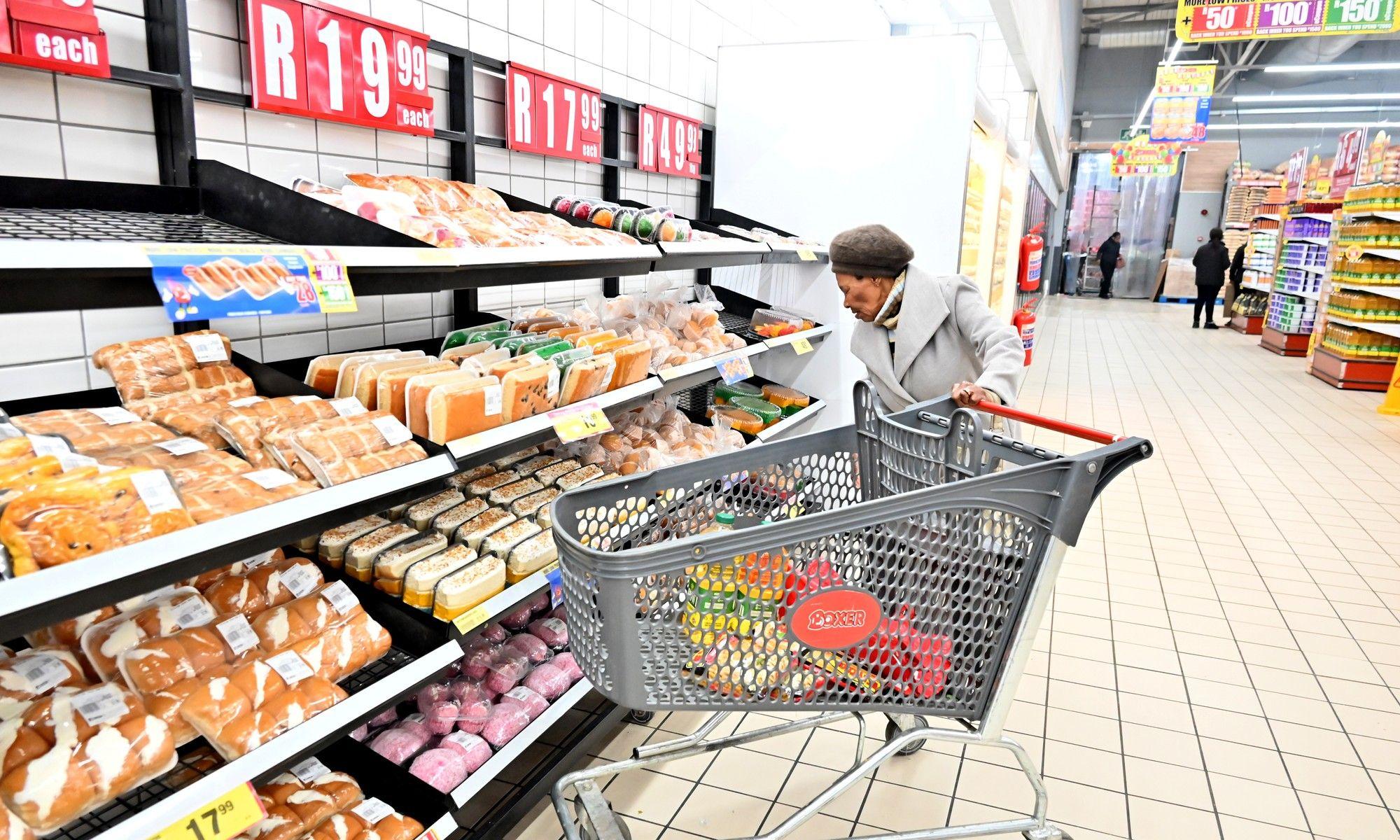
“South African households, particularly low-income families, are facing increasing pressure as the cost of a basic food basket rises while transport, electricity and borrowing costs absorb a large share of their incomes. Reporting by Business Day highlights the widening gap between the cost of nutritious food and what workers can afford after meeting essential expenses.”
Rising Food Prices and Household Costs Intensify Pressure on South African Consumers
South African households are facing growing financial pressure as the cost of essential goods and services continues to challenge their purchasing power. Rising food expenses, transport costs, electricity bills and borrowing costs are forcing consumers to make difficult decisions about how they allocate their limited incomes. Recent reporting by Business Day highlights the widening gap between the cost of a nutritious household food basket and the money available to low-income workers after essential expenses have been paid.
The issue illustrates a central principle of microeconomics: households have limited resources and must decide how best to distribute those resources among competing needs. When the prices of necessities increase faster than disposable income, consumers are left with fewer opportunities to purchase non-essential products, save money or invest in their future. These decisions also affect businesses, employment and demand throughout the wider South African economy.
Rising food costs expose household affordability challenges
Food affordability remains a significant concern for low-income households. According to Business Day’s report published on 1 October 2026, the average cost of a basic food basket increased by 0.2% to R5,488.06 between the August and September reporting periods. The basket’s cost was also approximately 2% higher than a year earlier.
The Pietermaritzburg Economic Justice and Dignity Group monitors the prices of essential food products across supermarkets and butcheries in several South African cities and towns. Its research provides an indication of how changing prices affect the everyday purchasing decisions of households.
More concerning is the gap between the cost of a basic food basket and the cost of a nutritionally adequate basket. The report placed the latter at R6,655.29 in September, leaving a difference of R1,167.23 between the two measures.
This difference highlights an important distinction between purchasing food and being able to afford a balanced diet. A household may obtain enough food to meet immediate needs while still struggling to purchase the variety and quantity of products required for adequate nutrition.
For families living on low incomes, higher prices can therefore affect not only consumption levels but also food quality. Households may substitute more expensive products with cheaper alternatives, reduce portion sizes or postpone purchases of other necessities.
Limited income forces difficult consumer choices
Microeconomics examines how individuals and households make decisions when resources are scarce. In South Africa, the relationship between wages and essential expenditure demonstrates this principle clearly.
Business Day reported that the national minimum wage used in the affordability calculations was R30.23 an hour, equivalent to approximately R5,078.64 for an average 21-day working month under the report’s assumptions.
The affordability analysis estimated that electricity and transport would consume R3,279.45 of that monthly amount in September. This represented approximately 64.6% of the worker’s wage, leaving R1,799.19 for food and other expenses.
For a household supporting several people, this remaining amount creates substantial constraints. The money must cover groceries and potentially other necessities, including school-related expenses, personal care, clothing, healthcare and unexpected emergencies.
The figures demonstrate the concept of opportunity cost. When a worker spends a large proportion of income travelling to work and paying for electricity, that money cannot also be spent on food, education or savings. Choosing one expenditure necessarily limits the ability to finance another.
Consequently, higher essential costs can reduce household welfare even when a worker remains employed. Employment provides income, but the purchasing power of that income determines the quantity and quality of goods and services the household can obtain.
Real wages and purchasing power
Nominal wages represent the amount of money a worker receives, whereas real wages measure what that income can purchase after accounting for price changes.
Business Day reported that PayInc’s net salary index, which tracks the average nominal net monthly salaries of approximately 2.1 million people, declined by 0.1% between July and August 2026 to R21,622. Although the index remained 1.9% above its level a year earlier, the inflation-adjusted measure showed a weaker position.
The report placed the real salary measure at R20,164 and described a 2.6% year-on-year pull-back in August. This suggests that increases in nominal earnings did not necessarily translate into stronger purchasing power.
For consumers, the distinction is critical. A salary increase may appear positive on paper, but its practical benefit depends on whether it exceeds the increase in the prices of goods and services the household buys.
When real income declines, consumers often adjust their spending patterns. They may switch supermarkets, purchase products in smaller quantities, reduce restaurant visits or postpone buying appliances and clothing. These responses are examples of demand adjustment: households react to changes in prices and purchasing power by changing what they buy.
The impact is not evenly distributed. Households with substantial savings may absorb temporary price increases more easily than households that spend nearly all their earnings on necessities.
Fuel costs and the wider price of living
Food prices do not operate independently of other household expenses. Fuel prices influence the cost of transporting agricultural products, delivering supermarket stock and moving workers between their homes and workplaces.
In its October 2026 monetary policy review, the South African Reserve Bank highlighted the effects of global energy disruptions on inflation and production costs. The Bank also warned about risks associated with food prices and the possibility that temporary cost increases could become embedded in inflation expectations.
Business Day’s household affordability report linked rising costs and interest-rate increases to pressure on disposable income. When transport, electricity and food become more expensive simultaneously, households have fewer opportunities to compensate by reducing just one category of expenditure.
This relationship illustrates cost transmission. An increase in the cost of an input, such as fuel, can affect businesses throughout a supply chain. Producers, distributors and retailers may face higher operating expenses, some of which may eventually be reflected in the prices paid by consumers.
However, the extent of this pass-through depends on competition, productivity, demand conditions and businesses’ ability to absorb higher costs. Some firms may raise prices, while others may accept lower profit margins or seek efficiencies to retain customers.
The consequences are particularly important for lower-income consumers because necessities occupy a large share of their budgets.
Retail competition and consumer behaviour
Retail competition can influence how effectively consumers respond to rising living costs. When several retailers sell comparable products, shoppers can compare prices and move towards businesses offering better value.
A separate report published by BusinessTech on 8 October 2026 identified Mtubatuba in KwaZulu-Natal as the lowest-cost location among the areas compared for a 44-item household food basket in September. The reported basket cost was R5,232.34, compared with higher totals in several other locations. <Cite refs={[“turn102340view2”]}/>
This comparison illustrates how geographical differences can affect the amount households pay for similar necessities. Retail pricing, local market conditions, distribution costs and the availability of particular products may contribute to differences between locations.
Nevertheless, a lower basket price does not automatically mean that every household in that area is better off. Income levels, employment opportunities, transport expenses and access to shops also determine affordability.
For example, travelling a long distance to purchase cheaper groceries may eliminate the savings through additional transport expenditure. Consumers must therefore consider the total cost of shopping rather than comparing shelf prices alone.
Retailers, meanwhile, face a balancing act. Lower prices may attract more customers and increase sales volumes, but businesses must still cover wages, rent, distribution and other operating expenses. Competition can encourage efficiency and better value, although the outcome depends on how effectively customers can compare alternatives and how many realistic choices are available.
Interest rates and household budgets
Interest rates also influence microeconomic decisions. When borrowing becomes more expensive, households with mortgages, vehicle finance, credit agreements or other variable-rate debt may have less disposable income available for everyday purchases.
Business Day reported that the Reserve Bank had increased interest rates by a cumulative 50 basis points during 2026 at the time of its 1 October article. The Bank’s subsequent October monetary policy review described continuing inflation risks arising from global energy disruptions and other potential price pressures.
Higher interest rates can help restrain inflation by reducing borrowing and spending demand. However, the adjustment can create short-term difficulties for indebted consumers and businesses.
A household facing higher loan repayments may cut discretionary expenditure, while a small retailer may postpone investment because financing equipment or expanding operations has become more expensive.
This creates a trade-off for economic policymakers. Containing persistent inflation helps protect purchasing power over time, but higher borrowing costs can weaken spending and economic activity in the near term.
The eventual effects depend on how inflation, wages, credit conditions and consumer confidence evolve.
Consequences for small businesses and employment
Household affordability pressures can spread beyond individual families. Low-income consumers often spend much of their income locally on groceries, transport, personal services and other necessities. When their budgets tighten, businesses serving these customers may experience changes in sales volumes and product demand.
A neighbourhood retailer, for instance, might find that customers increasingly select lower-priced brands, buy smaller quantities or visit less frequently. Restaurants and clothing shops may face weaker demand as households prioritise essential purchases.
Small businesses can respond by reviewing stock levels, negotiating with suppliers, reducing waste and offering different product sizes or price points. However, their ability to respond is limited when input costs rise while customers become less willing or able to pay higher prices.
If businesses experience sustained declines in sales, they may delay recruitment, reduce working hours or reconsider expansion. Such responses can weaken household incomes further, creating a feedback loop between reduced purchasing power and lower business activity.
The scale of this effect cannot be determined from food-basket figures alone. Nevertheless, the relationship illustrates why household affordability is relevant to both consumer welfare and local economic performance.
Potential responses and policy considerations
Addressing affordability requires attention to both household incomes and the costs of essential goods and services.
First, transparent price monitoring can help identify products and markets where prices are rising unusually quickly. Competition authorities can investigate potential anti-competitive conduct when there is evidence supporting such concerns, while avoiding the assumption that every price increase reflects misconduct.
Second, improving competition and distribution efficiency may help reduce unnecessary costs. Reliable infrastructure, effective transport networks and lower barriers to market entry can support businesses in delivering products more efficiently.
Third, targeted assistance can help vulnerable households meet essential needs. Such interventions require careful design to ensure that eligible families receive support and that public resources are used effectively.
Fourth, sustainable income growth remains important. Better employment opportunities, improved productivity and skills development can strengthen households’ ability to manage changes in the cost of living.
Finally, monetary policy must balance the need to control inflation against the effects of interest rates on borrowing, consumption and investment. No single policy can immediately resolve every pressure affecting household budgets.
Conclusion
South Africa’s household affordability challenge demonstrates how closely consumer decisions are linked to prices, wages, competition and the cost of credit. Recent reporting shows that low-income workers can spend a large proportion of their earnings on transport and electricity while still struggling to afford a nutritionally adequate food basket.
From a microeconomic perspective, these pressures influence household choices, substitution between products, demand for retail goods and the financial decisions of small businesses. The effects extend beyond grocery shopping to nutrition, savings, employment and future economic opportunities.
Improving affordability will require a combination of stronger purchasing power, efficient markets, effective competition, reliable infrastructure and carefully targeted policy measures. Continued monitoring of food prices and household expenditure will be important in determining whether consumers begin to experience meaningful relief.
Ultimately, economic progress must be assessed not only through national growth figures but also through the ability of households to afford essential goods and services while maintaining a reasonable standard of living.



