




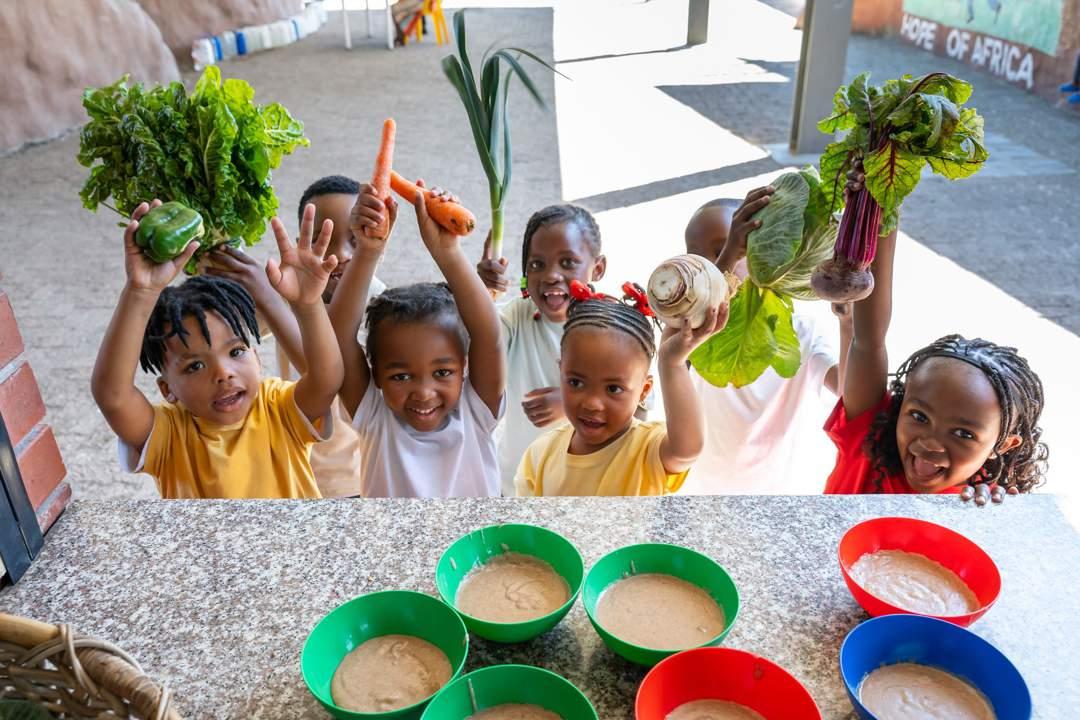
“South Africa faces an interconnected child nutrition crisis involving stunting, deficiencies in essential vitamins and minerals, and rising overweight and obesity, with poverty and unequal access to nutritious food contributing to the problem. Experts argue that addressing this challenge requires more than advising families to eat healthily: it also requires affordable nutritious food, stronger early-childhood support, effective public policies and better food environments.”
South Africa’s Child Nutrition Crisis: Why Access to Affordable, Nutritious Food Must Become a Public Health Priority
Introduction: A crisis beyond hunger
South Africa is confronting a complex nutrition challenge that extends beyond the question of whether families have enough food to eat. Increasing attention is being directed towards the quality, diversity and nutritional value of the food available to children, particularly those growing up in economically disadvantaged households. Recent reporting highlights a triple burden of malnutrition involving stunting, micronutrient deficiencies and overweight or obesity. These conditions can affect children at different stages of development and, in some households, may occur simultaneously.
The distinction between eating enough and receiving adequate nutrition is central to understanding the problem. A child may consume sufficient calories to feel full while still lacking iron, zinc, iodine, vitamin A and other nutrients essential for healthy development. Consequently, tackling childhood malnutrition requires coordinated action involving healthcare services, families, early childhood development centres, food producers, retailers and government.
The issue is therefore not only a medical concern. It is also a matter of social protection, household affordability, education and public policy.
Understanding the triple burden of malnutrition
The triple burden describes three interconnected nutritional problems: undernutrition, deficiencies in essential micronutrients, and excessive or unhealthy weight gain.
Undernutrition can result when children do not consistently receive enough energy and nutrients to support normal growth. One important indicator is stunting, which is identified when a child’s height or length is substantially below the expected range for their age and sex under recognised growth standards.
The National’s October 2026 report cites UNICEF data indicating that 29% of South African children under five were stunted during 2021–2023. It also reports that 23% of children live in severe food poverty, restricting their access to diverse and nutritious diets. These figures illustrate the scale of the challenge, although they refer to the periods specified rather than measurements collected on 20 October 2026.
Micronutrient deficiencies represent another dimension. Sometimes described as hidden hunger, they can exist even when a child appears adequately fed. Iron deficiency, for example, can contribute to anaemia and fatigue, while insufficient iodine can interfere with healthy brain development.
Meanwhile, overweight and obesity can emerge when diets contain excessive energy but lack sufficient nutritional diversity. These conditions can increase the risk of non-communicable diseases, including type 2 diabetes and cardiovascular disease.
These problems should not be treated as separate crises. They can emerge from the same circumstances: limited household income, food insecurity, inadequate dietary diversity and an environment in which less nutritious foods are often easier to obtain.
Poverty and the cost of healthy eating
Household affordability is central to South Africa’s nutrition challenge. Families must balance food purchases against expenses such as housing, electricity, transport, school requirements and healthcare. When budgets are stretched, the immediate priority is often to buy food that is filling and affordable.
However, a low-cost meal does not always supply the range of nutrients needed for childhood development. Diets dominated by refined carbohydrates, sugary drinks and nutrient-poor snacks can leave children short of essential vitamins and minerals, even when they consume enough calories.
The problem cannot be resolved simply by telling caregivers to purchase more fruit, vegetables, eggs or other nutrient-rich foods. Such advice must take account of local food prices, availability, cooking facilities, transport and the time required to prepare meals.
Public-health specialists interviewed by The National emphasise that healthy choices depend partly on whether households live in supportive food environments. The availability of nutritious, affordable and culturally appropriate foods can determine whether families are able to follow dietary guidance in practice.
Why the first 1,000 days matter
The period from conception until a child’s second birthday is particularly important for physical growth, brain development and immune function. During these first 1,000 days, the body develops foundations that influence health throughout childhood and later life.
Adequate maternal nutrition, appropriate antenatal care and access to recommended supplements can help protect the health of pregnant women and developing babies. After birth, breastfeeding support and the timely introduction of suitable complementary foods are important components of infant nutrition.
As children grow, their meals need to provide adequate energy, protein, healthy fats and essential micronutrients. When nutritional needs are not met consistently, children may experience poor growth, recurrent infections and developmental difficulties.
Nevertheless, early nutritional disadvantage does not determine an individual’s entire future. Appropriate healthcare, nutritious meals, responsive caregiving and opportunities for learning can improve children’s wellbeing and development.
Healthcare professionals therefore have an important role in identifying nutritional risks early. Caregivers should bring children’s Road to Health booklets to clinic appointments and ask health workers to explain growth measurements. Persistent feeding difficulties, frequent infections or concerning changes in growth should prompt professional assessment rather than assumptions based on appearance alone.
A practical response: Improving the nutritional value of everyday meals
Improving childhood nutrition does not always require expensive or unfamiliar ingredients. Depending on household circumstances, families may improve dietary diversity by combining familiar staple foods with affordable sources of protein, vegetables and fruit.
For example, maize meal porridge can be served with suitable additions such as mashed beans, lentils or eggs, depending on the child’s age and developmental readiness. Pilchards and other appropriate foods may also contribute protein and important nutrients. Seasonal vegetables and locally available fruit can help broaden the range of nutrients in the diet.
South Africa’s fortified maize meal and bread can contribute important micronutrients, while iodised salt can help prevent iodine deficiency when used appropriately. However, fortification is not a complete substitute for dietary diversity.
Infants and young children have specific feeding requirements, so food consistency, portion sizes and preparation methods must be age-appropriate. Caregivers should seek advice from healthcare workers when a child has feeding difficulties or suspected nutritional deficiencies.
Early childhood centres offer an opportunity for action
Early childhood development centres can play an important role because many young children receive meals while attending these facilities. However, providing balanced food requires more than knowing which foods children should eat. Centres also need practical menus, purchasing plans and sufficient funding.
A related South African initiative seeks to address this challenge through the Early Childhood Development Nationally Costed Nutrition Basket, developed by Zero2Five Trust, the Pietermaritzburg Economic Justice and Dignity Group and registered dietitian Philippa Barnard.
According to reporting published in October 2026, the initiative translates national nutrition guidance into a defined menu and estimates the cost of the ingredients needed to provide it. The basket includes foods such as fortified staples, vegetables, fruit, legumes, eggs, tinned fish and milk.
Its September 2026 pilot estimates put food ingredients at R7.35 per child per day for children aged 9–23 months and R13.06 for children aged two to six years. For an illustrative centre of 20 children attending for 20 days, the weighted average was R11.92 per child per day, with monthly ingredient costs estimated at R4,768.47.
The report compares this with the R9.60 daily food component of the 2026/27 ECD subsidy. Under the illustrated assumptions, the centre would face a monthly ingredient shortfall of approximately R928 if every child qualified for the subsidy, rising to about R2,080 at 70% coverage. These estimates exclude labour, fuel, water, cleaning supplies and equipment.
The initiative demonstrates why nutrition policy must be supported by realistic budgets. A nutritionally appropriate menu cannot be implemented consistently if centres lack the resources to buy the required ingredients.
Government policy and accountability
South Africa’s wider food security policies also face implementation challenges. A Daily Maverick investigation published on 9 October 2026 examined the National Food and Nutrition Security Plan covering 2018–2023 and reported shortcomings in coordination, funding and monitoring.
The article stated that only 11 of 65 strategic objectives were achieved by 2023. It also highlighted weaknesses in monitoring arrangements and difficulties assessing several intended outcomes because relevant data were unavailable. Government representatives offered explanations and disputed some of the evaluation’s interpretations.
These findings raise important questions about how national commitments translate into practical improvements for households and children. Effective policy requires clearly assigned responsibilities, reliable data, adequate funding and transparent reporting.
Nutrition also involves several departments. Health services can identify and treat nutritional problems, while social protection programmes can help vulnerable households afford food. Agricultural and economic policies influence food production, distribution and prices, and education services can support nutrition through early childhood programmes.
Better coordination could help ensure that these measures reinforce one another rather than operating as disconnected interventions.
Conclusion: Making nutritious food accessible
South Africa’s child nutrition challenge cannot be solved by individual families alone. Caregivers need practical information, but they also need access to affordable food, reliable healthcare and support when household resources are insufficient.
The triple burden of malnutrition highlights the need to address undernutrition, hidden hunger and unhealthy weight gain together. Strengthening maternal nutrition, improving early childhood meals, supporting appropriate infant feeding and monitoring children’s growth are important parts of the response.
The ECD Nutrition Basket offers one practical example of how nutritional requirements can be translated into measurable costs. Meanwhile, the reported weaknesses in the national food security plan underline the importance of sustained funding, coordination and accountability.
Ultimately, progress should be measured not simply by the number of policies announced or nutrition campaigns conducted, but by whether children can consistently access food that supports healthy growth and development.
South Africa’s central challenge is to make nutritious food a realistic daily option for every child, regardless of household income. Achieving that goal will require sustained cooperation between government, communities, healthcare professionals, food businesses and early childhood development providers.



