




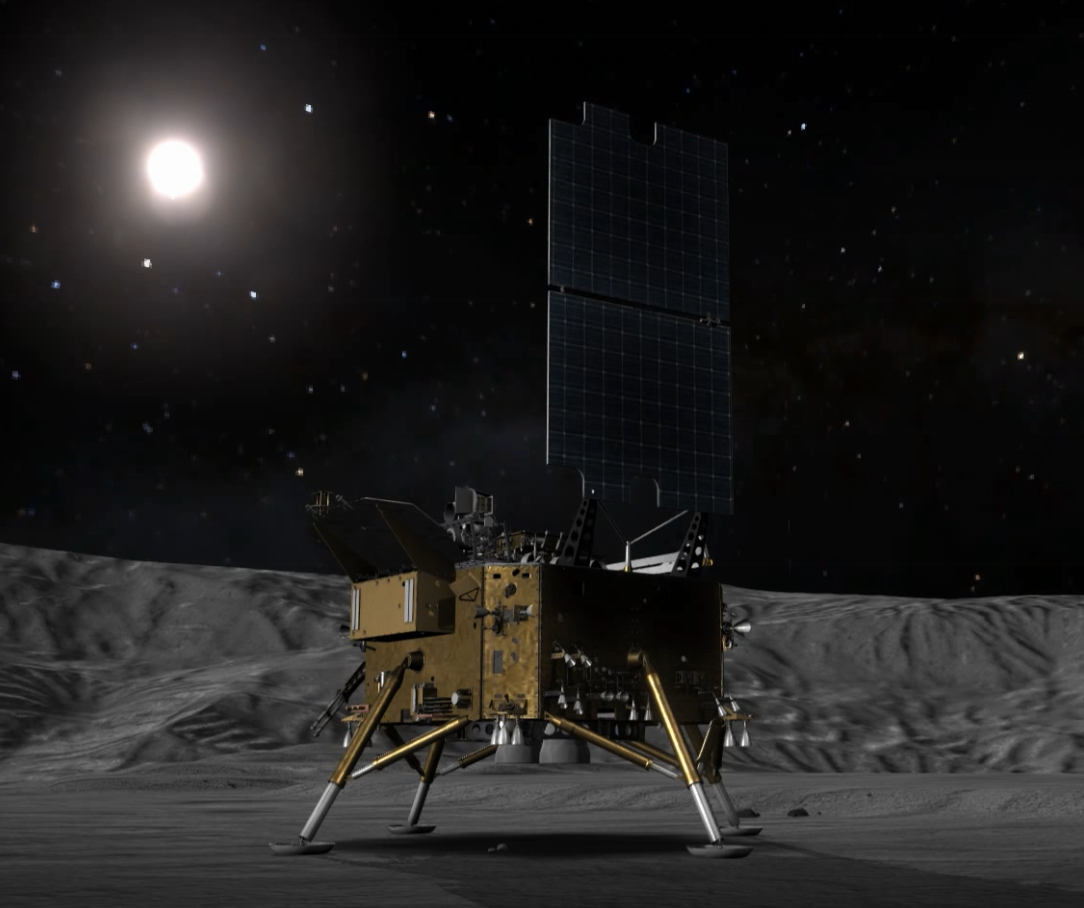
“South African researchers have unveiled plans to deploy three spherical probes, called Bounced African Low Lunar Spheres (B.A.L.L.S), on the Moon as part of the Africa2Moon mission aboard China’s Chang’e‑8 in 2029. These probes will form a miniature radio astronomy array to detect low‑frequency signals that Earth’s atmosphere blocks, marking a bold step in Africa’s space science ambitions.”
South Africa has once again positioned itself at the forefront of global astronomy and space exploration. The announcement of the Africa2Moon mission’s lunar radio astronomy experiment represents not only a technological milestone but also a symbolic leap for Africa’s participation in cutting-edge science. Scheduled to ride aboard China’s Chang’e‑8 lunar mission in 2029, the project will deploy three locally developed spherical probes—nicknamed “space balls”—on the Moon’s surface. These probes, formally called Bounced African Low Lunar Spheres (B.A.L.L.S), are designed to test a revolutionary approach to low-frequency radio astronomy.
Why the Moon?
Earth’s ionosphere blocks radio signals below 20 MHz, preventing astronomers from studying certain cosmic phenomena. The lunar surface, however, offers a pristine environment free from atmospheric interference and human-made radio noise. By placing instruments directly on the Moon, scientists can observe signals from the early universe, including the “cosmic dawn” when the first stars and galaxies formed.
The Technology
The B.A.L.L.S probes are small, spherical devices engineered to withstand the harsh lunar environment. Once deployed, they will bounce signals between each other to form a miniature radio astronomy array. This innovative design allows for scalable expansion: if successful, the long-term ambition is to deploy 55 antennas—one for each African nation—on the lunar surface.
Collaboration and Leadership
The Africa2Moon project is spearheaded by the Foundation for Space Development Africa, in collaboration with:
- South African Radio Astronomy Observatory (SARAO)
- South African National Space Agency (SANSA)
- Stellenbosch University
- Rhodes University
- University of KwaZulu-Natal (UKZN)
This consortium reflects a pan-African vision, combining academic expertise, government support, and international partnerships.
Strategic Importance
South Africa already hosts the MeerKAT telescope and is a key partner in the Square Kilometre Array (SKA), the world’s largest radio telescope project. The Africa2Moon mission complements these efforts by extending Africa’s reach beyond Earth. It signals a transition from being a host nation for global projects to becoming a driver of innovation in space science.
Global Context
China’s Chang’e‑8 mission is part of its ambitious lunar exploration program, which aims to establish a permanent lunar research station. By partnering with China, South Africa gains access to launch capabilities and lunar infrastructure while contributing unique scientific payloads. This collaboration underscores the growing importance of South-South cooperation in space exploration.
Economic and Educational Impact
Beyond science, the Africa2Moon mission has significant socio-economic implications:
- STEM Education: Inspiring young Africans to pursue careers in science and engineering.
- Innovation Ecosystem: Driving local industries in robotics, materials science, and telecommunications.
- Global Prestige: Positioning Africa as a contributor to humanity’s exploration of the cosmos.
Challenges Ahead
Deploying instruments on the Moon is no small feat. The probes must survive extreme temperature fluctuations, radiation exposure, and mechanical stresses during landing. Engineers are currently testing prototypes to ensure durability and reliability. Funding remains another challenge, requiring sustained investment from governments and private partners.
Vision for the Future
If successful, Africa2Moon could pave the way for a pan-African lunar observatory, symbolizing continental unity through science. By listening to the universe’s faintest whispers, Africa would not only contribute to humanity’s understanding of cosmic origins but also inspire a new generation of explorers.
Conclusion
The Africa2Moon mission represents a bold step for South Africa and the continent at large. By sending “space balls” to the Moon, African scientists are breaking barriers, expanding horizons, and asserting their place in the global space community. As the countdown to 2029 begins, the world will be watching Africa’s journey to the stars.



