




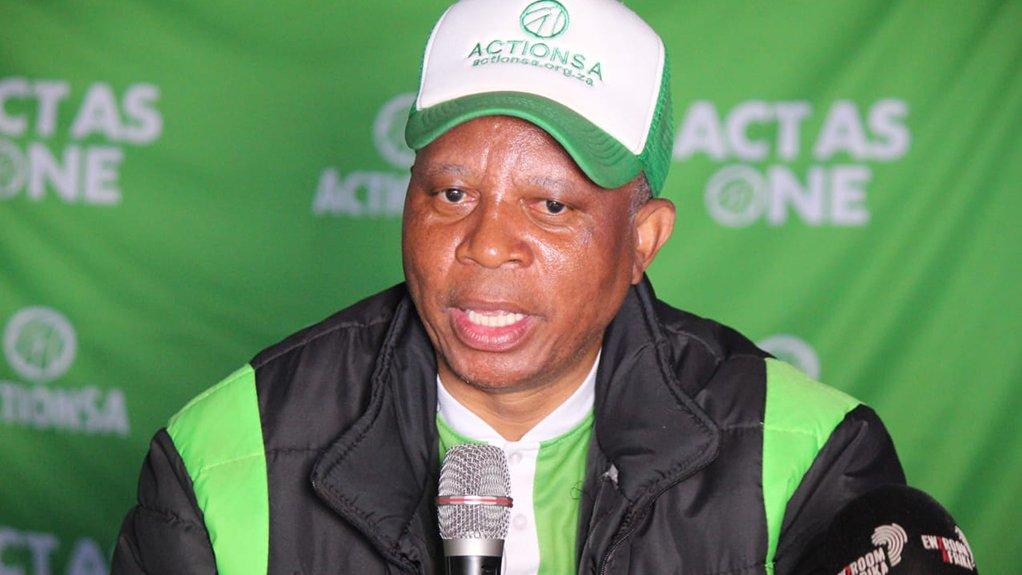
“ActionSA has maintained that it is willing to cooperate with the Democratic Alliance (DA) in Johannesburg’s coalition negotiations but will not support a partnership in which Helen Zille becomes mayor, with party leader Herman Mashaba reportedly offering to withdraw his own mayoral ambitions if the DA also changes its candidate. The dispute comes as Johannesburg faces coalition negotiations following the 2026 municipal elections, in which the DA emerged as the leading party without securing an outright majority, making smaller political parties crucial to the city’s next administration.”
ActionSA Draws a Line on Helen Zille as Johannesburg Coalition Negotiations Intensify
ActionSA has reaffirmed its opposition to Helen Zille becoming Johannesburg’s next mayor, setting the stage for potentially difficult coalition negotiations with the Democratic Alliance (DA) as political parties attempt to establish a stable administration in South Africa’s economic capital.
The position, communicated by ActionSA leadership ahead of Thursday’s planned coalition discussions, highlights the personal, political and ideological disagreements that could influence municipal government formation following the 2026 local government elections.
According to Eyewitness News, ActionSA remains open to working with the DA but insists that Zille’s withdrawal from the mayoral contest is a condition for a potential agreement. Party leader Herman Mashaba has reportedly indicated his willingness to withdraw from Johannesburg’s mayoral race if the DA also changes its candidate.
The development illustrates how negotiations are becoming increasingly complicated in a municipality where no political party secured an outright majority.
ActionSA maintains its position on mayoral leadership
ActionSA’s opposition to Zille’s mayoral ambitions has emerged as one of the most prominent political obstacles in Johannesburg’s coalition discussions.
The party has maintained that it is willing to cooperate with political formations that share its commitment to effective governance, but it has also made clear that the identity of the mayor remains an important consideration.
The latest position follows earlier engagements between ActionSA and several political parties, including the African National Congress (ANC) and the Economic Freedom Fighters (EFF).
ActionSA national chairperson Michael Beaumont confirmed that discussions with the DA would provide an opportunity to address the disagreement directly.
According to EWN, Beaumont indicated that the parties would discuss the matter during their face-to-face negotiations scheduled for Thursday.
The discussions will be particularly important because ActionSA’s representation in Johannesburg gives it considerable political influence despite its inability to govern the municipality independently.
Johannesburg’s election results create a coalition challenge
The 2026 municipal elections significantly changed Johannesburg’s political landscape.
The DA emerged as the leading party in the city, followed by the ANC and ActionSA. However, the DA did not secure enough seats to govern independently.
Consequently, coalition negotiations have become essential to determining who will occupy the mayoral office and which political formations will participate in the municipal administration.
The electoral outcome reflects a broader national transformation in South African politics.
The ANC, which historically dominated national and municipal government, experienced a substantial decline in electoral support. Meanwhile, opposition parties have strengthened their positions in several important metropolitan municipalities.
Reuters reported that the ANC received approximately 30.76% of the national municipal vote, compared with 45.59% in 2021. The DA received approximately 24.64%, while the MK Party secured 9.76%.
These results demonstrate the increasingly competitive nature of South Africa’s multiparty democracy.
Mashaba seeks greater influence for ActionSA
For Mashaba, the coalition negotiations represent an opportunity to expand ActionSA’s influence over municipal governance.
The party has presented itself as an alternative to established political formations and has sought to attract voters dissatisfied with the ANC’s administration.
Mashaba’s criticism of the ANC has become a central element of ActionSA’s political identity. He has argued that the party has disappointed communities that historically regarded it as a vehicle for political representation and social transformation.
In a statement reported by The Citizen on 11 November, Mashaba described ActionSA as a new source of political hope for Black South Africans.
The statement reflects the party’s broader ambition to establish itself as a significant political force beyond its traditional electoral base.
However, the party’s willingness to negotiate with the DA also illustrates the practical compromises that coalition politics may require.
ActionSA must balance its political identity, its electoral mandate and its desire to participate in municipal government.
The DA faces difficult choices
The DA must now determine whether it is prepared to accommodate ActionSA’s position or pursue alternative coalition arrangements.
Helen Zille remains an influential political figure within the party and has been associated with its Johannesburg mayoral ambitions.
Changing its candidate could have consequences for the DA’s internal political dynamics and its negotiating strategy.
At the same time, refusing ActionSA’s demand could complicate efforts to establish a governing majority.
The DA has previously indicated that coalition negotiations should be guided by principles of clean government and accountability.
Its federal executive is coordinating negotiations nationally, seeking consistency across municipalities rather than allowing individual local structures to determine agreements independently.
This approach could strengthen the party’s negotiating position, but it also requires flexibility when dealing with partners whose priorities differ.
Smaller parties become decisive
The Johannesburg negotiations demonstrate how smaller political formations can exercise significant influence in South Africa’s emerging coalition environment.
Although the DA emerged as the leading party, it cannot govern alone.
ActionSA’s support could help determine the composition of the municipal administration, while other parties may also become important participants in negotiations.
The ANC remains another potential coalition partner, despite its electoral decline.
ActionSA has already engaged the ANC and EFF, indicating that its negotiating strategy is not restricted to one political formation.
This flexibility could enable the party to negotiate policy commitments, leadership arrangements and administrative priorities.
Nevertheless, disagreements over mayoral candidates and political principles could complicate the process.
Service delivery remains the central challenge
Beyond political negotiations, Johannesburg residents face pressing municipal challenges.
Water shortages, electricity disruptions, deteriorating infrastructure, waste management difficulties and concerns about municipal accountability remain important issues.
These problems have contributed to voter dissatisfaction and have influenced electoral outcomes across South Africa.
Coalition negotiations therefore carry significant consequences for residents who expect political parties to translate electoral mandates into practical improvements.
A coalition agreement that focuses primarily on political positions without addressing service delivery could undermine public confidence.
The parties will need to establish clear priorities, define responsibilities and create mechanisms for accountability.
Effective administration will require cooperation between political leadership, municipal officials and communities.
Coalition stability and political accountability
The negotiations also raise questions about the sustainability of coalition government in South Africa.
Municipal coalitions have previously experienced disagreements, leadership changes and administrative instability.
Political parties entering agreements must therefore consider how disputes will be resolved and how governments will remain functional when disagreements emerge.
A successful coalition requires more than an agreement on the mayor.
It also requires cooperation on budgets, appointments, service delivery priorities and oversight.
Johannesburg’s political leaders will need to demonstrate that competing political interests can be managed without compromising municipal administration.
The negotiations could provide an important test of whether South Africa’s political parties are capable of developing more durable coalition arrangements.
A defining moment for ActionSA
For ActionSA, the Johannesburg negotiations represent an opportunity to demonstrate whether the party can convert electoral representation into meaningful political influence.
Its position on Zille may strengthen its appeal among supporters who believe political leadership should reflect accountability and political renewal.
However, the party must also consider the consequences of refusing an agreement if alternative arrangements fail to produce a governing majority.
Political negotiations require balancing principles with practical responsibilities.
ActionSA’s eventual decision could influence its reputation as a party capable of participating constructively in municipal government.
Johannesburg awaits a political agreement
As Thursday’s negotiations approach, the immediate question remains whether ActionSA and the DA can resolve their disagreement over mayoral leadership.
The parties have expressed openness to engagement, but their positions indicate that an agreement is not guaranteed.
The outcome will influence the formation of Johannesburg’s municipal administration and could have implications for coalition negotiations elsewhere in the country.
South Africa’s 2026 local government elections have reinforced the reality that political power is increasingly distributed among competing parties.
The ANC’s declining electoral dominance, the DA’s stronger performance and the growing influence of smaller political formations have created a more complex political environment.
Johannesburg’s coalition negotiations therefore represent more than a contest over the mayoral office.
They are an important test of whether political parties can cooperate across disagreements to establish a stable government capable of addressing the needs of residents.
Ultimately, the success of any coalition will be measured not simply by which party secures leadership positions, but by whether the administration delivers reliable services, manages public resources responsibly and restores confidence in local government.
The immediate political challenge is clear: Johannesburg’s parties must find a way to turn competing electoral mandates into a functioning municipal government.



