




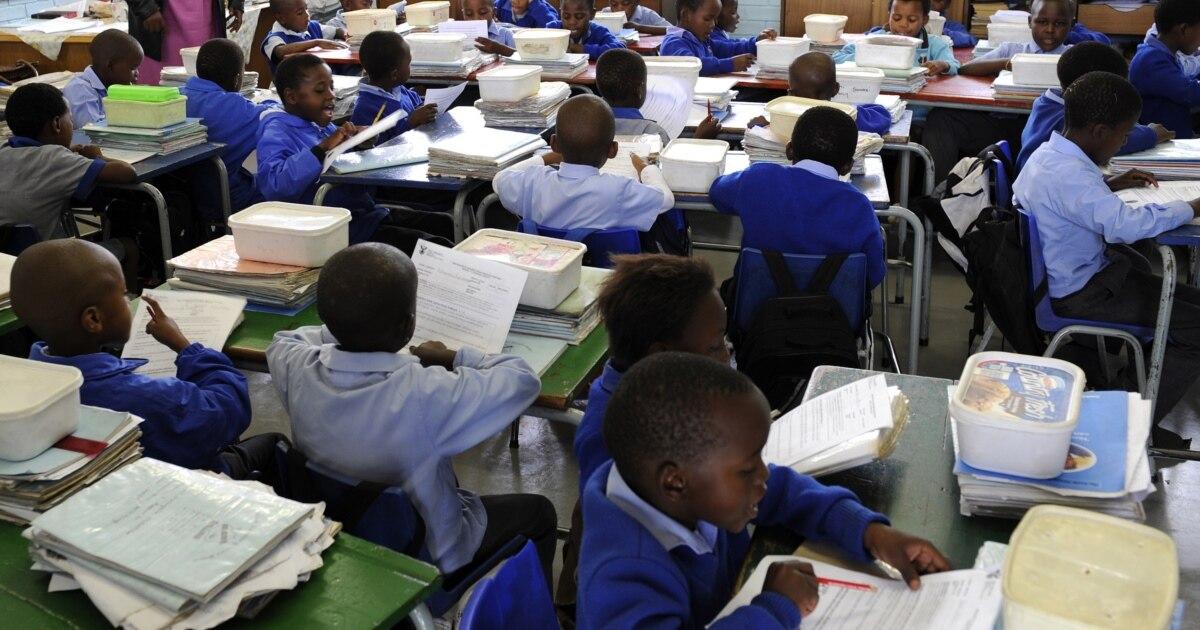
“South Africa’s implementation of the Basic Education Laws Amendment (BELA) Act has come under renewed parliamentary scrutiny following concerns about outstanding school admission and language-policy reviews, delayed regulations, and uneven Grade R implementation. Parliament’s Basic Education Committee is demanding detailed school-level information, realistic implementation deadlines and stronger departmental accountability to ensure that education reforms protect learners’ rights and improve access to schooling.”
BELA Act Implementation Under Parliamentary Scrutiny as Education Policy Reform Faces Delays
South Africa’s education reform programme is facing increased parliamentary scrutiny as lawmakers demand greater accountability over the implementation of the Basic Education Laws Amendment (BELA) Act. The legislation represents an important policy development in the country’s education system, introducing changes intended to strengthen school governance, improve access to education and address issues affecting learners’ rights. However, concerns about delayed regulations, incomplete school-policy reviews and uneven implementation across provinces are raising questions about the government’s ability to translate legislative commitments into meaningful improvements in classrooms.
The Portfolio Committee on Basic Education intensified its oversight on 10 November 2026 after receiving a briefing from the Department of Basic Education on the implementation of the BELA Act. Committee members requested a detailed breakdown of schools that had not completed their admission and language-policy reviews, together with explanations for the delays and realistic deadlines for completing the outstanding work.
BELA Act implementation and the national education policy framework
The Basic Education Laws Amendment Act introduces changes to the South African Schools Act and strengthens aspects of the country’s education governance framework.
Among its significant provisions is the introduction of compulsory Grade R education. The legislation also addresses school admission policies, language policies and other governance matters affecting learners and school communities.
These reforms are particularly important in a country where education remains central to addressing inequality, improving economic opportunities and strengthening social development.
School admission policies determine how learners access educational institutions, while language policies influence the languages used for teaching and learning. Consequently, the implementation of the BELA Act has implications extending beyond administrative compliance.
The reforms require schools to examine whether their existing policies are consistent with the amended legal framework. School governing bodies must therefore review relevant policies and ensure that their decisions reflect the applicable legislation.
However, Parliament’s recent concerns suggest that the process remains incomplete in a considerable number of institutions.
Thousands of school-policy reviews remain outstanding
One of the most significant developments emerging from the parliamentary briefing was the number of outstanding school-policy reviews.
According to information presented by the Department of Basic Education, 11,715 admission-policy reviews and 11,657 language-policy reviews remained outstanding.
These figures illustrate the scale of the administrative work still required to achieve full implementation.
The committee expressed concern that provincial totals alone were insufficient to explain the situation. Members requested information identifying individual schools that had not completed their reviews, together with explanations for the delays and details of the interventions needed to resolve them.
This approach reflects Parliament’s responsibility to ensure that government departments provide measurable information about policy implementation.
Without school-level information, oversight institutions may struggle to determine whether delays result from inadequate administrative support, insufficient capacity, financial constraints or other implementation difficulties.
The committee therefore wants the department to provide a clearer picture of the circumstances affecting individual schools.
Admission policies and learners’ rights
Admission policies are among the most important elements of school governance because they influence access to education.
The BELA Act introduces changes intended to strengthen the legal framework governing admissions. Schools must ensure that their policies are aligned with the amended legislation and applicable constitutional principles.
The timing of these reviews is particularly important because parents and guardians are applying for school placements.
Where institutions have not updated their admission policies, families may face uncertainty about whether decisions are being made under legally appropriate procedures.
Parliament’s concern is that outdated policies could prejudice parents and learners during the admission process.
This issue demonstrates why policy implementation cannot be treated as a purely administrative exercise. School admissions affect educational opportunities, family planning and the broader principle of equal access to public services.
The committee’s demand for detailed information is therefore intended to establish whether outstanding reviews are creating practical difficulties for communities.
Language policies and education transformation
Language policy remains another important area of education reform.
South Africa’s linguistic diversity creates significant policy challenges for schools, particularly where communities have different language preferences and educational needs.
School governing bodies must review their language policies to ensure that they comply with the amended legal framework.
The process also requires schools to consider the relationship between language, educational access and the practical availability of teaching resources.
Implementation may involve administrative work, consultation with school communities and the development of appropriate arrangements for teaching and learning.
However, delays in reviewing language policies can create uncertainty for learners, parents and education administrators.
Parliament’s intervention seeks to establish whether schools have received sufficient guidance and support to complete the process.
Grade R expansion faces funding and infrastructure challenges
The introduction of compulsory Grade R represents a major policy commitment intended to strengthen early childhood education.
Early learning is widely recognised as an important foundation for literacy, numeracy and future educational development.
Nevertheless, expanding Grade R across the public education system requires substantial investment.
Schools need appropriate classrooms, qualified practitioners, teaching materials and administrative support.
During the parliamentary briefing, committee members raised concerns about classroom shortages, practitioner qualifications and differences in employment arrangements across provinces.
The department reported that seven provinces appoint Grade R practitioners who receive stipends, while Mpumalanga and North West appoint educators who receive salaries.
Limpopo was identified as the only province currently incorporating Grade R into its educator post-provisioning model.
These differences highlight the complexity of implementing a national education policy through provincial institutions with varying administrative arrangements.
The committee questioned why substantial differences had developed between provinces in their progress towards providing Grade R.
The issue is particularly significant because compulsory early education cannot be achieved effectively without adequate staffing and infrastructure.
Funding and provincial capacity remain central challenges
The Department of Basic Education identified several challenges affecting implementation, including funding shortages, infrastructure constraints, provincial capacity limitations and delays in finalising regulations.
These factors demonstrate that legislation alone cannot guarantee successful policy implementation.
National government must provide clear direction, while provincial education departments require sufficient resources and personnel to implement the requirements.
Schools also need guidance on interpreting the amended legislation and revising their governance documents.
Where administrative capacity is inadequate, implementation timelines may become difficult to achieve.
The committee’s demand for detailed explanations is intended to establish where assistance or intervention is required.
This approach may help identify schools that need additional support rather than treating every outstanding review as an identical administrative problem.
Delayed regulations create uncertainty
Another important concern raised by Parliament relates to the finalisation of regulations supporting the BELA Act.
Regulations are necessary to provide operational clarity and establish the procedures through which legislation is implemented.
The committee expressed dissatisfaction with the pace of finalising the regulations and called for accelerated progress.
The delay creates uncertainty for education authorities and schools that must interpret and apply the amended legal framework.
Although the department has reported progress, Parliament expects the remaining regulatory work to be completed within a reasonable timeframe.
The committee indicated that it would continue monitoring progress and expects further accountability when the department returns for another briefing.
This demand reflects the importance of timely regulatory development in ensuring that policy reforms are translated into practical arrangements.
School codes of conduct and learner protection
The BELA Act also requires schools to review their codes of conduct.
These reviews must incorporate amendments addressing issues including hairstyles, religious beliefs, corporal punishment and other matters affecting learners’ rights.
Codes of conduct establish behavioural expectations and disciplinary procedures within schools.
However, they must also comply with constitutional protections and the applicable education legislation.
The review process provides an opportunity for schools to ensure that disciplinary practices respect learners’ dignity and rights.
It also requires school governing bodies to consider how existing rules may need to change.
Parliament’s position is that these reviews should form part of a structured implementation programme rather than an indefinite process.
Parliamentary oversight and government accountability
The Basic Education Committee’s intervention demonstrates the importance of parliamentary oversight in public policy implementation.
Parliament is responsible for scrutinising government departments, assessing progress against legislative objectives and identifying obstacles requiring intervention.
By requesting school-level information and realistic timelines, the committee is seeking to strengthen accountability and improve the quality of implementation reporting.
The approach also emphasises the need for measurable progress indicators.
Rather than relying exclusively on general statements about implementation, the department is expected to demonstrate which schools have completed their reviews, which remain outstanding and what actions are being taken.
Such information can help Parliament determine whether the implementation programme is progressing effectively.
Implications for parents, learners and communities
The implementation of the BELA Act has direct implications for South African families.
Parents need confidence that school admission procedures are consistent with applicable legislation.
Learners require educational environments where their rights are protected and school governance arrangements are fair.
Communities also depend on education authorities to provide adequate infrastructure and staffing.
The introduction of compulsory Grade R could strengthen access to early learning, but its benefits depend on whether schools can accommodate additional learners.
Similarly, updated admission and language policies can improve governance, provided schools receive sufficient guidance and support.
The parliamentary intervention therefore concerns both administrative accountability and the practical experience of learners and families.
The road ahead for education policy implementation
The immediate priority is for the Department of Basic Education to provide the detailed information requested by Parliament.
This includes identifying schools with outstanding admission and language-policy reviews, explaining implementation barriers and providing realistic deadlines for completing the work.
The department must also accelerate the finalisation of BELA regulations and address concerns about Grade R infrastructure, staffing and provincial capacity.
Further progress will depend on cooperation between national government, provincial education departments, school governing bodies and communities.
The committee’s continued oversight may help establish whether implementation commitments are being translated into measurable improvements.
Ultimately, the success of the BELA Act will depend not simply on the legislation itself but on the effectiveness of the institutions responsible for implementing it.
Conclusion
South Africa’s education reform programme has reached an important implementation stage, with Parliament demanding greater transparency and accountability over the Basic Education Laws Amendment Act.
The outstanding school-policy reviews, delayed regulations and challenges surrounding Grade R expansion demonstrate the complexity of translating national legislation into practical educational improvements.
The committee’s intervention sends a clear message that implementation cannot remain open-ended. Education authorities must provide credible timelines, identify barriers and demonstrate measurable progress.
For parents, learners and communities, the significance of the process lies in ensuring that education policies improve access, protect rights and strengthen school governance.
The coming implementation period will therefore be critical in determining whether the BELA Act delivers its intended benefits across South Africa’s education system.



