




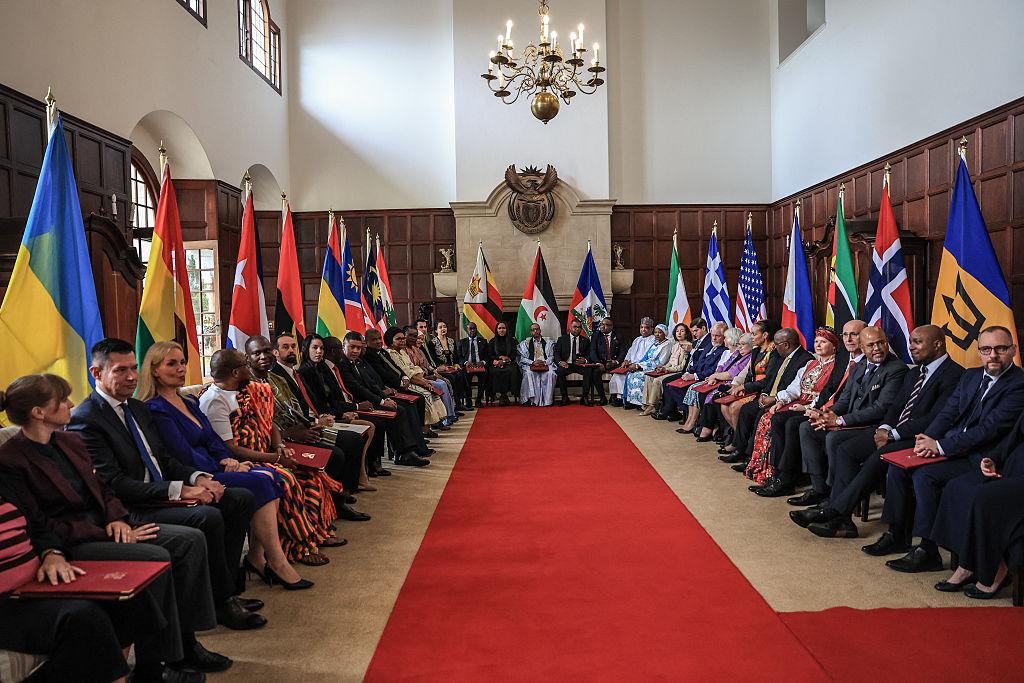
“President Cyril Ramaphosa is scheduled to receive Letters of Credence from diplomatic representatives of 15 countries and the European Union on Friday, 13 November 2026, in Pretoria, formally advancing their accreditation to South Africa. The ceremony highlights Pretoria’s continued engagement with African, European, Asian and other international partners, offering opportunities to strengthen diplomatic cooperation, trade, investment and development partnerships.”
South Africa Welcomes 15 New Diplomatic Missions as Ramaphosa Prepares for Credentials Ceremony
South Africa is preparing to strengthen its international diplomatic relationships as President Cyril Ramaphosa is scheduled to receive Letters of Credence from representatives of 15 countries and the European Union on Friday, 13 November 2026. The ceremony, which will take place at the Sefako Makgatho Presidential Guesthouse in Pretoria, marks an important stage in the formal accreditation of foreign ambassadors and high commissioners appointed to represent their governments in South Africa.
The diplomatic event comes at a significant moment for South Africa’s international relations, as Pretoria continues to pursue strategic partnerships, economic cooperation and stronger engagement with countries across Africa, Europe, Asia and other regions.
According to information published by Central News South Africa on Wednesday, 11 November, the representatives attending the ceremony will include diplomats from South Sudan, Somalia, Comoros, Madagascar, Germany, Uruguay, Vietnam, Seychelles, Belgium, the European Union, Cyprus, Timor-Leste, Maldives, France and Nigeria.
The diversity of the countries represented reflects South Africa’s extensive diplomatic engagement and its continuing efforts to maintain constructive international relationships.
A Formal Milestone in Diplomatic Relations
Letters of Credence are official diplomatic documents through which a foreign head of state formally introduces an ambassador or high commissioner to the receiving country’s president. Their presentation establishes the formal recognition of the diplomatic representative and signifies the beginning of an ambassador’s official duties.
The credentials ceremony is therefore more than a symbolic gathering. It represents the institutional foundation upon which diplomatic communication, bilateral negotiations and cooperation between governments are conducted.
South Africa’s diplomatic protocol also allows designated representatives to begin certain official functions after copies of their Letters of Credence have been submitted to the Chief of State Protocol. The original documents are subsequently presented to the President during the formal ceremony.
This arrangement enables diplomatic representatives to commence their responsibilities without unnecessary delays while preserving the traditional constitutional and diplomatic significance of presidential accreditation.
The upcoming ceremony follows South Africa’s established practice of receiving newly appointed diplomatic representatives and encouraging them to strengthen relationships between their respective countries and Pretoria.
African Partnerships Remain Central
The presence of representatives from South Sudan, Somalia, Comoros, Madagascar and Seychelles underscores the importance of African diplomatic relationships.
South Africa maintains a significant role in regional political cooperation through the African Union and the Southern African Development Community. Its diplomatic relationships with African governments contribute to discussions involving regional stability, economic development, infrastructure, peacebuilding and cross-border cooperation.
Relations with South Sudan and Somalia are particularly relevant to continental discussions concerning peace, security, institutional development and economic reconstruction.
Meanwhile, partnerships with island states such as Comoros, Madagascar and Seychelles can contribute to cooperation on maritime security, fisheries, tourism, environmental protection and the sustainable development of the Indian Ocean region.
The Indian Ocean is increasingly important to international trade, energy transportation and regional connectivity. Strengthening diplomatic relationships with countries located along its strategic maritime routes can support South Africa’s broader economic and security interests.
European Relationships and Economic Opportunities
The inclusion of Germany, France, Belgium, Cyprus and the European Union demonstrates the continued significance of European partnerships in South Africa’s foreign policy.
European countries remain important partners in investment, industrial development, technology, education, climate cooperation and trade. Germany and France, in particular, have established extensive relationships with South Africa across business, development cooperation and political engagement.
The European Union also maintains an important relationship with South Africa through trade agreements, development programmes and cooperation on international issues.
Diplomatic engagement provides opportunities to expand existing partnerships while addressing matters of mutual interest, including renewable energy, infrastructure development, industrial transformation and sustainable economic growth.
For South Africa, these relationships are particularly important as the government seeks to attract investment, diversify export markets and strengthen its position within the international economy.
The accreditation of new diplomatic representatives provides an opportunity to renew these commitments and establish priorities for future bilateral cooperation.
Strengthening South-South Cooperation
The participation of Uruguay, Vietnam, Timor-Leste and Maldives adds another dimension to South Africa’s diplomatic engagement.
These relationships provide opportunities for South Africa to deepen cooperation with countries outside its immediate regional environment.
South Africa has consistently promoted stronger relationships among developing countries, particularly through platforms that support cooperation on trade, investment, technology, education and development.
Vietnam offers opportunities for engagement involving manufacturing, agricultural cooperation, trade and industrial development. Uruguay provides avenues for dialogue involving agricultural production, international trade and cooperation between South America and Africa.
Timor-Leste and Maldives also present opportunities for diplomatic exchange involving development policy, environmental protection, maritime affairs and multilateral cooperation.
By maintaining diplomatic relationships across diverse geographical regions, South Africa can strengthen its international networks and expand opportunities for collaboration.
Nigeria and South Africa’s African Leadership
Nigeria’s participation is especially significant because of its position as one of Africa’s largest economies and most influential political actors.
South Africa and Nigeria maintain important relationships through continental institutions, economic cooperation and discussions concerning African development.
Both countries have interests in strengthening regional integration, improving trade within Africa and supporting greater African representation in international institutions.
Their relationship also provides opportunities for cooperation on peacebuilding, security, entrepreneurship and investment.
The accreditation of Nigeria’s new High Commissioner represents another opportunity to sustain diplomatic communication between Pretoria and Abuja.
Diplomacy Amid Changing Global Relations
South Africa’s diplomatic engagement is unfolding against a backdrop of changing international political and economic relationships.
The country has recently faced difficult relations with the United States, particularly over trade, foreign policy disagreements and Washington’s decision to suspend South Africa’s access to the African Growth and Opportunity Act beginning in January 2027.
President Ramaphosa has indicated that South Africa intends to pursue negotiations with Washington while diversifying export markets and strengthening economic partnerships elsewhere.
The situation highlights the importance of maintaining a broad diplomatic network.
Rather than relying on a narrow group of international partners, South Africa has increasingly emphasised cooperation across multiple regions and institutions.
Its relationships with African countries, European governments, Asian economies and Latin American partners provide opportunities to broaden economic engagement and strengthen diplomatic flexibility.
The credentials ceremony, although a routine diplomatic procedure, therefore takes place within a wider context of international strategic competition, economic uncertainty and evolving geopolitical relationships.
Diplomacy and Economic Development
Foreign diplomatic missions play an important role in supporting economic relationships.
Ambassadors and high commissioners frequently facilitate business engagements, promote investment opportunities, encourage tourism and assist their governments in identifying areas for cooperation.
South Africa’s government has consistently sought to connect diplomatic engagement with economic development objectives.
Potential areas of cooperation include infrastructure, renewable energy, manufacturing, agriculture, mining, technology, education and tourism.
For South African businesses, stronger diplomatic relationships can help create opportunities to enter international markets, establish partnerships and access new investment networks.
Similarly, foreign companies can use diplomatic channels to explore investment opportunities in South Africa.
The success of these relationships, however, depends on effective implementation, sustained communication and practical cooperation beyond formal ceremonies.
The Importance of Multilateral Cooperation
South Africa’s international relations strategy also involves participation in multilateral institutions, including the United Nations, African Union, BRICS and the G20.
Through these platforms, Pretoria has advocated international cooperation, economic development, reform of global institutions and greater representation for developing countries.
The country’s diplomatic relationships can strengthen its ability to engage with international partners on shared priorities.
These priorities include climate change, sustainable development, international trade, peace and security, debt management and reform of global governance structures.
South Africa has also continued to emphasise the importance of international law and peaceful resolution of disputes.
The presence of representatives from different regions creates opportunities for diplomatic dialogue and collaboration on these matters.
Expectations for Friday’s Ceremony
President Ramaphosa’s credentials ceremony is scheduled for Friday, 13 November 2026, at the Sefako Makgatho Presidential Guesthouse in Pretoria.
The event is expected to begin at 10:00, with media representatives instructed to arrive from 08:00.
The ceremony forms part of the regular diplomatic calendar and provides an opportunity for South Africa to formally welcome the newly appointed representatives.
Although the event itself is ceremonial, its broader significance lies in the relationships that diplomatic representatives will develop and maintain during their assignments.
The new envoys will be expected to contribute to stronger bilateral engagement, improved communication between governments and the advancement of mutually beneficial cooperation.
Conclusion: South Africa’s Global Engagement Continues
South Africa’s planned reception of 15 new diplomatic representatives and the European Union demonstrates the continuing importance of international engagement in the country’s foreign policy.
The ceremony reflects Pretoria’s commitment to maintaining relationships across different continents while pursuing economic development, regional stability and international cooperation.
As the global political environment becomes increasingly complex, diplomatic relationships remain essential instruments for communication, negotiation and partnership.
For South Africa, the accreditation of these representatives offers an opportunity to reinforce its international connections and translate diplomatic engagement into practical benefits for its economy and people.
The long-term significance of Friday’s ceremony will ultimately depend on the partnerships developed afterward, including trade agreements, investment cooperation, development initiatives and constructive political dialogue.
South Africa’s diplomatic network remains a valuable foundation for navigating international challenges while pursuing opportunities for shared prosperity and global cooperation.



