




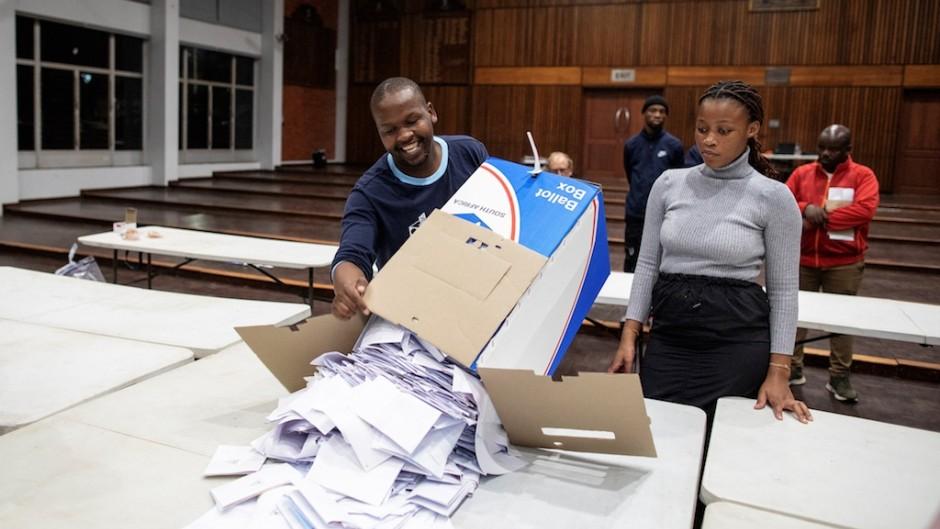
“The Economic Freedom Fighters (EFF) in the Eastern Cape are demanding accountability from the Electoral Commission of South Africa (IEC) over alleged irregularities involving the Ward 15 election in Buffalo City Metro, where the party and the Democratic Alliance (DA) initially received identical vote totals. The dispute has renewed questions about vote reconciliation, recount procedures and electoral transparency, even as South Africa moves into the post-election period following the 2026 local government elections.”
EFF challenges IEC over Buffalo City Ward 15 vote-counting controversy
Election dispute puts transparency, accountability and public confidence under scrutiny
The aftermath of South Africa’s 2026 Local Government Elections has brought renewed attention to the integrity of electoral processes, following a dispute involving the Economic Freedom Fighters (EFF), the Democratic Alliance (DA) and the Electoral Commission of South Africa (IEC) in Buffalo City Metropolitan Municipality in the Eastern Cape.
The controversy centres on Ward 15, which includes the community of Nompumelelo, where the EFF has raised concerns about vote-counting procedures and demanded accountability from the electoral authority. The dispute has become one of the latest developments in South Africa’s politically consequential local elections, which have reshaped the country’s municipal political landscape.
According to reporting published by eNCA on Wednesday, 11 November 2026, the EFF is continuing to challenge aspects of the Ward 15 electoral process, arguing that the matter extends beyond the determination of a winning candidate to questions about electoral transparency and institutional responsibility.
The developments highlight the importance of ensuring that every vote is properly reconciled, accurately recorded and subjected to appropriate verification procedures.
A tied result creates electoral controversy
The Ward 15 dispute originated when the EFF and DA initially received identical vote totals during the election results process.
According to the South African Broadcasting Corporation (SABC), both parties were initially recorded with 1,714 votes, creating a deadlock over the ward’s outcome.
The IEC subsequently proposed resolving the tie through a coin toss, a procedure that the EFF rejected in favour of a recount.
The recount eventually broke the deadlock, with the EFF securing the ward after additional votes were identified during the verification process.
The recount reportedly resulted in 39 additional votes being credited to the EFF and eight to the DA.
The outcome strengthened the EFF’s position in Ward 15 while simultaneously intensifying its concerns about the counting procedures that preceded the recount.
The party maintained that the discrepancies required further examination and accountability.
The controversy demonstrates how seemingly small differences in electoral administration can become politically significant when they determine the allocation of municipal representation.
In ward-based elections, a relatively small number of votes can determine which political party or candidate receives a seat on a municipal council.
Consequently, counting accuracy and transparent reconciliation procedures are essential to maintaining public confidence in election outcomes.
EFF demands accountability from the electoral commission
The EFF’s latest position reflects its dissatisfaction with the handling of the Ward 15 electoral process.
The party argues that the issue should not be treated solely as a dispute over which political formation won the ward.
Instead, it maintains that the circumstances surrounding the original vote-counting process deserve closer scrutiny.
The EFF has raised concerns about alleged irregularities and called for accountability from the IEC.
Its position places pressure on the electoral commission to explain the procedures followed during the initial reconciliation of votes and the subsequent recount.
The DA, meanwhile, has indicated that it is satisfied with the manner in which the election was conducted.
The competing positions illustrate the political sensitivity surrounding electoral disputes, particularly when parties disagree over whether administrative procedures were sufficiently transparent.
However, allegations made by political parties should not automatically be interpreted as proof of deliberate electoral manipulation.
Determining whether irregularities occurred, whether they affected the result and whether they involved unlawful conduct requires evidence and appropriate investigation.
The IEC’s response therefore remains important in clarifying the circumstances surrounding the dispute.
Electoral transparency becomes a central political concern
The controversy has emerged during a period in which South Africa’s electoral institutions are facing increasing scrutiny following the 2026 municipal elections.
The elections produced significant changes in party representation, including a historic decline in support for the African National Congress (ANC) and stronger performances by opposition parties in several municipalities.
The IEC announced final national results on 8 November, declaring the elections free and fair.
National turnout reached 52%, representing an increase from the 45.9% recorded during the 2021 municipal elections.
According to the commission, approximately 14.9 million South Africans participated in the elections from a registered electorate of approximately 29.2 million.
The official results placed the ANC first nationally with 30.76% of the vote, followed by the DA with 24.64%.
The uMkhonto weSizwe Party received 9.76%, while the EFF secured 6.22%.
Although the commission declared the elections free and fair, it also acknowledged that electoral administration requires continued review and improvement.
The Ward 15 controversy illustrates why such reviews remain important.
Public confidence depends not only on the final declaration of results but also on whether voters and political contestants believe that procedures were applied consistently and transparently.
Buffalo City faces questions beyond electoral competition
The controversy is unfolding against a wider background of municipal challenges affecting communities in Buffalo City.
Nompumelelo, which forms part of Ward 15, has reportedly experienced overcrowding and poor service delivery.
These concerns demonstrate the connection between electoral representation and the everyday experiences of residents.
Municipal elections determine the councillors responsible for overseeing local government functions, including infrastructure, municipal services, community development and accountability.
Consequently, disputes over election results carry implications beyond party competition.
Residents ultimately depend on municipal institutions to respond to practical problems such as deteriorating infrastructure, inadequate services and pressure on local facilities.
The EFF’s electoral challenge therefore intersects with broader questions about political accountability and local governance.
The recount may have determined the ward’s electoral outcome, but the responsibilities of the successful political representatives extend well beyond the counting process.
The IEC’s responsibilities in resolving electoral objections
South Africa’s electoral framework provides mechanisms through which parties and candidates can raise objections concerning election procedures and results.
The IEC has previously explained that objections under Section 65 of the Municipal Electoral Act may concern matters material to election results, including voting, counting and alleged unlawful interference with electoral activities.
Such objections must satisfy applicable procedural requirements and include details supporting the allegations.
The commission is required to investigate qualifying objections and determine whether they should be upheld or rejected.
Where an objection is upheld, the available remedies can include amendments to election results or referral of serious matters to the Electoral Court.
These procedures are intended to ensure that disputes are addressed through established institutional mechanisms rather than political confrontation.
They also provide a framework for distinguishing administrative mistakes from more serious allegations of unlawful conduct.
The existence of an electoral objection does not automatically mean that the election was fraudulent or that its outcome must be overturned.
Instead, the evidence, applicable legal requirements and findings of the relevant authorities determine whether corrective action is justified.
Why recounts matter in democratic elections
Recounts serve an important function in electoral administration because they provide an opportunity to verify disputed totals and correct counting errors.
In closely contested wards, recounts can be particularly consequential.
They may identify ballots that were incorrectly classified, counting discrepancies or inconsistencies between recorded results and the ballots actually cast.
The Ward 15 recount reportedly recovered votes that had initially been treated differently during the counting process.
This demonstrates how verification mechanisms can help clarify election outcomes.
However, recounts must also be conducted transparently and according to applicable procedures.
Political parties, candidates and observers need confidence that the process is impartial and that all relevant ballots are handled consistently.
Clear documentation of recount decisions can help prevent misunderstandings and reduce the likelihood of further disputes.
The broader lesson is that electoral transparency should be treated as a continuous responsibility rather than an activity limited to polling day.
Political implications for the Eastern Cape
The Ward 15 dispute also carries political significance for the EFF and DA in Buffalo City.
The EFF’s successful recount outcome represents an important ward-level result for the party, while the DA’s position reflects its insistence that the election was properly administered.
Both parties have an interest in demonstrating that their electoral claims are supported by evidence and that municipal representation is determined through legitimate procedures.
The dispute also provides an opportunity for the IEC to reinforce confidence in its administrative processes.
A credible explanation of the counting sequence, recount findings and relevant decisions could help address concerns raised by political contestants.
Conversely, inadequate communication could prolong uncertainty and contribute to public mistrust.
The issue therefore requires careful handling by electoral officials and political parties alike.
Democracy requires accountability after voting
South Africa’s municipal elections have demonstrated the continuing importance of competitive politics and citizen participation.
The electoral process does not conclude when ballot boxes are closed or results are announced.
Democratic accountability also requires institutions to investigate legitimate complaints, explain administrative decisions and correct mistakes where necessary.
Political parties have a responsibility to raise concerns through lawful procedures and avoid presenting unverified allegations as established facts.
Electoral authorities, meanwhile, must ensure that their decisions are transparent, consistent and supported by evidence.
The Ward 15 dispute provides a practical example of how these responsibilities intersect.
Ultimately, confidence in democracy depends on citizens believing that their votes matter and that disagreements about electoral outcomes can be resolved fairly.
Conclusion: Ward 15 dispute underscores the importance of electoral credibility
The EFF’s challenge concerning Buffalo City Ward 15 has become a significant electoral development in South Africa’s post-election period.
The controversy originated from an initially tied result between the EFF and DA, followed by a recount that reportedly awarded the ward to the EFF after additional votes were identified.
The party’s continuing demands for accountability highlight questions about counting procedures, transparency and the responsibilities of electoral institutions.
At the same time, the dispute must be distinguished from a proven finding of electoral fraud.
The IEC’s explanations, the evidence presented by political contestants and the findings of any relevant investigations will be essential in determining whether further action is warranted.
Beyond the immediate political competition, the episode reinforces a fundamental democratic principle: election results must be credible, electoral procedures must be transparent and legitimate disputes must be resolved through accountable institutions.
South Africa’s democratic institutions will continue to face important tests as political competition intensifies and municipal governments navigate the consequences of the 2026 elections.
The credibility of those institutions will depend not only on their ability to organise elections but also on their willingness to address concerns openly, investigate irregularities fairly and protect the integrity of every vote.



