




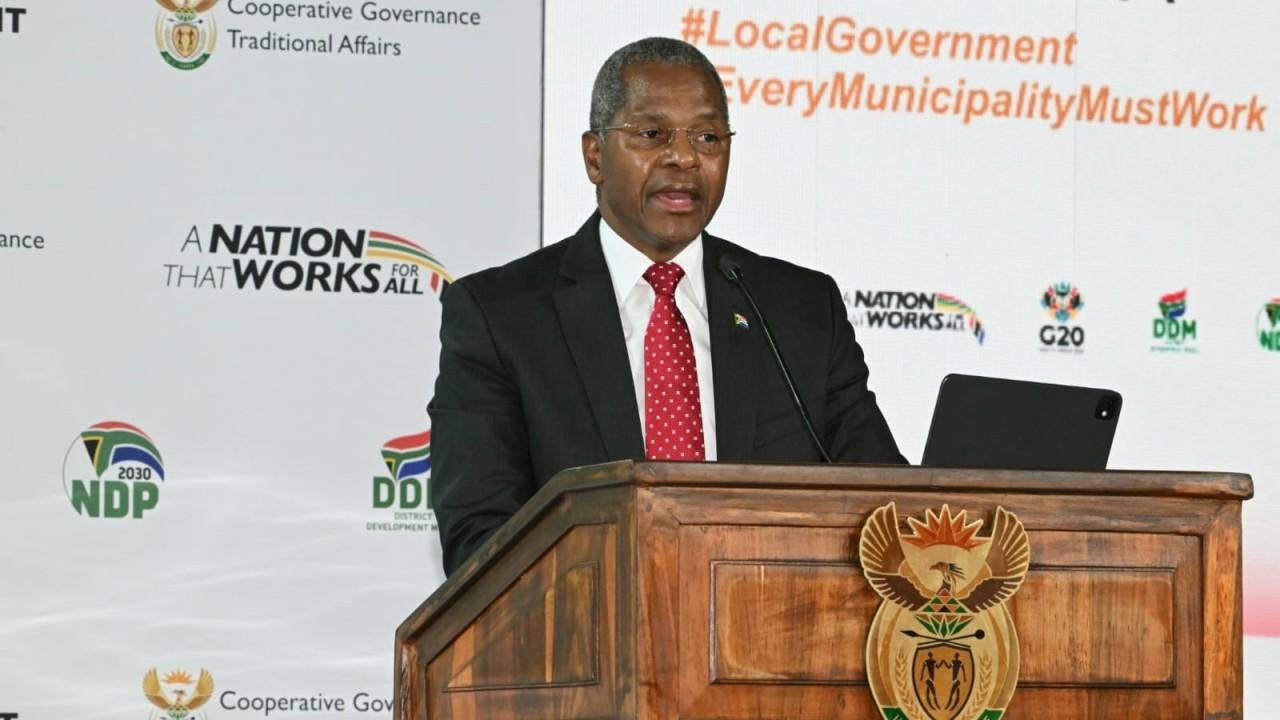
“South Africa has approved interim guidelines designed to promote stable coalition governments following the 2026 Local Government Elections, after election results left 127 of 213 municipalities without a single-party majority. The new framework seeks to prevent political deadlocks, strengthen accountability and ensure that coalition negotiations translate into effective municipal administration and uninterrupted service delivery.”
South Africa Approves Interim Coalition Guidelines as 127 Hung Councils Face Governance Challenges
South Africa has taken a significant step towards stabilising local government after the approval of interim coalition guidelines aimed at addressing political instability in municipalities following the 2026 Local Government Elections. The development comes as political parties prepare to negotiate governing arrangements in municipalities where no single party secured an outright majority, raising renewed concerns about accountability, institutional stability and service delivery.
The guidelines were approved following a special Ministerial Committee meeting convened by the Department of Cooperative Governance and Traditional Affairs (CoGTA), under Minister Velenkosini Hlabisa. The framework is intended to guide political parties, municipal institutions and provincial authorities as newly elected councils begin the process of establishing governments.
Coalition governance becomes a central political challenge
The 2026 Local Government Elections have significantly reshaped South Africa’s municipal political landscape. According to election-related reporting, 127 of the country’s 213 municipalities emerged with hung councils, creating a situation in which political parties must negotiate governing arrangements to secure majorities.
The outcome demonstrates the increasing importance of coalition politics in South African democracy. Instead of relying exclusively on single-party administrations, municipalities increasingly depend on agreements between political parties with different electoral mandates, policy priorities and political interests.
This development creates opportunities for cooperation, representation and democratic accountability. However, it also introduces substantial governance challenges where coalition partners struggle to agree on leadership positions, policy priorities or administrative responsibilities.
The approval of interim coalition guidelines therefore represents an important attempt by government to establish a more predictable framework for municipal political cooperation.
Government seeks stability through interim guidelines
Minister Hlabisa convened a special CoGTA Ministerial Committee meeting on 10 November 2026, following technical discussions held the previous day. The meeting brought together representatives from national and provincial government, local government institutions and organised local government structures.
The guidelines were presented to the political leadership for consideration and approval after technical inputs were incorporated into the document.
According to CoGTA, the framework is designed to assist political parties in navigating coalition negotiations, managing disagreements and establishing stable municipal governing arrangements.
The initiative is particularly important because the Municipal Structures Amendment Bill of 2026, commonly referred to as the Municipal Coalitions Bill, remains subject to parliamentary processes.
Until the proposed legislation becomes available, the interim guidelines are intended to provide practical guidance for municipalities and political parties entering coalition negotiations.
Government has emphasised that political arrangements must not undermine municipal administration, interrupt essential services or compromise constitutional responsibilities.
Lessons from previous coalition instability
South Africa’s experience with coalition governments has highlighted the consequences of political instability in local government.
In several municipalities, disagreements between coalition partners have resulted in leadership changes, disputes over executive appointments and repeated attempts to remove mayors or council speakers.
Such political developments can weaken municipal institutions and distract elected representatives from their responsibilities to residents.
Frequent changes in governing arrangements may also create uncertainty among municipal employees, complicate planning and delay important administrative decisions.
The interim guidelines seek to reduce these risks by encouraging political parties to establish clear agreements and approaches to managing disputes.
Stable coalition arrangements are particularly important where municipalities face financial difficulties, infrastructure challenges or weak administrative capacity.
Accountability and service delivery remain priorities
The central objective of coalition governance should be to improve the performance of municipalities rather than simply distribute political positions.
Residents depend on municipalities for essential services, including water provision, sanitation, electricity distribution where applicable, refuse collection, roads, public infrastructure and local development planning.
When councils become dysfunctional, administrative decisions can be delayed and service delivery may deteriorate.
Government has therefore urged political parties to ensure that coalition agreements support effective administration and uninterrupted municipal operations.
The guidelines are expected to encourage a common approach to coalition stability, accountability and responsible leadership.
Nevertheless, their success will ultimately depend on whether political parties implement their commitments and whether municipal administrations have the resources and capacity to deliver services.
Hung councils face a constitutional deadline
The timing of the guidelines is significant because newly elected councils must be constituted within the applicable statutory period.
CoGTA indicated that the Electoral Commission of South Africa was expected to officially publish the election results in the Government Gazette on 11 November 2026.
The publication activates the statutory 14-day period for constituting metropolitan and local municipal councils.
The constitution period runs from 12 November to 26 November 2026, according to the department’s announcement.
Municipalities must therefore move quickly to organise council meetings, elect required office-bearers and establish the political arrangements necessary for governing.
Where coalition negotiations become prolonged, municipalities risk delays in establishing functioning councils.
Government has warned that failure to constitute councils within the prescribed period must be addressed through the applicable legal procedures to prevent governance and service delivery disruptions.
District municipal councils will be constituted after the local municipal councils within their respective districts have been finalised.
Political parties face pressure to negotiate responsibly
The election results have placed political parties under pressure to demonstrate that they can cooperate beyond electoral competition.
Coalition negotiations are expected to involve discussions about executive leadership, council responsibilities, municipal priorities and mechanisms for resolving disagreements.
However, political bargaining alone cannot provide sustainable governance.
Parties must consider the needs of communities, the financial circumstances of municipalities and the administrative capacity required to implement development programmes.
Governance analysts have argued that coalition agreements should be based on municipal circumstances and public priorities rather than solely on the distribution of political positions.
The increasing prevalence of coalition governments makes political maturity and institutional accountability particularly important.
Local government institutions must strengthen oversight
CoGTA, provincial governments and organised local government institutions are expected to provide support to municipalities as the new councils are constituted.
This includes guidance on governance procedures, monitoring institutional stability and assisting municipalities facing significant administrative challenges.
The South African Local Government Association (SALGA) has also emphasised the importance of building stable, capable and accountable councils following the elections.
Effective oversight will be necessary to ensure that coalition arrangements do not undermine municipal financial management, planning or service delivery.
Municipal officials must continue implementing lawful administrative responsibilities regardless of political disagreements within councils.
The broader democratic significance
The emergence of hung councils reflects a changing relationship between voters and political parties in South Africa.
Recent election reporting has highlighted growing public dissatisfaction with service delivery failures, infrastructure deterioration and corruption concerns.
The results indicate that electoral support is increasingly contested, creating opportunities for smaller political parties and independent representatives to influence municipal governance.
Coalitions can provide broader political representation when they are based on transparent agreements and common development priorities.
However, they can also create instability where political competition continues after elections without adequate mechanisms for resolving disagreements.
The challenge facing South Africa is therefore not simply to establish coalition governments, but to make them accountable, transparent and responsive to residents.
Implementation will determine the success of the guidelines
The approval of interim coalition guidelines represents an important governance intervention, but the framework alone cannot guarantee stability.
Political parties must demonstrate willingness to honour agreements, resolve disputes constructively and maintain functioning municipal institutions.
Councillors must also recognise that their responsibilities extend beyond party interests to the constitutional obligations of local government.
Municipal administrations require predictable leadership, effective oversight and financial discipline to implement development programmes.
The new framework will therefore need to be supported by monitoring, institutional cooperation and continued political engagement.
Conclusion
South Africa’s approval of interim coalition guidelines comes at a critical moment for local government.
With 127 municipalities facing hung councils, the country is entering a period in which coalition negotiations will determine the leadership and governing arrangements of many municipal institutions.
The guidelines provide an interim mechanism for promoting political stability, reducing governance deadlocks and supporting the constitution of newly elected councils.
Ultimately, the success of this initiative will be measured not by the number of coalition agreements signed, but by whether municipalities become more accountable, financially responsible and capable of delivering essential services.
For communities across South Africa, stable coalition governance must translate into functioning municipal institutions, improved public services and greater confidence in democratic leadership.



