




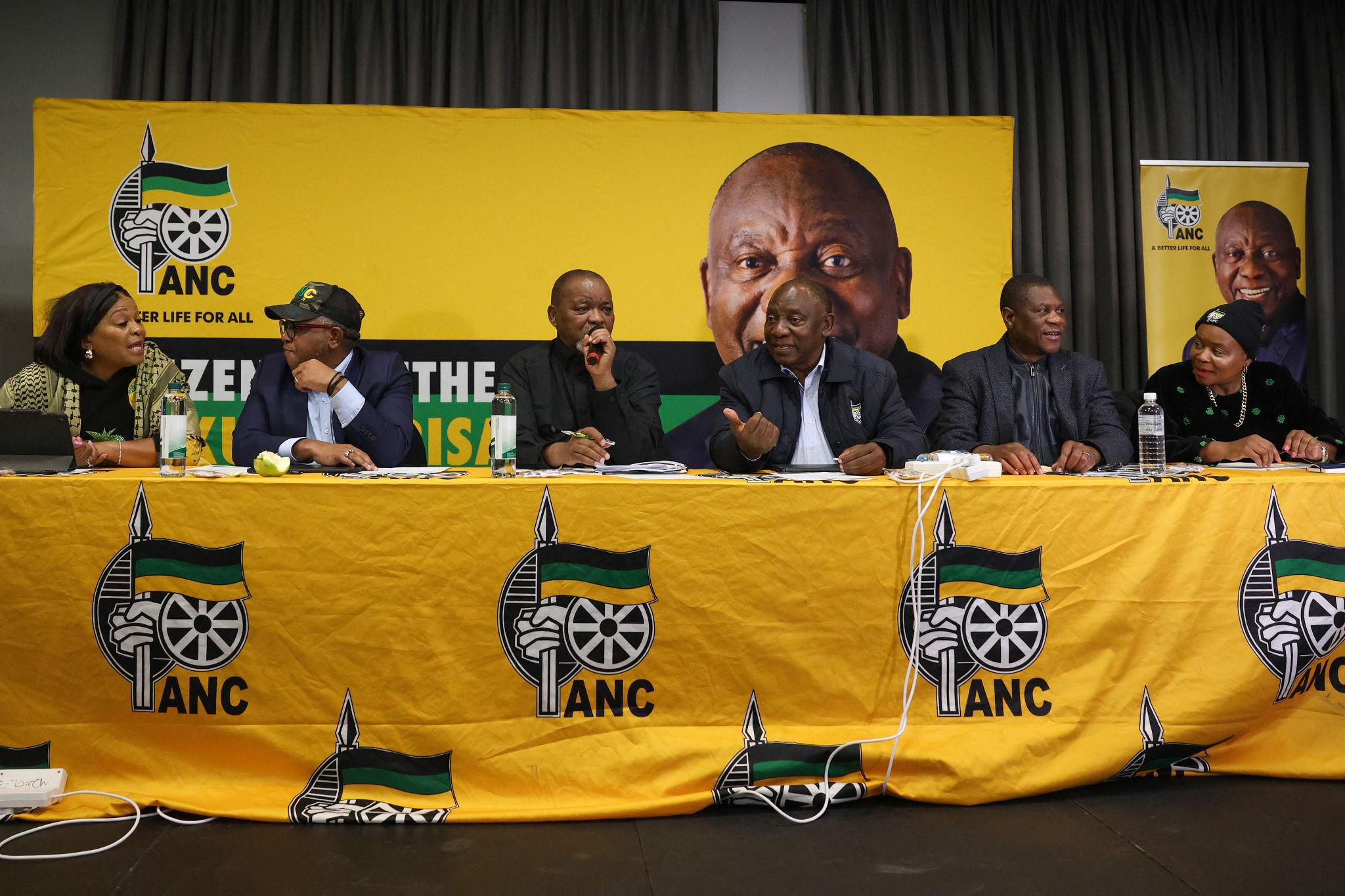
“South Africa’s African National Congress is holding a decisive National Executive Committee meeting on 12 November to establish its negotiating mandate for coalition governments following its historic losses in the 2026 municipal elections. With 127 hung municipal councils requiring political agreements, the ANC’s strategy could significantly influence municipal leadership, service delivery and the country’s evolving political landscape.”
ANC NEC Faces Decisive Coalition Meeting as South Africa Enters New Electoral Era
South Africa’s political landscape is entering a decisive phase as the African National Congress (ANC) convenes an Extended Special National Executive Committee (NEC) meeting on Thursday to determine its negotiating mandate for coalition governments following the country’s November 4 local government elections. The meeting comes at a critical moment for the governing party, which has experienced a significant electoral setback and must now negotiate political partnerships across municipalities where voters denied parties outright majorities.
The 2026 municipal elections produced a fragmented political environment, with the ANC securing 30.76% of the national vote, compared with 45.59% in the 2021 local government elections. Although the party remains South Africa’s largest political formation nationally, its reduced electoral support demonstrates the changing relationship between voters and established political institutions.
According to reporting by IOL on November 12, the ANC’s Extended Special NEC meeting will consider a Mandating Guide for its coalition negotiations team and receive reports on initial engagements with other political parties. The discussions are expected to establish the political framework through which the organisation approaches negotiations in municipalities requiring coalition arrangements.
Election Results Force ANC to Reconsider Political Strategy
The November 4 elections marked another significant development in South Africa’s democratic evolution. The ANC, which has dominated national politics since the country’s first democratic elections in 1994, experienced a substantial decline in voter support.
The Democratic Alliance (DA) emerged as the second-largest party nationally, receiving 24.64% of the vote. The uMkhonto weSizwe Party (MK Party) secured 9.76%, followed by the Economic Freedom Fighters (EFF) with 6.22% and ActionSA with 5.67%.
The results reflect a growing political diversity across South Africa’s municipalities. Smaller political parties and independent candidates have increasingly become influential participants in local governance, particularly where larger organisations cannot independently secure sufficient council seats.
The election outcome also reinforces developments witnessed during the 2024 national elections, when the ANC lost its parliamentary majority for the first time since 1994.
Political analysts and commentators have increasingly highlighted service delivery, unemployment, corruption concerns and municipal accountability as important considerations influencing voter behaviour. These issues remain central to discussions about the ANC’s declining electoral support and the broader transformation of South African political competition.
Coalition Negotiations Become Central to Municipal Governance
The most immediate consequence of the election results is the growing importance of coalition negotiations.
South Africa has 213 municipal councils, and 127 councils reportedly lack an outright majority following the latest elections. Consequently, political parties must establish agreements to secure sufficient support to elect municipal leadership and govern effectively.
Coalition negotiations will determine the composition of municipal administrations, including mayors, speakers and other political office-bearers. These arrangements will also influence council decision-making, budget priorities and the implementation of local development programmes.
The ANC’s NEC meeting is therefore particularly significant because the party must establish a coordinated negotiating strategy while responding to different political circumstances across municipalities.
The organisation has already initiated consultations with alliance partners, including the Congress of South African Trade Unions (COSATU) and the South African National Civic Organisation (SANCO).
According to IOL, the ANC’s National Working Committee met earlier in the week, followed by engagements with alliance partners and other organisational structures.
These consultations form part of the party’s broader assessment of the election results and its responsibilities in municipalities where it remains a major political participant.
NEC to Establish Negotiating Mandate
The central responsibility of Thursday’s meeting is to establish a Mandating Guide for the ANC’s coalition negotiations team.
Such a framework is expected to provide direction on negotiating principles, political priorities and acceptable arrangements with other parties.
The party must balance its electoral position with the practical requirements of forming functioning municipal governments.
Coalition negotiations frequently involve discussions about political office allocation, shared governance priorities and mechanisms for resolving disagreements. However, political agreements must also remain consistent with constitutional responsibilities and the legal framework governing municipal councils.
The ANC leadership has emphasised that its response to the election results should extend beyond negotiations for political positions.
National spokesperson Mahlengi Bhengu reportedly said the election outcome placed a serious responsibility on the organisation to listen to voters, confront its shortcomings and provide leadership as municipalities prepare to establish new administrations.
This position suggests that the party’s coalition approach is being considered alongside broader organisational renewal and political recovery.
Municipal Service Delivery Remains a Central Concern
The coalition negotiations are unfolding against persistent concerns about municipal service delivery.
Across South Africa, residents continue to demand reliable water supplies, electricity infrastructure, functioning roads, effective waste management and accountable municipal leadership.
These responsibilities place significant pressure on political parties negotiating municipal governments.
Coalition arrangements that fail to establish clear priorities or stable decision-making structures could struggle to deliver improvements in communities.
Consequently, the ANC and other political formations face pressure to demonstrate that coalition negotiations can produce practical improvements rather than merely redistribute political offices.
The effectiveness of municipal governments over the next five years may influence public perceptions of political parties ahead of future national elections.
Political Competition Reshapes Johannesburg and Other Major Cities
The election results have also intensified political competition in major metropolitan municipalities.
Johannesburg, Tshwane and Ekurhuleni are among the important councils where coalition negotiations will determine governing arrangements.
The DA’s stronger electoral performance in several metropolitan areas has positioned it as an important participant in discussions about municipal leadership.
Meanwhile, the ANC must determine how to negotiate from a substantially weakened electoral position while maintaining influence in councils where it remains a significant political force.
Smaller parties, including ActionSA, the EFF and other political formations, may influence the outcomes of negotiations where their council representation becomes decisive.
The resulting political arrangements could produce different coalition combinations across municipalities, reflecting local electoral outcomes and political priorities.
Stability and Accountability Become Essential
The formation of coalition governments presents opportunities to strengthen democratic accountability by requiring parties to cooperate and negotiate.
However, coalition arrangements also introduce risks associated with political disagreements, leadership changes and competing policy priorities.
Municipal governments require stable decision-making processes to approve budgets, implement infrastructure programmes and maintain administrative continuity.
Political instability can disrupt these responsibilities and weaken public confidence in municipal institutions.
The ANC’s negotiating mandate will therefore be important not only for securing political participation but also for determining how the party approaches stability, accountability and service delivery.
Coalition partners will need to establish clear expectations regarding cooperation and dispute resolution.
Constitutional Responsibilities and Council Formation
The constitution of newly elected municipal councils remains another important consideration.
According to IOL, newly elected municipal councils must hold their first meetings within 14 days of the declaration of election results.
These meetings provide the formal platform for electing mayors, speakers and other political office-bearers.
The timetable places considerable pressure on political parties to negotiate agreements and identify candidates capable of securing council support.
Delayed negotiations could complicate council formation and create uncertainty regarding municipal leadership.
Political formations must therefore conduct negotiations while respecting the legal requirements governing the establishment of municipal councils.
Implications for South Africa’s Future Elections
The November 2026 municipal elections could have consequences extending beyond local government.
The ANC’s reduced electoral support has intensified discussions about its organisational renewal, leadership responsibilities and prospects in the 2029 national elections.
The party’s ability to negotiate effective coalition agreements and demonstrate improvements in municipal governance may influence its future political recovery.
Similarly, the DA, MK Party, EFF, ActionSA and smaller political formations face opportunities to expand their influence through municipal administration.
Coalition governance could become an increasingly permanent feature of South African politics rather than an occasional arrangement.
The experience of the next municipal administrations will provide voters with an opportunity to assess whether political cooperation produces better governance outcomes.
Conclusion
The ANC’s Extended Special NEC meeting on November 12 represents a significant moment in South Africa’s post-election political transition.
The party must establish a negotiating mandate capable of responding to a fragmented electoral landscape while confronting the concerns that contributed to its declining voter support.
With 127 hung municipal councils requiring political agreements, coalition negotiations will shape local government leadership and influence service delivery across the country.
Ultimately, the credibility of these arrangements will depend on whether political parties can translate electoral mandates into accountable administration, effective public services and improved living conditions.
South Africa’s evolving coalition politics presents both a challenge and an opportunity: political organisations must demonstrate that cooperation can strengthen democracy and deliver tangible benefits to citizens.
The outcome of the ANC’s negotiations, together with the conduct of newly formed municipal governments, will help determine the direction of South African politics in the years ahead.



