




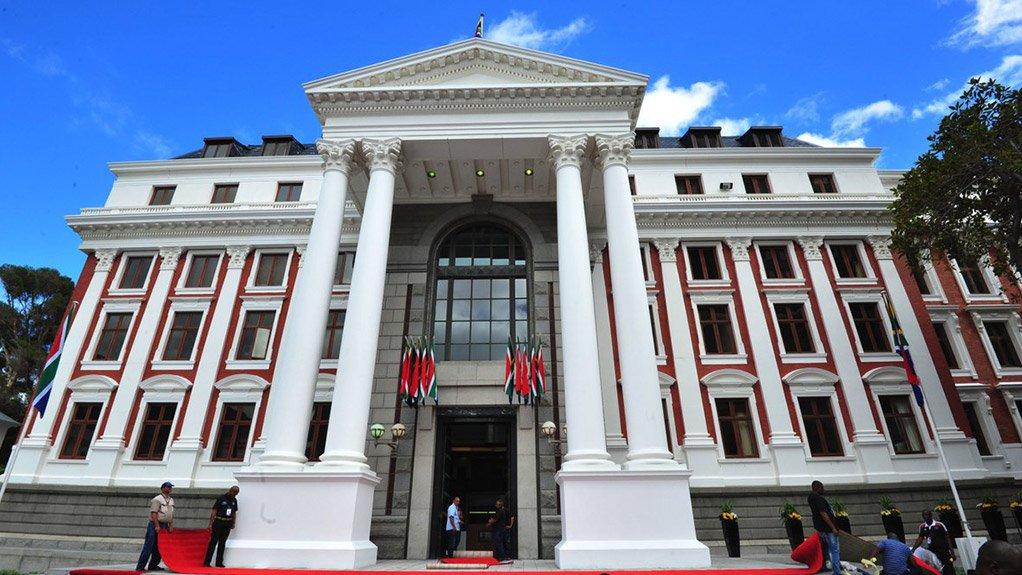
“South Africa’s parliamentary Standing Committee on Appropriations is holding public hearings on the 2026 Division of Revenue Amendment Bill and the 2026 Special Appropriation Bill, bringing important government funding legislation under public scrutiny. The hearings provide an opportunity for stakeholders to examine proposed adjustments to public finances, the distribution of resources between government spheres and the additional funding requirements of the state.”
South Africa’s Budget Legislation Faces Public Scrutiny as Parliament Examines Funding Adjustments and Government Spending Priorities
South Africa’s parliamentary legislative programme entered an important phase on Friday, 13 November 2026, as the Standing Committee on Appropriations convened public hearings on the 2026 Division of Revenue Amendment Bill and the 2026 Special Appropriation Bill. The proceedings represent a significant opportunity for parliamentary oversight, public participation and legislative scrutiny of government spending priorities during a period of continuing pressure on public finances.
The hearings form part of Parliament’s examination of the 2026 Medium-Term Budget Policy Statement (MTBPS), which was tabled by Finance Minister Enoch Godongwana on 21 October 2026. Through this process, parliamentary committees are expected to assess the government’s spending framework, the allocation of resources between national, provincial and local government, and the additional funding requirements identified by the executive.
Parliament Strengthens Oversight of Budget Legislation
The parliamentary hearings reflect the constitutional and legislative responsibilities of Parliament to scrutinise government expenditure and ensure that public resources are allocated within an accountable framework.
The Standing Committees on Appropriations are responsible for considering the MTBPS and associated legislation, including proposed spending priorities, revenue distribution arrangements and significant adjustments to conditional grants.
The 2026 legislative programme is particularly important because the MTBPS provides an updated perspective on government finances beyond the annual national budget. It enables Parliament to examine changing economic circumstances, fiscal priorities and spending requirements before the next budget cycle.
According to Parliament’s committee notice, the appropriations committees must examine spending priorities for the next three years, the proposed distribution of revenue between the three spheres of government and adjustments to conditional grants where applicable.
These responsibilities position the committees at the centre of the country’s legislative oversight process.
Division of Revenue Amendment Bill Under Examination
One of the principal pieces of legislation under consideration is the Division of Revenue Amendment Bill, identified as Bill B29 of 2026.
The legislation concerns adjustments to the distribution of revenue among national government, provincial administrations and municipalities. The division of revenue framework is fundamental to South Africa’s public administration because different government spheres have responsibilities for delivering essential services and implementing development programmes.
Provincial governments oversee major responsibilities involving education, healthcare, infrastructure and other public services. Municipalities, meanwhile, are responsible for local services such as water provision, sanitation, electricity distribution where applicable, municipal roads and community infrastructure.
The proposed revenue arrangements therefore have direct implications for service delivery throughout the country.
The appropriations committees are expected to evaluate whether the proposed adjustments adequately reflect government priorities and whether the distribution of resources supports effective public administration.
Particular attention is required where conditional grants are involved. Such grants are generally intended to support specified programmes or services, and changes to their allocations can influence implementation capacity across provinces and municipalities.
The legislative scrutiny process consequently provides an opportunity to assess whether funding arrangements remain appropriate in light of emerging priorities and administrative challenges.
Special Appropriation Bill and Additional Government Funding
The second major legislative instrument examined during the hearings is the Special Appropriation (2026/27 Financial Year) Bill, identified as Bill B31 of 2026.
Special appropriation legislation provides a mechanism through which Parliament considers additional funding requirements beyond those addressed through ordinary budget allocations.
The introduction of such legislation reflects the reality that government expenditure requirements can change during a financial year. New priorities, unforeseen costs and emerging operational demands may require additional resources.
However, additional appropriations also raise important questions about fiscal discipline, expenditure management and accountability.
Parliament must ensure that additional funding requests are properly justified and that the proposed allocations are consistent with government responsibilities and national priorities.
The legislative process provides an opportunity for committee members and stakeholders to examine the rationale for additional spending and the implications for public finances.
In this respect, the Special Appropriation Bill is not simply an administrative funding instrument. It forms part of the broader framework through which Parliament exercises control over government expenditure.
Public Participation Remains Central to Legislative Scrutiny
The public hearings are significant because they create an opportunity for interested parties to contribute to Parliament’s consideration of the legislation.
South Africa’s parliamentary processes recognise public participation as an important component of democratic lawmaking. Through submissions, stakeholders can raise concerns, provide technical analysis and communicate the practical implications of proposed legislative measures.
For budget legislation, public participation can be particularly valuable because government spending decisions affect communities, businesses, public institutions and civil society organisations.
Stakeholders may provide perspectives on the effectiveness of funding arrangements, the financial pressures experienced by municipalities and provinces, and the consequences of changes to public spending priorities.
Parliament’s appropriations committees invited interested parties to participate in the consideration of the 2026 MTBPS and associated bills.
The submission process also included opportunities for written and oral representations, allowing stakeholders to communicate their views through different channels.
The parliamentary notice specified deadlines and contact arrangements for submissions, while the hearings were scheduled to take place through a virtual platform.
This approach broadens participation beyond those able to attend parliamentary proceedings physically.
Legislative Decisions Have Implications for Municipal Services
The distribution of revenue between government spheres remains one of the most consequential elements of South Africa’s budget legislation.
Municipalities depend on a combination of locally generated revenue and transfers from national government to support their responsibilities.
These transfers can help municipalities maintain infrastructure, expand access to basic services and address development requirements in communities.
However, the effectiveness of funding arrangements also depends on administrative capacity, financial management and accountability.
The legislative scrutiny of revenue distribution therefore provides an opportunity to examine the relationship between funding allocations and service delivery outcomes.
For communities facing challenges involving water infrastructure, sanitation, roads and other municipal services, the budget process carries considerable practical importance.
The appropriations committees’ consideration of revenue arrangements is consequently relevant to both national fiscal policy and local development.
Provincial Government Funding and Service Delivery
Provincial administrations also occupy a central position in the revenue distribution framework.
Education and healthcare account for significant responsibilities within provincial government budgets. Consequently, changes in funding arrangements can influence the capacity of provinces to maintain service delivery and respond to population needs.
The consideration of conditional grants is especially important because these allocations frequently support programmes with specific policy objectives.
Parliament’s examination of revenue legislation provides an opportunity to assess whether proposed adjustments adequately support provincial responsibilities.
Furthermore, scrutiny of the legislative framework can help identify potential implementation challenges and areas requiring improved financial oversight.
The process is therefore closely connected to the broader objectives of public administration, including equitable service delivery, institutional accountability and efficient expenditure.
The Medium-Term Budget Policy Statement Provides the Framework
The 2026 MTBPS serves as the principal policy framework informing the legislative discussions.
Parliament describes the statement as an important opportunity to assess the government’s approach to balancing economic growth, service delivery and fiscal sustainability.
It also provides updated economic forecasts and information about government spending priorities.
The statement is particularly relevant because it informs the direction of public finances over the medium term rather than focusing exclusively on a single financial year.
The accompanying legislative instruments translate aspects of the government’s fiscal framework into proposals requiring parliamentary consideration.
These include the Division of Revenue Amendment Bill, Adjustments Appropriation Bill and Special Appropriation Bill.
Parliament has also scheduled further consideration of the Adjustments Appropriation Bill and the MTBPS later in November.
This sequence demonstrates that the legislative process extends beyond the initial hearings.
Parliamentary Accountability and Financial Management
The hearings also highlight the importance of financial accountability within South Africa’s democratic institutions.
Public expenditure legislation determines how government obtains parliamentary authority to spend public money and how resources are distributed across institutions.
Effective scrutiny requires committees to examine whether expenditure proposals are adequately explained, whether funding arrangements support policy objectives and whether public resources are managed responsibly.
The Parliamentary Budget Office provides analytical support to parliamentary committees on budget matters, including the MTBPS and appropriation legislation.
Its work can contribute to informed deliberations by providing analysis of fiscal proposals and government spending arrangements.
This analytical capacity is important because budget legislation involves technical financial considerations alongside political and policy decisions.
The quality of parliamentary oversight can influence the transparency and accountability of the public finance system.
Legislative Process Continues Beyond the Hearings
The 13 November hearings represent one stage in a broader legislative process.
Following public participation and committee consideration, parliamentary structures must continue examining the relevant bills and associated reports.
The appropriations committees are expected to consider the information received during the hearings alongside government documentation and other submissions.
The broader parliamentary programme also includes further consideration of the Adjustments Appropriation Bill and the MTBPS later in November.
These activities demonstrate that the legislative process involves several stages, including introduction, public participation, committee deliberation, reporting and parliamentary consideration.
The distinction between a bill being introduced, examined and ultimately passed remains important.
The public hearings themselves do not constitute final approval of the legislation.
Instead, they provide an opportunity for scrutiny before Parliament reaches decisions through its established procedures.
Public Interest in Government Funding Decisions
The significance of the legislative process extends beyond parliamentary institutions.
Budget decisions affect public services, infrastructure investment, government operations and the financial resources available to different communities.
Citizens therefore have a direct interest in understanding how public funds are allocated and how Parliament examines government spending proposals.
Public participation enables individuals and organisations to contribute to these discussions.
It also provides an opportunity for parliamentary committees to consider concerns that may not be fully reflected in official government documentation.
In this regard, the appropriations hearings represent an important component of democratic accountability.
Conclusion: Budget Legislation Remains a Key Parliamentary Priority
South Africa’s consideration of the 2026 Division of Revenue Amendment Bill and Special Appropriation Bill represents a significant legislative development on 13 November 2026.
The hearings provide an opportunity for parliamentary committees to examine government funding arrangements, assess proposed adjustments to public finances and consider stakeholder perspectives.
The process is central to determining how resources are distributed between national, provincial and local government and how additional government funding requirements are addressed.
As Parliament continues its examination of the 2026 Medium-Term Budget Policy Statement and related legislation, public participation and financial accountability remain essential elements of the country’s democratic legislative framework.
The ultimate importance of the process lies in ensuring that government spending decisions receive appropriate parliamentary scrutiny and that public resources are managed within a transparent and accountable system.
For South Africans, the legislative discussions are particularly relevant because funding decisions influence the delivery of essential services, infrastructure development and the ability of government institutions to meet their responsibilities.
The hearings therefore represent more than a technical exercise in budget administration. They are part of the broader democratic process through which Parliament examines government priorities, evaluates public expenditure and exercises oversight over the country’s financial affairs.



