




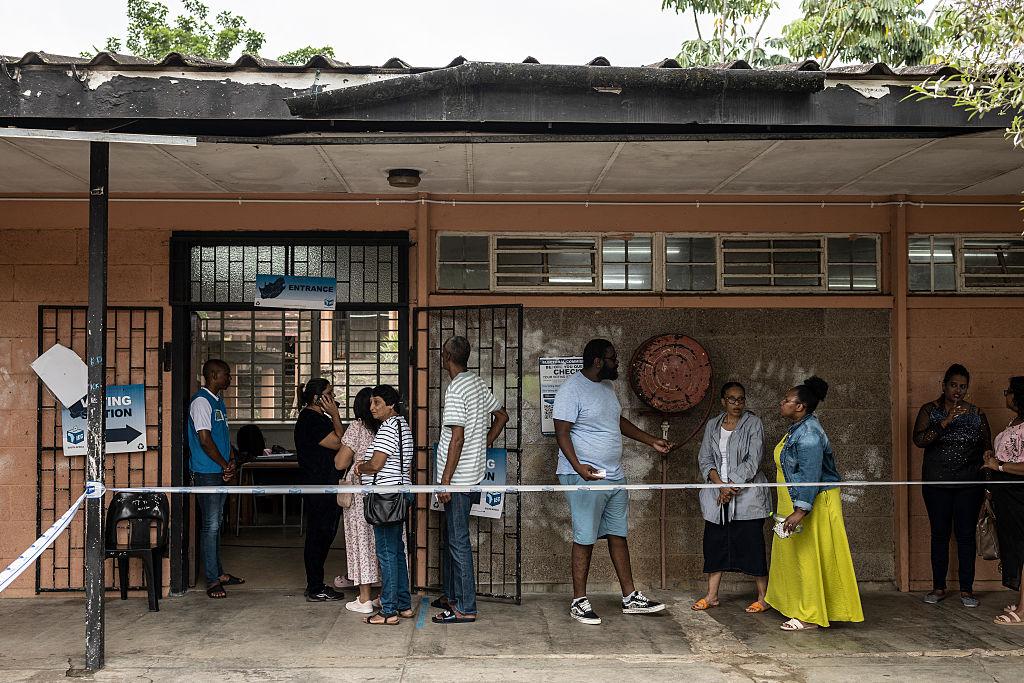
“South Africa’s growing number of political parties has not automatically translated into stronger electoral participation or greater public confidence in political representation, with the 2026 local government elections highlighting concerns about voter disengagement, political accountability and the credibility of campaign promises. The debate increasingly centres on whether political parties can rebuild public trust through meaningful community engagement, credible policies and improved municipal service delivery rather than relying on election campaigns alone.”
South Africa’s Multiparty Democracy Faces a Public Confidence Test as Voter Disengagement Raises Political Questions
Introduction: More political choices, but growing questions about representation
South Africa’s democratic landscape is experiencing a significant transformation as political competition expands while questions about voter participation, public confidence and political accountability become increasingly prominent.
The country’s multiparty system, established following the historic 1994 democratic transition, has provided citizens with opportunities to participate in elections, support competing political formations and challenge established political leadership. Nevertheless, the increasing number of political parties does not necessarily mean that South Africans feel adequately represented or that they are becoming more enthusiastic about electoral politics.
The 2026 local government elections have brought these concerns into sharper focus. Although political parties multiplied and competition intensified, questions remained about whether citizens believed their participation could meaningfully influence municipal governance and improve their everyday circumstances.
An opinion article published by the Mail & Guardian on 13 November 2026, titled More parties; fewer voters, examines this contradiction and considers the implications for South Africa’s democratic future.
The central issue is whether political competition can deliver meaningful representation when citizens increasingly question the effectiveness of political leadership, the credibility of campaign promises and the responsiveness of elected representatives.
1. Expanding political competition does not automatically strengthen democracy
South Africa’s multiparty democracy has expanded considerably since 1994. Established political parties now compete alongside emerging organisations seeking to represent communities dissatisfied with traditional political leadership.
The 2026 local government elections demonstrated the scale of this political competition. According to the Mail & Guardian opinion article, 547 political parties contested the elections, compared with 323 in the 2021 municipal elections.
This expansion reflects the availability of political opportunities and the willingness of different organisations to participate in democratic processes.
However, the existence of numerous political parties does not automatically guarantee that voters will identify meaningful differences between their policies or governing capabilities.
Many parties campaign around similar issues, including unemployment, corruption, poverty, inequality and economic development. These concerns are central to South Africa’s political debate, yet repeated promises to address them can become less persuasive when citizens do not see substantial improvements in their communities.
Consequently, voters may question whether changing political leadership will produce meaningful changes in their living conditions.
This creates a challenge for smaller political parties seeking to attract supporters from established formations. They must demonstrate that their policies are credible, their leadership is accountable and their proposed solutions are realistic.
The issue is therefore not simply whether South Africa has enough political parties. It is whether those parties provide citizens with meaningful choices and demonstrate an ability to translate political representation into effective governance.
2. Voter participation remains a central concern
Electoral participation provides an important indicator of citizens’ willingness to engage with democratic institutions.
South Africa’s previous elections have demonstrated substantial fluctuations in turnout. The 2021 local government elections recorded approximately 45.86% turnout among registered voters, while the 2024 national and provincial elections recorded approximately 58.64%.
The 2026 municipal elections subsequently attracted increased participation compared with 2021.
Mail & Guardian reporting on the election estimated that approximately 15.9 million people participated, representing roughly 54.5% of registered voters. This was higher than the participation recorded in 2021, although it remained below the 2024 national election level.
The increase should not necessarily be interpreted as evidence that South Africans have suddenly regained confidence in political institutions.
Rather, participation can reflect several different motivations. Some citizens may vote because they support a political party, while others may participate because they are dissatisfied with existing leadership and want to influence political change.
For example, communities experiencing unreliable water supplies, electricity interruptions, deteriorating roads or inadequate refuse removal may regard municipal elections as an opportunity to demand better services.
However, the participation of more voters does not eliminate the challenge of disengagement among millions of eligible citizens who remain outside electoral processes.
The continued existence of a substantial non-voting population raises questions about whether political parties are adequately communicating with communities and addressing their concerns.
3. Public frustration with municipal service delivery shapes political attitudes
Local government occupies an important position in South Africa’s democratic system because municipalities are responsible for services that directly affect people’s everyday lives.
These include water provision, sanitation, electricity distribution, refuse collection, municipal roads and the maintenance of public infrastructure.
When these services deteriorate, the consequences extend beyond administrative inconvenience.
Residents may experience increased household expenses, reduced economic opportunities, health risks and declining confidence in municipal institutions.
The 2026 local government elections demonstrated how service delivery concerns influenced political debate and voter behaviour.
Reuters reported that dissatisfaction with corruption, crime and failing public services contributed to the ANC’s electoral decline. The party recorded its worst-ever municipal election performance, receiving less than one-third of the vote nationally.
The outcome suggests that voters are increasingly willing to reconsider established political loyalties when municipal performance fails to meet expectations.
Nevertheless, service delivery dissatisfaction does not necessarily mean that every dissatisfied resident abandons their traditional political affiliation.
Some voters may continue supporting established parties because of historical connections, ideological preferences or concerns about alternative leadership.
Others may support opposition parties, emerging political formations or independent candidates.
The relationship between public opinion and voting behaviour is therefore complex, reflecting both dissatisfaction with governing institutions and differing perceptions of political alternatives.
4. Political disillusionment should not automatically be confused with apathy
One important issue in the public-opinion debate is the interpretation of citizens who do not vote.
Non-participation is frequently described as political apathy, suggesting that individuals are uninterested in public affairs or unwilling to participate in democratic processes.
However, this explanation may overlook citizens who remain politically concerned but believe that electoral participation offers limited opportunities for meaningful change.
Some residents may follow political developments, discuss public policy and criticise government decisions while remaining reluctant to support any political party.
Others may believe that politicians become attentive to communities only during election campaigns.
These attitudes can develop when repeated political promises are not accompanied by visible improvements in employment opportunities, infrastructure, public safety or municipal services.
The distinction matters because political disengagement can have different causes.
A citizen who lacks interest in elections requires a different approach from someone who actively follows politics but believes that available parties do not adequately represent their interests.
Political parties and democratic institutions therefore need to understand why people withdraw from electoral participation rather than treating all non-voters as politically indifferent.
Understanding these motivations could help strengthen political engagement and improve the relationship between citizens and elected representatives.
5. Young people remain an important constituency in the public-opinion debate
Youth participation represents another significant challenge for South African democracy.
Young citizens face particular economic and social pressures, including unemployment, limited economic opportunities and difficulties accessing education or training.
These circumstances influence how they evaluate political leadership and whether they believe political participation can improve their future prospects.
Repeated campaign promises about employment creation, economic inclusion and youth development may become less persuasive when young people experience little visible progress.
The 2026 election coverage also highlighted concerns about young people’s political engagement.
Mail & Guardian reporting indicated that social media encouraged some young voters to participate by sharing voting experiences and motivating their peers.
At the same time, voter education difficulties and uncertainty about political choices continued to affect engagement.
This suggests that youth disengagement cannot be addressed solely through campaign advertising or calls to register.
Political parties need to create opportunities for young people to influence policy discussions, participate in community decision-making and hold elected representatives accountable.
Meaningful engagement should extend beyond election periods and include discussions about employment, education, entrepreneurship, public services and economic development.
6. Coalition politics creates new questions about accountability
South Africa’s increasingly fragmented political landscape has also strengthened the importance of coalition governance.
The 2024 national election ended the ANC’s parliamentary majority, requiring the party to negotiate cooperation with other political formations.
The 2026 local government elections subsequently reinforced the importance of coalition arrangements in municipal governance.
Coalitions can create opportunities for broader representation and encourage political parties to cooperate across ideological differences.
However, they can also introduce uncertainty when governing partners disagree over leadership positions, budgets, political appointments or policy priorities.
Reuters reported that South Africa’s 2026 municipal election results increased political fragmentation and created difficult coalition negotiations in several major municipalities.
These developments have implications for public confidence.
Residents generally evaluate municipal government according to whether services improve, infrastructure is maintained and public resources are managed responsibly.
When coalition partners repeatedly disagree or shift responsibility for administrative failures, communities may struggle to determine which political organisation should be held accountable.
Coalition governments therefore need clear agreements, transparent decision-making and measurable service delivery commitments.
Without these safeguards, political fragmentation could undermine the confidence that elections are intended to strengthen.
7. Political parties must demonstrate credibility beyond campaign promises
The growing concern about public confidence suggests that political parties need to reconsider how they communicate with voters.
Election campaigns frequently emphasise ambitious promises about economic development, infrastructure investment, employment creation and improved governance.
However, citizens increasingly need evidence that those commitments can be implemented.
Credibility requires political organisations to explain how their policies will be financed, who will implement them and how progress will be measured.
It also requires parties to acknowledge challenges honestly rather than presenting every policy proposal as an immediate solution.
Political communication should therefore become more transparent and practical.
For example, municipal representatives could provide regular updates on infrastructure projects, budget expenditure, service delivery targets and the progress of community development programmes.
Such information would allow residents to assess whether elected representatives are fulfilling their responsibilities.
Furthermore, political parties should establish accessible mechanisms for receiving complaints, responding to public concerns and engaging communities outside election periods.
The objective should be to establish an ongoing relationship between political leadership and citizens rather than treating elections as isolated opportunities to secure support.
8. Public opinion and the future of South African democracy
South Africa’s democratic future will depend partly on whether political institutions can maintain public confidence while responding to changing social and economic expectations.
The 2026 local government elections demonstrate that political competition remains substantial and that voters continue to exercise their constitutional rights.
However, the growing debate about voter disengagement, political representation and municipal accountability indicates that electoral participation alone cannot guarantee democratic legitimacy.
Public confidence is strengthened when citizens believe that their concerns are recognised, their representatives are accessible and government decisions produce meaningful improvements.
It is weakened when political promises remain unfulfilled, public institutions become unresponsive or elected leaders appear disconnected from community priorities.
The expansion of political parties should therefore be accompanied by improvements in political accountability and governing competence.
Emerging parties must demonstrate that they can offer credible alternatives, while established political formations must show that they can adapt to changing public expectations.
At the same time, the Electoral Commission and civil society organisations have important roles in promoting voter education, encouraging participation and protecting the integrity of democratic processes.
These responsibilities become particularly important when citizens face practical barriers to voting or experience uncertainty about how electoral institutions operate.
Conclusion: South Africa needs meaningful representation, not merely more political parties
The public-opinion debate following the 2026 local government elections highlights a central challenge for South African democracy.
Although the country’s political landscape has become increasingly competitive, the number of political parties does not automatically translate into stronger public confidence or meaningful political representation.
Citizens continue to evaluate political leadership according to its ability to address unemployment, corruption, poverty, inequality and inadequate municipal services.
The growing importance of coalition governance further reinforces the need for transparent leadership, accountable institutions and measurable policy commitments.
Political parties must therefore recognise that democratic representation extends beyond election campaigns.
It requires sustained community engagement, responsible governance and a willingness to respond to citizens’ concerns.
Ultimately, South Africa’s democratic institutions will remain strongest when citizens believe that their participation matters and that elected representatives are accountable for the promises they make.
The challenge facing political parties is not simply to attract more votes.
It is to demonstrate that political participation can produce meaningful representation, responsible leadership and tangible improvements in people’s lives.



