




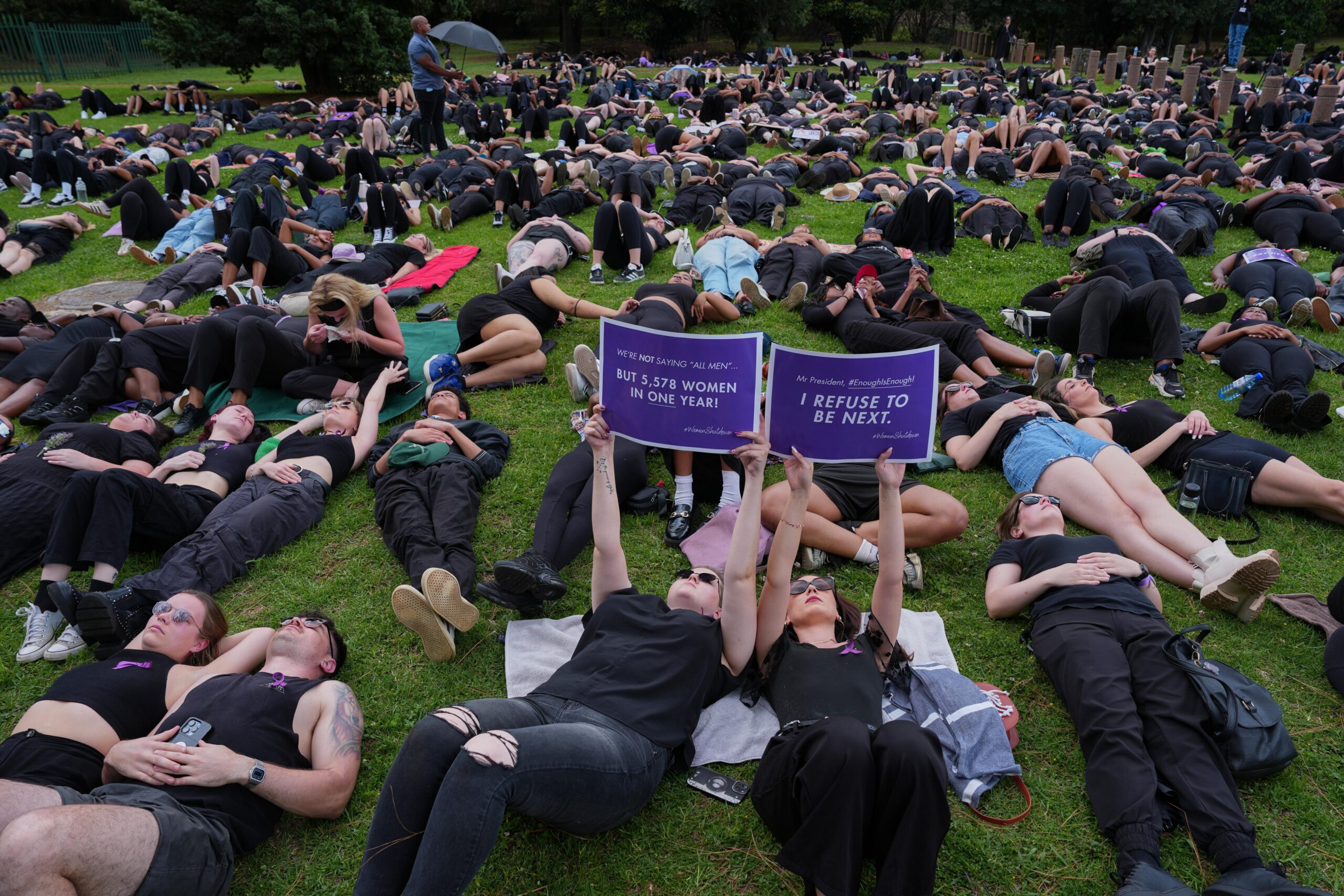
“Women For Change has announced a nationwide Women’s Shutdown for 21 November 2026, demanding that the South African government demonstrate meaningful progress against gender-based violence and femicide following last year’s national disaster declaration. The movement is calling for a fully funded, time-bound implementation plan, stronger survivor protections and greater accountability, using collective action and peaceful protest to pressure political leaders.”
A nationwide movement demanding accountability
South Africa’s gender-based violence and femicide crisis is once again becoming a central focus of political activism, with Women For Change announcing a nationwide Women’s Shutdown scheduled for Saturday, 21 November 2026. The campaign represents a renewed effort to mobilise communities, challenge government inaction and demand concrete measures to protect women and vulnerable groups from violence.
According to a report published by The South African on 13 November, the movement intends to use this year’s shutdown to assess whether authorities have translated political commitments into meaningful action. Its message is clear: recognition of the country’s gender-based violence crisis must be followed by implementation, funding and accountability.
The campaign comes almost one year after Women For Change helped intensify national pressure that contributed to government declaring gender-based violence and femicide a national disaster. While the declaration represented an important political milestone, activists argue that the emergency requires sustained intervention, measurable progress and stronger institutions capable of protecting survivors.
Consequently, the upcoming shutdown is expected to serve as both a demonstration of public solidarity and a political demand for urgent action.
From national recognition to implementation
Women For Change has framed its 2026 campaign around the message, Our Rights. Our Voices. Our Democracy.
The organisation says that last year’s mobilisation secured widespread public support for recognising gender-based violence as a national emergency. However, activists believe the declaration must now produce practical improvements in policing, prosecution, survivor services and prevention.
The movement’s central demand is for the Presidency to publish a fully costed and time-bound implementation plan for addressing gender-based violence and femicide by 21 November 2026.
Such a plan, according to the campaign, should include a dedicated and transparent budget, clear responsibilities for government departments and mechanisms for monitoring implementation.
Women For Change also wants the appointment of a national leader responsible for coordinating the response and holding relevant departments accountable.
These demands reflect a broader concern among activists that national commitments can become ineffective when responsibilities are fragmented across institutions or when funding and implementation remain unclear.
For campaigners, the next stage of the struggle is therefore about ensuring that government commitments become visible in the everyday experiences of people affected by violence.
A nationwide shutdown designed to amplify public pressure
The planned Women’s Shutdown is intended to involve women, LGBTQI+ people and supporters throughout South Africa.
Participants are encouraged to stop working and conducting business where possible, while joining activities that demonstrate solidarity with survivors and families affected by gender-based violence.
The movement’s approach combines economic participation, public mobilisation and symbolic protest to communicate the seriousness of the crisis.
The main procession is scheduled to begin at Wits University and conclude at Constitution Hill in Johannesburg.
One of the campaign’s most significant symbols will be the Unburied Casket, an empty coffin representing women murdered through femicide and families still seeking justice.
At noon, participants at Constitution Hill and across the country are expected to lie down for 15 minutes in a collective act of remembrance.
The silent demonstration is intended to honour the approximately 15 women reportedly murdered daily in South Africa, while highlighting the continuing urgency of prevention and accountability.
The action also gives participants an opportunity to remember victims whose deaths have become part of the country’s broader struggle against gender-based violence.
The Unburied Casket and the politics of remembrance
The Unburied Casket has developed into an important visual symbol associated with Women For Change’s activism.
Covered in beadwork created by local women artisans, the casket represents murdered women and the communities left behind by their deaths.
Each bead is intended to represent an individual life, transforming an artistic object into a powerful statement about the human consequences of gender-based violence.
The symbol has featured prominently in previous demonstrations, including a march along Cape Town’s Sea Point Promenade during the 2025 shutdown, where the names of more than 300 murdered women were reportedly read aloud.
Its continued use demonstrates how activism in South Africa frequently combines cultural expression, remembrance and political messaging.
The casket also helps communicate the campaign’s demands beyond conventional political speeches, bringing attention to victims and families whose experiences may otherwise remain underrepresented in public debate.
Stronger institutions and survivor protection
Women For Change’s campaign extends beyond symbolic demonstrations and public awareness.
The organisation is also calling for stronger institutions and improvements to the criminal justice system.
Among its demands are stronger courts, stricter bail conditions for alleged abusers, improved education about gender-based violence and consent in schools, and improvements to the National Register for Sex Offenders.
The campaign also emphasises increased funding for shelters and survivor-support services.
These demands reflect concerns about the obstacles survivors can encounter when seeking protection, reporting abuse or pursuing justice.
Activists argue that an effective response must involve more than criminal punishment after violence occurs. Prevention, education, access to support services and institutional accountability are equally important components of addressing the crisis.
The movement’s proposals therefore place responsibility on multiple areas of government, including policing, education, justice and social development.
Government commitments under increasing scrutiny
President Cyril Ramaphosa issued directives on 29 September 2026 aimed at accelerating the government’s response to gender-based violence and femicide.
According to The South African’s report, these directives included efforts to resolve outstanding cases and address forensic backlogs.
The announcement provided another indication that the government recognises the importance of improving the justice system’s response to gender-based violence.
However, Women For Change maintains that political announcements must be accompanied by clear implementation mechanisms and adequate financial resources.
The movement’s renewed mobilisation reflects a broader accountability challenge facing public institutions: demonstrating that policy commitments can produce measurable changes in people’s lives.
For activists, the declaration of a national disaster was an important achievement, but it did not conclude the campaign.
Instead, it established a basis for demanding more effective coordination, transparent funding and sustained political attention.
Activism and democratic participation
The Women’s Shutdown also highlights the relationship between activism and democratic participation in South Africa.
Peaceful demonstrations, petitions, public campaigns and collective action allow citizens to communicate demands that may not receive sufficient attention through ordinary political channels.
Women For Change’s mobilisation illustrates how civil society organisations can influence political agendas by bringing together communities around shared concerns.
The campaign also demonstrates the importance of public participation in monitoring government performance.
Although political leaders make policy decisions, civil society organisations can continue questioning implementation, highlighting failures and demanding explanations.
The movement’s message, Our Rights. Our Voices. Our Democracy, links the struggle against gender-based violence to constitutional rights, public accountability and democratic inclusion.
In this context, the shutdown is not simply a protest against violence. It is also an effort to strengthen the relationship between citizens and institutions responsible for protecting their rights.
The importance of sustained mobilisation
The success of the November campaign will depend partly on its ability to maintain public attention beyond the demonstration itself.
Activists face the challenge of ensuring that political pressure continues after participants return to their workplaces, businesses and communities.
This requires sustained engagement with government departments, monitoring progress on implementation plans and communicating developments to the public.
Community organisations, survivor-support groups, educational institutions and civil society networks may also play important roles in extending the campaign’s reach.
The movement’s demands for transparent funding and measurable implementation could provide a basis for monitoring government progress over time.
Such efforts would help distinguish between announcements and practical changes in service delivery, institutional performance and survivor protection.
A national test of political accountability
South Africa’s continuing gender-based violence crisis remains a major challenge for public institutions and society.
The Women’s Shutdown 2026 places renewed emphasis on the responsibilities of government to protect vulnerable people, improve access to justice and ensure that public commitments are implemented.
By demanding a dedicated budget, a coordinated implementation plan and accountable leadership, Women For Change is seeking to move the debate from political recognition towards measurable action.
The campaign also places survivors, families and affected communities at the centre of public discussion.
As 21 November approaches, the movement’s mobilisation is likely to contribute to renewed national debate about the effectiveness of government interventions and the role of civil society in demanding accountability.
Ultimately, the significance of the Women’s Shutdown will extend beyond the number of people participating in demonstrations.
Its broader importance lies in whether sustained public pressure can help secure stronger protections, improved institutional responses and meaningful progress against gender-based violence and femicide.
For Women For Change and its supporters, the message remains that recognition alone is insufficient. Justice must be implemented, public resources must reach affected communities, and institutions must be held accountable for protecting lives.
The November campaign therefore represents another chapter in South Africa’s ongoing struggle to ensure that constitutional rights translate into safety, dignity and justice for everyone affected by gender-based violence.



