




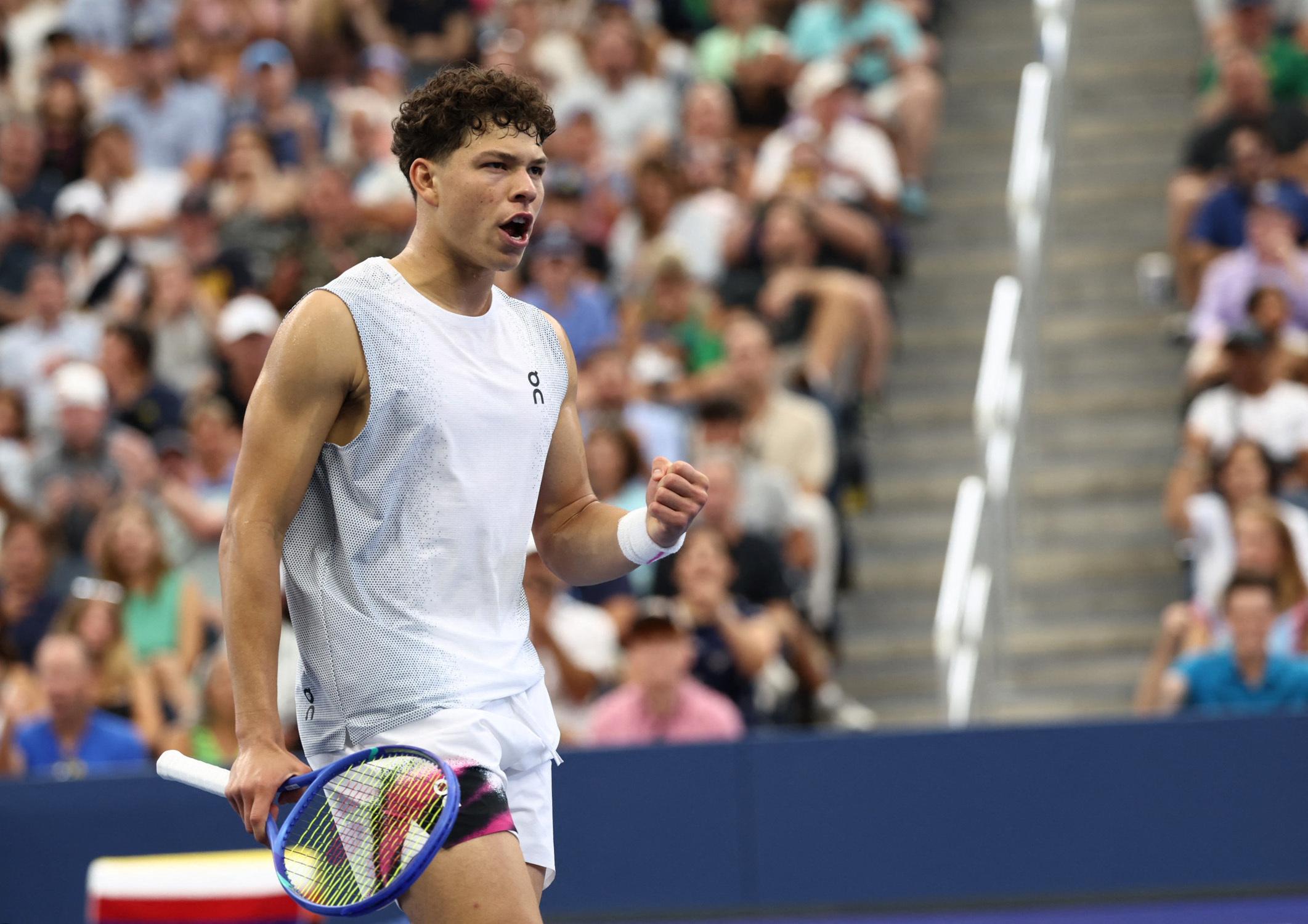
“French qualifier Arthur Géa defeated fourth-ranked American Ben Shelton 7–6 (5), 7–6 (3) in the third round of the Shanghai Masters on Sunday, securing his first victory over a top-10 opponent. The result marked a significant breakthrough for the 21-year-old and eliminated one of the tournament’s leading contenders without either set being decided before a tiebreak.”
Arthur Géa’s Shanghai Masters triumph highlights the unpredictability of elite tennis
French tennis player Arthur Géa delivered one of the most notable results of the Shanghai Masters on Sunday, 11 October 2026, defeating American star Ben Shelton in straight sets to advance to the last 16. The 21-year-old qualifier won 7–6 (5), 7–6 (3), overcoming the fourth-ranked American in a match defined by pressure, determination and two decisive tiebreaks. For Géa, the victory represented a major career milestone and demonstrated how emerging players can challenge established names on the ATP Tour.
The result is significant for tennis followers internationally, including South African supporters who follow major ATP tournaments and the development of young professional players. Although the contest took place in China, its implications extend beyond one match. Géa’s breakthrough illustrates the competitive depth of modern men’s tennis, where rankings, experience and reputation do not always determine the outcome.
A breakthrough victory against a top-ranked opponent
Géa entered the Shanghai tournament as a qualifier, meaning he had to navigate the qualifying process to secure his place in the main draw. Competing against players with considerably greater experience at the highest level can present a substantial challenge, particularly at an ATP Masters 1000 event.
However, the Frenchman demonstrated that he could handle the occasion. According to reports published on Sunday, he defeated Shelton in two closely contested sets, earning his first victory against a top-10 opponent. The achievement marked a significant step forward in his developing professional career.
Shelton, meanwhile, arrived at the contest with a strong reputation and a high world ranking. The American had also attracted attention as a US Open finalist, making his early elimination an important development in the Shanghai tournament.
For Géa, beating a player of Shelton’s calibre offers more than progression to another round. Such a result can strengthen confidence, provide valuable experience and demonstrate an ability to compete under pressure against leading international opponents.
Nevertheless, one victory does not automatically establish a player as a future champion. Consistency across tournaments, physical preparation and the ability to reproduce strong performances remain essential elements of a successful professional career.
Two tiebreaks decide a tightly contested match
The match was notable because neither set produced a straightforward conclusion. Both were decided by tiebreaks, placing additional emphasis on concentration, serve execution and decision-making at crucial moments.
In the opening set, Géa initially gained an advantage but allowed Shelton opportunities to return to the contest. The French player nevertheless recovered his composure when the set reached the tiebreak, winning it 7–5 to take the lead.
That opening-set victory placed Shelton under pressure. The American needed to respond quickly, but the second set followed a similarly competitive pattern, with neither player managing to separate himself sufficiently to close it out during the regular games.
The second-set tiebreak ultimately decided the contest. Géa again proved the more effective player at the decisive moment, winning 7–3 and completing a straight-sets victory. Shelton faced three match points at 6–3 in the second-set tiebreak, and Géa converted his first opportunity to secure the win.
These details underline an important feature of tennis: a match can remain competitive for extended periods before being determined by a handful of points. Players must maintain concentration even when the score appears balanced, because one poorly executed shot or an unforced error can change the direction of a tiebreak.
Géa’s performance demonstrated the value of staying composed when the pressure increases. His ability to win both tiebreaks was central to the outcome.
Why Ben Shelton’s elimination matters
Shelton’s defeat represents a setback in his Shanghai campaign. As one of the tournament’s leading players, the American would have been expected to challenge for a deeper run, although the unpredictable nature of tennis means that no result is guaranteed.
The loss also illustrates the pressure associated with competing among the world’s highest-ranked professionals. Players must defend ranking positions, maintain competitive form and respond to opponents who often approach matches with considerable motivation.
For a younger or less established competitor, defeating a prominent opponent can be an opportunity to demonstrate ability on a major stage. Géa took advantage of that opportunity, while Shelton was unable to find a decisive response during either tiebreak.
It would, however, be premature to interpret this single defeat as evidence of a broader decline in Shelton’s career. Professional tennis involves changing conditions, difficult matchups and narrow margins. A player can lose a close match while still maintaining a high level of performance throughout much of the contest.
The American’s elimination instead reinforces the importance of treating each tournament as a separate challenge. Players must assess their performances, identify areas for improvement and prepare for subsequent events.
Shanghai provides a demanding test for emerging players
The Shanghai Masters is part of the ATP Masters 1000 series, one of the most prominent levels of competition outside the Grand Slam tournaments. Its international field brings together leading professionals, rising prospects and qualifiers seeking opportunities to establish themselves.
For emerging players, participation in such tournaments provides exposure to demanding opposition and the atmosphere of elite competition. Even reaching the main draw can represent a valuable achievement, while advancing through successive rounds can accelerate a player’s development.
Géa’s victory is particularly noteworthy because he was making his main-draw debut at a Masters 1000 event, according to reporting published on Sunday. Rather than being overwhelmed by the occasion, he managed to defeat one of the tournament’s prominent seeds.
This outcome illustrates why qualifying tournaments remain important within professional tennis. They create pathways for players outside the highest rankings to compete against established stars. Although qualifiers face difficult odds, they can use the opportunity to gain experience, improve their rankings and attract wider attention.
The result also demonstrates the importance of preparation. Players who enter major tournaments must adapt to different courts, opponents, schedules and environmental conditions. The ability to remain focused despite unfamiliar circumstances can be as important as technical skill.
Conditions and concentration add to the challenge
Reports from the match noted that direct sunlight on one end of the court affected the players during the contest. Such conditions can influence comfort, visibility and the consistency required for high-level shot-making.
Outdoor tennis requires competitors to adapt continuously to their surroundings. Sunlight, temperature, wind and court characteristics can affect how players serve, return and construct points. While both competitors face the same general environment, their individual playing styles and tactical preferences can influence how effectively they respond.
In a match decided by narrow margins, small differences in adaptation can become important. Players must choose when to attack, when to defend and when to prioritise consistency over risk.
The two tiebreaks in Géa’s victory show how important it was to maintain concentration throughout the contest. Even when a player has established an advantage, the match remains uncertain until the final point is won.
For coaches and developing players, contests of this nature provide useful examples of the relationship between mental resilience and technical execution. Strong serving, accurate returns and effective movement must be supported by the ability to make good decisions when pressure increases.
What the result means for South African tennis followers
Although this is an international story rather than a tournament taking place in South Africa, it offers several points of interest for the country’s tennis community.
South African players, coaches and junior competitors can draw lessons from the importance of competitive opportunities, structured preparation and mental strength. Tennis development requires more than identifying talented athletes; it also involves providing access to quality coaching, appropriate competition and pathways through which players can progress.
Tennis South Africa provides information about national competitions, junior development and the broader playing structure through its official platforms. Its 2026 RCS Rising Star Tennis programme, for example, includes school-level competitions and a wheelchair division, illustrating the importance of creating opportunities for different groups of players.
International tournaments can also help young South Africans understand the standards required to compete at higher levels. Watching matches between established professionals and rising challengers provides examples of tactical discipline, composure and the importance of executing under pressure.
However, the development of South African tennis cannot depend on international inspiration alone. Sustainable progress also requires investment in facilities, coaching, player support and opportunities to compete at regional and international levels.
Géa’s success is a reminder that players can emerge from the qualifying ranks and produce results that attract international attention. For aspiring professionals, the lesson is not that rankings are unimportant, but that performance and preparation can create opportunities to challenge higher-ranked opponents.
The wider significance of the tournament
The Shanghai Masters result arrives during a busy period on the international tennis calendar, when players are competing for ranking points and seeking strong finishes to the season.
Every tournament can influence the competitive picture. Deep runs provide opportunities to accumulate points, while early exits can affect a player’s momentum and preparation for subsequent events. For younger competitors, a strong result can also provide valuable experience against opponents they may encounter repeatedly in future seasons.
Géa’s victory will therefore be an important reference point in assessing his progress. The next challenge is to show that he can sustain his level beyond a single standout performance.
The Frenchman was scheduled to face the winner of the match between Argentina’s Francisco Cerúndolo and Czech player Jakub Menšík in the following round, according to reporting published on Sunday. His next opponent would present a fresh tactical challenge and require another strong performance.
Progression in a major tournament can become increasingly demanding as the remaining field narrows. Players encounter opponents who have also survived difficult matches and who possess the technical ability to exploit weaknesses.
For Géa, maintaining the same composure that carried him through the two tiebreaks will be important. He will also need to manage recovery, prepare tactically and avoid allowing the significance of his victory to distract him from the next contest.
Conclusion: A defining opportunity for Arthur Géa
Arthur Géa’s 7–6 (5), 7–6 (3) victory over Ben Shelton on 11 October 2026 stands out as a major breakthrough in the young Frenchman’s professional tennis career. By defeating a top-ranked opponent in two tightly contested sets, he demonstrated the ability to compete under pressure at one of the sport’s leading tournament levels.
For Shelton, the result ends his Shanghai campaign earlier than expected. For Géa, it opens the door to another opportunity to test himself against elite opposition and build on a significant achievement.
South African tennis followers can take an important lesson from the match: success depends not only on reputation or ranking, but also on preparation, resilience and execution at decisive moments. As the international season continues, Géa’s progress will be worth following, while South Africa’s own development programmes remain important to building the next generation of competitive players.
The immediate story is clear: an emerging French talent has defeated a leading American star, and the Shanghai Masters has once again demonstrated how quickly the balance of a tennis match can change.



