




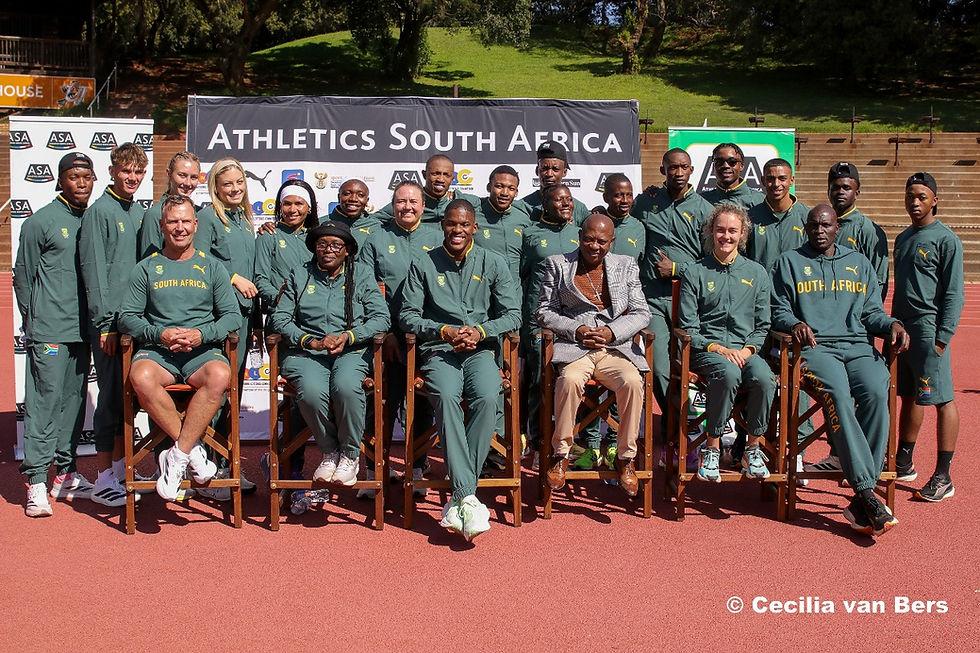
“World Athletics has instructed Athletics South Africa to implement the disciplinary panel’s recommendation to remove suspended president James Moloi and adopt a revised constitution within six months, warning that failure to comply could lead to sanctions. The intervention raises important questions about leadership accountability, financial oversight, athlete representation and the stability of South African athletics.”
Athletics South Africa Under Pressure to Reform as World Athletics Demands Accountability
A major turning point for South African athletics
Athletics South Africa is facing a critical period in its administration after World Athletics called for the removal of suspended president James Moloi and demanded comprehensive reforms to the national federation’s constitution. The intervention represents a significant development for a sport that depends on effective leadership, transparent financial management and strong relationships between athletes, clubs, provincial associations and international governing bodies.
According to reporting published by Business Day on 20 October 2026, World Athletics instructed the federation to implement the findings of an independent disciplinary panel and establish a timetable for constitutional reform. Daily Maverick subsequently reported on 23 October that the international governing body was seeking broader changes to Athletics South Africa’s leadership arrangements.
The developments matter because athletics in South Africa encompasses far more than elite track and field competitions. The sport includes road running, cross-country, marathon racing, school athletics, middle-distance events, sprinting, jumping and throwing disciplines. A stable national federation can help coordinate these activities, maintain sporting standards and support athletes pursuing opportunities at continental and global championships.
However, governance disputes can create uncertainty for athletes, coaches, event organisers and sponsors. The challenge facing Athletics South Africa is therefore to address the concerns raised by international authorities while ensuring that preparations for competitions and the development of emerging talent continue.
Disciplinary findings against the suspended president
The dispute intensified following the findings of an independent disciplinary panel chaired by retired judge Basheer Waglay. According to Business Day’s report, the panel issued its findings on 6 October 2026 and unanimously found Moloi guilty of two charges relating to the misuse of Athletics South Africa’s funds and assets. The panel determined that his removal as president and as a member of the executive board was the appropriate sanction.
The distinction between suspension and removal is important. Suspension temporarily prevents an individual from exercising certain responsibilities, whereas removal addresses whether that individual should continue holding office. The disciplinary recommendation consequently placed pressure on the federation to follow its established procedures and implement the outcome.
World Athletics subsequently called on Athletics South Africa to respect the panel’s findings and implement its decision without delay. Its position indicates that the matter is not simply a disagreement between individual administrators. Instead, the international body considers the wider governance framework an issue requiring sustained attention.
For the federation, the immediate challenge is to demonstrate that disciplinary procedures can produce meaningful outcomes. Athletes and other stakeholders need confidence that financial resources are managed appropriately and that leadership positions are subject to clear rules.
It is equally important that disciplinary decisions are implemented through legitimate procedures. A sustainable solution requires compliance with applicable rules, clearly defined responsibilities and safeguards that apply consistently to all officials.
World Athletics identifies structural weaknesses
The concerns extend beyond the individual disciplinary case. A fact-finding mission led by Zakhele Dlamini, president of the Southern African Confederation of Athletics and vice-president of the Confederation of African Athletics, examined governance problems within the South African federation.
Business Day reported that World Athletics identified divisions within the executive board, difficulties in collective decision-making, uncertainty over the authority of elected officials and potential conflicts of interest involving overlapping national and provincial responsibilities.
These issues can affect how a sports federation makes decisions, allocates resources and communicates with its members. When responsibilities are unclear, disagreements can delay important decisions or create uncertainty over which officials have the authority to act.
A strong governance system should establish a clear division between strategic oversight, executive administration, financial supervision and independent disciplinary processes. It should also explain how decisions are approved, recorded, reviewed and challenged.
The reforms being demanded are therefore intended to address the underlying arrangements that can allow institutional disputes to continue. Replacing one leader without strengthening these arrangements would not necessarily resolve the problems identified by the international governing body.
For South African athletics, the objective should be a system in which the federation operates according to established rules rather than depending excessively on relationships between particular officeholders.
Constitutional reform and the six-month deadline
World Athletics and the Confederation of African Athletics have established a roadmap requiring Athletics South Africa to finalise and formally adopt a revised constitution within six months of the relevant letter. The federation must also provide a detailed timetable for the reform process within one month. Following adoption of the revised constitution, fresh elections are expected within a further three months.
These deadlines create a defined process for addressing the governance concerns. Nevertheless, constitutional reform involves more than changing wording in a document. The new arrangements must establish workable procedures and gain the necessary approval through the federation’s legitimate decision-making structures.
World Athletics has indicated that the draft constitution prepared by Athletics South Africa contains improvements but does not adequately address every fundamental governance principle. The federation must therefore work with the international and continental bodies to resolve the outstanding issues before adopting the revised document.
The process will require careful consultation, clear communication and effective administration. Rushed changes could produce further disagreements, while unnecessary delays could increase the risk of sanctions.
The six-month period is consequently an opportunity to establish a more durable institutional framework. Success will depend on whether the federation can translate the requirements into practical rules that members understand and consistently follow.
Independent elections and athlete representation
One of the central questions concerns the relationship between elected leadership and the wider athletics community. A national federation must represent the interests of its members while maintaining an effective system for making decisions.
World Athletics has called for clearly defined voting rights, safeguards against individuals exercising multiple votes and rules addressing conflicts of interest. It has also identified the need for appropriate term limits, gender balance and athlete representation.
Independent electoral arrangements are particularly important because leadership elections determine who controls the federation’s strategic direction. Transparent candidate procedures, clearly established voting rules and reliable verification of results can help reduce disputes and strengthen confidence in the outcome.
Athlete representation is equally significant. Elite competitors and developing athletes experience the practical consequences of administrative decisions, including competition planning, selection procedures, development opportunities and the distribution of available resources.
Providing athletes with a meaningful voice can help ensure that governance discussions consider the needs of the people participating in the sport. Representation should, however, be supported by clearly defined responsibilities and appropriate accountability mechanisms.
Gender balance also deserves attention throughout the federation’s leadership and committee structures. Broad participation can help ensure that different experiences and perspectives inform decisions about the future of athletics.
Ultimately, a successful constitution should create a balance between democratic participation, professional administration and independent oversight.
Financial accountability and stakeholder confidence
Financial accountability is another major issue arising from the disciplinary proceedings. National sports federations must manage funds carefully because their resources support administration, competitions, athlete development and other essential activities.
Clear financial controls can include documented expenditure approvals, regular reconciliations, independent audits, conflict-of-interest declarations and transparent reporting to the appropriate governing bodies.
These safeguards are important regardless of who occupies a leadership position. An effective system should make it possible to identify irregularities, investigate concerns and take appropriate action without relying solely on the discretion of individual officials.
Financial transparency can also influence the confidence of sponsors, event organisers and other partners. Organisations supporting athletics need assurance that their contributions are handled responsibly and directed towards legitimate sporting objectives.
For athletes, confidence in financial administration matters because they depend on reliable arrangements for competition participation, development programmes and the fulfilment of legitimate obligations.
The governance reforms offer Athletics South Africa an opportunity to strengthen those arrangements. However, restoring confidence will require evidence of consistent implementation rather than assurances alone.
Potential consequences of non-compliance
World Athletics has warned that failure to adopt a satisfactory revised constitution within the prescribed period, or deliberate obstruction of the agreed roadmap, could result in the matter being referred to its council for consideration of sanctions.
The possibility of sanctions adds urgency to the reform process. The exact consequences would depend on the applicable rules and any subsequent decision by the relevant governing authority.
For athletes, the central concern is avoiding unnecessary disruption to their competitive opportunities. International representation, championship preparation and the development of younger competitors all benefit from a stable relationship between national and international sporting organisations.
The federation must therefore manage two priorities simultaneously: resolving its governance problems and maintaining the operational continuity of athletics.
This requires timely communication with provincial associations, clubs, coaches, athletes and event organisers. Stakeholders should receive clear information about administrative changes, the reform timetable and any decisions affecting competitions.
At the same time, the prospect of sanctions should not be treated as a reason to bypass legitimate procedures. Reforms must be both timely and credible if they are to provide a lasting solution.
Implications for road running and grassroots athletics
The governance dispute also has implications for South Africa’s wider running community. The country’s athletics ecosystem includes major road races, local running clubs, school competitions and community-based development programmes.
Recent tensions involving Athletics South Africa and the Comrades Marathon have illustrated how disagreements over governance and event administration can affect relationships within the sport. Daily Maverick’s October reporting on the federation’s reform requirements adds to the wider debate about institutional stability.
Road races and grassroots programmes rely on cooperation between organisers, local authorities, provincial structures and national sporting bodies. Clear responsibilities can help prevent uncertainty over event recognition, athlete participation and administrative requirements.
Smaller clubs may have limited resources to navigate complicated disputes. For them, predictable rules and accessible communication from governing institutions are particularly important.
Grassroots athletics also provides a pathway for young competitors to progress from school and community events to provincial, national and international competition. A well-managed federation can support that progression through consistent standards and coordinated development initiatives.
The governance crisis should therefore be viewed not only through the experiences of senior officials but also through its potential effect on ordinary participants and the communities that sustain the sport.
What happens next?
The next stage will depend on Athletics South Africa’s response to the reform roadmap, its engagement with World Athletics and the Confederation of African Athletics, and its ability to adopt a constitution that meets the required standards.
Important indicators will include publication of a credible timetable, clear explanations of the proposed constitutional changes, effective consultation with stakeholders and progress towards independent elections.
The federation will also need to demonstrate that financial oversight and disciplinary arrangements are capable of operating independently and transparently.
For journalists and athletics supporters, it is important to distinguish confirmed decisions from proposals, deadlines and possible future sanctions. As of the reporting verified for this article, the international body’s reform demands are established, but the completion of the entire reform process should not be assumed.
Further developments will determine whether the federation can turn the current dispute into an opportunity for institutional renewal.
Conclusion: accountability must benefit the sport
Athletics South Africa faces a consequential test of leadership and institutional credibility. The disciplinary findings involving James Moloi and World Athletics’ demands for constitutional reform have placed governance, financial accountability and democratic representation at the centre of the national athletics debate.
The immediate priority is to follow the required procedures, meet the established deadlines and implement reforms that address the structural concerns identified by the international governing bodies.
However, the ultimate measure of success will extend beyond the adoption of a new constitution. The federation must demonstrate that its rules work in practice, its financial administration is accountable and its leadership structures serve the interests of the sport.
South Africa has athletes competing across sprinting, middle-distance running, long-distance events, cross-country and road racing. Their development depends on a sporting environment in which administrative disputes do not overshadow preparation, competition and opportunity.
A transparent and stable federation can strengthen relationships with athletes, clubs, sponsors and international partners. It can also provide a more reliable foundation for nurturing emerging talent and maintaining South Africa’s presence in international athletics.
The reform process will require cooperation, discipline and measurable progress. If Athletics South Africa responds effectively, the current crisis could become a turning point towards stronger governance. If it fails to meet the required standards, the consequences could extend well beyond its leadership, affecting confidence in the institutions responsible for guiding the sport.
For now, the central story is clear: the future credibility of South African athletics will depend not simply on who leads the federation, but on whether the organisation can establish transparent, accountable and effective systems that put the sport and its athletes first.



