




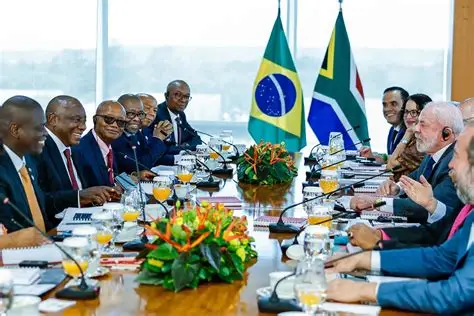
“South Africa reaffirmed its strategic partnership with Brazil, aiming to deepen economic ties, but the move highlights the absence of a coherent trade strategy. With South Africa already running a R22 billion trade deficit with Brazil, experts caution that free trade could worsen the imbalance and harm domestic industries.”
On 31 August 2026, South Africa’s reaffirmation of its strategic partnership with Brazil was presented as a diplomatic success. Yet beneath the political fanfare lies a sobering reality: South Africa’s trade policy remains fragmented, and the Brazil deal underscores the urgent need for a coherent national trade strategy.
Current Trade Deficit
South Africa’s trade with Brazil is heavily imbalanced. In 2025, South Africa exported R5.2 billion worth of goods to Brazil but imported R27.3 billion, leaving a R22 billion deficit. This imbalance is not new, but the prospect of deepening ties without a clear economic framework risks worsening the situation.
Political vs. Economic Leadership
The announcement was led by the Department of International Relations and Cooperation (DIRCO) rather than the Department of Trade, Industry and Competition (DTIC). This signals that the partnership is being driven by political optics rather than economic analysis. Trade agreements require careful evaluation of reciprocal benefits, yet South Africa’s approach appears reactive and politically motivated.
Risks of Free Trade with Brazil
Brazil’s economy overlaps significantly with South Africa’s in sectors such as agriculture, mining, and manufacturing. Free trade could expose South African industries to cheaper Brazilian imports, undermining local producers. Without protective measures or targeted agreements, domestic industries may face intensified competition, leading to job losses and reduced industrial output.
SACU-Mercosur PTA Limitations
Currently, trade between South Africa and Brazil is governed by the SACU-Mercosur Preferential Trade Agreement (PTA). While this provides tariff relief on certain products, many goods fall outside its scope. Expanding the agreement without addressing structural imbalances could entrench South Africa’s deficit.
Broader Trade Strategy Gaps
South Africa’s free trade portfolio is thin, with no agreements in place with many regions from the Middle East to East Asia. This lack of diversification leaves the economy vulnerable to shocks, such as US tariff policies and geopolitical conflicts. A coherent strategy should prioritize markets where South African goods are competitive, while avoiding reciprocal arrangements that flood the domestic market with imports.
Logistics and Competitiveness
Improving logistics is critical to competitiveness. South Africa has invested in enhancing port efficiency and reducing shipping costs, but without trade agreements that open markets, these improvements cannot translate into expanded exports. Logistics reforms must be complemented by strategic trade deals that secure access to diverse markets.
Business Perspective
South African businesses are ready to partner with government on a coherent trade strategy. Industry leaders emphasize the need for agreements that balance export opportunities with protection against harmful import surges. The Brazil case illustrates the danger of politically driven deals that ignore economic fundamentals.
Global Context
International trade uncertainty has increased due to US tariffs and ongoing geopolitical conflicts. Countries are reassessing trade strategies to secure resilience. South Africa’s reliance on politically motivated partnerships risks leaving it exposed to external shocks without the buffer of diversified trade relationships.
Conclusion
The Brazil partnership announcement may be celebrated as a diplomatic win, but it exposes South Africa’s missing trade strategy. Without a coherent plan, deepening ties with Brazil could worsen the trade deficit and harm domestic industries. Policymakers must urgently craft a strategy that balances competitiveness, diversification, and reciprocity to safeguard South Africa’s economic future.



