




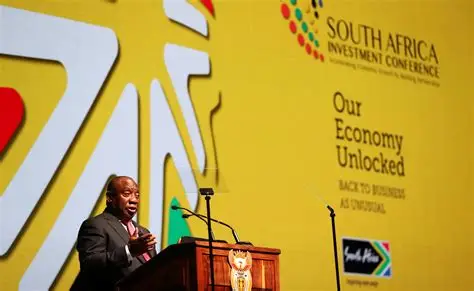
“South Africa’s Presidency and Business Leadership South Africa (BLSA) have launched Phase 3 of their partnership, targeting GDP growth above 3% annually and the creation of one million jobs by 2030. The initiative marks a transition from crisis management in electricity and logistics to long-term structural reforms driven by private-sector collaboration.”
South Africa has entered a defining moment in its economic reform journey. On August 20, 2026, President Cyril Ramaphosa and Business Leadership South Africa (BLSA) unveiled Phase 3 of the Government–Business Partnership, a bold initiative designed to accelerate growth, generate employment, and strengthen institutional capacity. This announcement signals a shift from crisis stabilization—focused on electricity, logistics, and governance—to proactive structural reform aimed at building a resilient, competitive economy.
Background: From Crisis to Reform
The partnership traces back to 2023, when South Africa faced severe challenges:
- Loadshedding crippled productivity, undermining industrial output.
- Logistics bottlenecks at ports and railways disrupted trade flows.
- Security concerns eroded investor confidence.
- Placement on the FATF grey list raised reputational risks.
Early phases of the partnership focused on stabilization:
- Achieving 400 consecutive days without loadshedding.
- Improving port performance and freight transport efficiency.
- Opening rail corridors to private operators.
- Securing removal from the FATF grey list.
These milestones restored confidence in the state’s ability to collaborate with business, laying the foundation for deeper reforms.
Phase 3 Objectives
The new phase shifts emphasis from fixing broken systems to unlocking growth. Key objectives include:
- GDP growth above 3% annually.
- Creation of one million jobs by 2030.
- Mobilization of private-sector expertise in infrastructure, energy, and logistics.
- Strengthening institutional capacity in government.
President Ramaphosa emphasized that the partnership is no longer about crisis response but about building a resilient, competitive economy.
Business Perspective
BLSA CEO Busi Mavuso highlighted that the partnership has moved beyond discussion to tangible outcomes. She noted:
- Improvements in public finances, with South Africa receiving credit rating upgrades due to fiscal discipline.
- A “change in emphasis” toward growth-driven collaboration.
- The importance of private-sector participation in electricity generation, logistics modernization, and fiscal management.
Structural Reforms Driving Confidence
The partnership supports reforms in critical areas:
- Energy: Expansion of private-sector participation in electricity generation and transmission.
- Logistics: Modernization of freight corridors and port infrastructure.
- Fiscal Management: Improved discipline and transparency in public finances.
These reforms are expected to reduce bottlenecks, enhance competitiveness, and attract foreign investment.
Implications for Business Policy
The initiative represents a significant evolution in South Africa’s business policy landscape:
- Shift from crisis management to growth strategy.
- Integration of private-sector expertise into national development.
- Institutional strengthening to ensure sustainability of reforms.
For businesses, this means a more predictable environment, reduced operational risks, and expanded opportunities in infrastructure and energy sectors.
Challenges Ahead
Despite optimism, challenges remain:
- Ensuring reforms are implemented effectively across all levels of government.
- Addressing persistent inequality and unemployment.
- Balancing fiscal discipline with social spending needs.
Conclusion
Phase 3 of the Government–Business Partnership marks a turning point in South Africa’s economic trajectory. By prioritizing growth, job creation, and institutional reform, the country is positioning itself for a more resilient and competitive future. The collaboration between government and business underscores the importance of shared responsibility in driving national development.



