




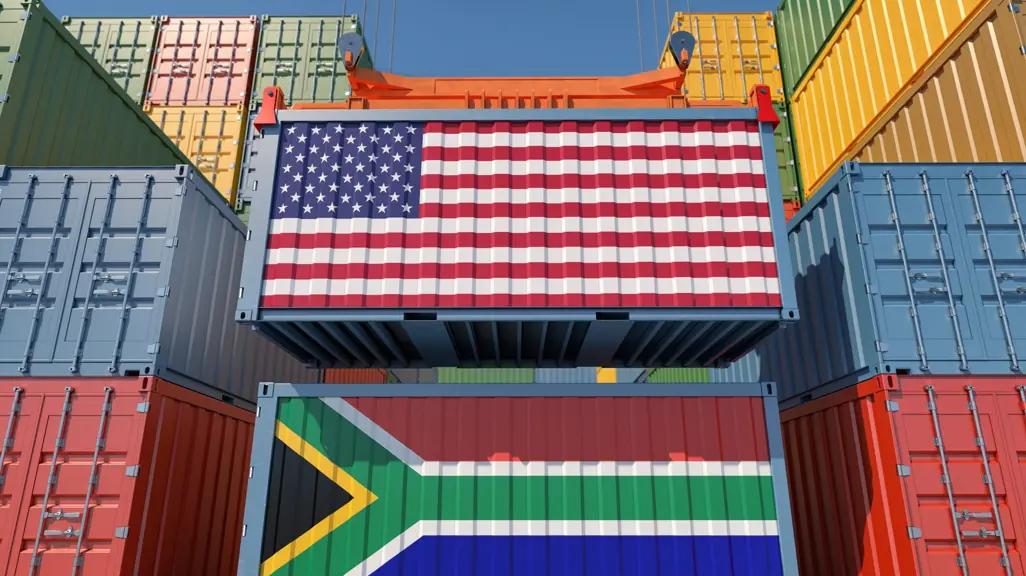
“South African businesses are being urged to prepare for the possible loss of preferential US trade benefits under the African Growth and Opportunity Act (AGOA) from January 2027. Supply-chain expert Paul Forster has advised companies to assess their exposure, review contracts and diversify supply chains, warning that particular export industries could experience substantial disruption despite the relatively limited overall exposure of global trade.”
South African Businesses Urged to Prepare for AGOA Trade Policy Changes as Export Risks Increase
South African businesses are being urged to prepare for the possible loss of preferential trade access to the United States as the country approaches a January 2027 deadline under the African Growth and Opportunity Act (AGOA). Supply-chain specialist Paul Forster told Eyewitness News on 7 November that companies should assess their exposure, review contracts and diversify supply chains rather than wait for political negotiations to conclude. His warning captures the central business-policy challenge facing exporters: the national trade impact may be relatively contained, but particular industries, firms and communities could experience significant disruption.
The warning follows Washington’s announcement on 2 November that it intends to suspend South Africa and Rwanda from AGOA from 1 January 2027. The programme, established in 2000, has offered qualifying goods from eligible sub-Saharan African countries preferential, generally duty-free access to the US market. South Africa has been one of its largest beneficiaries, using the preference for products including automotive components, citrus, wine and other agricultural goods.
A policy change with uneven consequences
The expected withdrawal does not mean South African products will be prohibited from entering the United States. Instead, qualifying exports would lose preferential treatment and generally face ordinary import duties applicable to their product, alongside any other tariffs in force. The additional cost varies by product and can influence competitiveness, prices, margins and purchasing decisions.
That distinction is important for businesses planning their response. The end of AGOA is not equivalent to a blanket embargo, nor does it automatically terminate the broader commercial relationship between South Africa and the US. Nevertheless, for exporters whose business models depend on the preference, even a relatively modest tariff increase can make a difference when competing against suppliers from countries with more favourable terms.
The Department of Trade, Industry and Competition has said that AGOA exports represented approximately US$1.7 billion in 2025, down from roughly US$4 billion in 2024. The department also reported that around 89% of South African exports to the US entered under ordinary most-favoured-nation terms in 2025, while approximately 10% entered under AGOA. The programme accounted for about 1% of South Africa’s total global exports.
These figures suggest that the aggregate exposure is limited, but they do not capture the concentration of risk within individual sectors.
Exporters urged to act before the deadline
Forster’s advice is practical: businesses should not treat diplomatic talks as a substitute for operational preparation. Exporters need to identify which products qualify for AGOA, calculate the likely tariff change for each product line, and determine how much of their revenue depends on US customers.
Companies should also examine whether contracts allocate tariff costs to the exporter, importer or another party, and whether price-adjustment clauses or renegotiation mechanisms are available.
A detailed exposure assessment should extend beyond direct sales. Exporters may rely on local growers, packhouses, manufacturers, logistics providers, freight operators and smaller suppliers. If US orders decline or customers demand lower prices, pressure can move through the value chain. Businesses should therefore map suppliers and employment linked to affected contracts, not simply calculate the value of shipments crossing the border.
The timing matters. A January implementation date leaves a relatively short period for businesses to adjust pricing, negotiate customer arrangements, test alternative destinations and plan production.
Some companies may be able to redirect products; others face constraints arising from product specifications, certification, perishability, consumer preferences or established distribution networks.
Agriculture faces particular adjustment challenges
Agriculture is among the sectors attracting attention because some production has been tailored to US demand. Citrus growers, wine producers and other agricultural exporters may face additional costs or weaker margins if preferential access disappears.
The challenge is not always solved by finding another buyer: fruit varieties, quality standards, packaging, shipping schedules and market requirements can differ significantly across destinations.
Reuters reported earlier this week that citrus industry representatives warned that orchards had been planted specifically for the US market and that produce could not necessarily be redirected quickly. Wine exporters also cautioned that losing the preference would reduce their competitive advantage against suppliers in countries such as Chile, Argentina and parts of Europe.
These concerns are concentrated rather than universal. Not every farm or exporter sells to the US, and the effect depends on the share of sales exposed, the product’s tariff treatment and the capacity to negotiate new markets.
Still, where US demand supports seasonal jobs, packhouse activity and transport services, even a limited decline in orders could be meaningful for local communities.
Automotive and manufacturing exposure
South Africa’s automotive sector has long been connected to international trade policy, but AGOA is only one factor in its US market position. Automotive exports have already faced separate US tariff measures, which reduced the value of the AGOA preference for some products. The withdrawal therefore needs to be assessed alongside existing duties, production costs, exchange rates and the competitiveness of South African plants.
Manufacturers and component suppliers should examine the rules that apply to each shipment rather than assume a single tariff rate across the industry. They must also consider whether US customers can shift sourcing to competing countries or whether long-term supply arrangements and technical requirements make substitution difficult.
The effects could extend to investment decisions. If a plant expects lower orders or thinner margins, it may delay expansion, reduce overtime or reconsider new hiring. Conversely, companies with strong customer relationships, efficient production and diversified destinations may be better placed to absorb the change.
Diversification: opportunity and practical limits
Forster also pointed to trade with other African countries as an opportunity, while warning that infrastructure and border inefficiencies can impede commerce. Diversification is a longstanding priority in South Africa’s industrial and trade strategy.
Government has identified opportunities in the African Continental Free Trade Area, the Southern African Development Community, the European Union, the United Kingdom, India, China, ASEAN and other markets.
Yet diversification is not an instant replacement for US sales. New markets require buyer relationships, product approvals, logistics planning, payment arrangements and often investment in marketing or distribution. A company may need to adapt packaging, standards or product mix. For perishable goods, shipping routes and cold-chain capacity can determine whether an alternative destination is commercially viable.
The most realistic approach is a portfolio of options: preserve US relationships where possible, explore new buyers, improve domestic productivity and reduce dependence on a single market.
Companies should evaluate destinations based on net returns and operational feasibility, not merely headline market size.
Government response and negotiations
South Africa’s government has said it will continue engaging the US while supporting affected sectors and accelerating export diversification. Trade Minister Parks Tau has argued that the AGOA decision does not define the entire bilateral relationship and that a solution depends on both parties’ willingness to negotiate.
The department says it has offered concessions through appropriate channels, while maintaining constitutional, biosecurity and international obligations.
Government has also indicated that support will be tailored to affected industries and companies. That approach matters because exposure differs substantially between businesses. A broad package that treats all exporters alike may not address the needs of a citrus grower, a component manufacturer or a small supplier in the same way.
Parliament has expressed concern about potential effects on jobs, trade and bilateral relations. Its committee discussions have also emphasised that the loss of preferences would not prohibit exports and that additional duties would vary by product. Officials have cautioned against presenting speculative job-loss figures as confirmed outcomes.
What businesses should do now
Companies can take several immediate steps.
First, establish a product-level tariff and revenue baseline, including the proportion of US sales that currently benefits from AGOA.
Second, review contracts and discuss tariff-sharing arrangements with customers.
Third, build scenarios for different outcomes, including continued negotiations, loss of preference and possible changes in other US tariffs.
Fourth, assess alternative markets and the cost of reaching them. This should include customs requirements, transport, insurance, currency risk, payment terms and buyer reliability.
Fifth, communicate early with workers, suppliers and lenders where exposure could affect production or cash flow.
Finally, exporters should use official guidance from the dtic and seek specialised customs or legal advice for product-specific questions.
The department’s exporter FAQ, published on 3 November, is intended to help companies understand eligibility developments, assess trade exposure and identify support mechanisms. It is a useful starting point, although individual businesses still need to verify their own product classifications and commercial arrangements.
The wider business-policy lesson
The AGOA episode highlights how external policy decisions can rapidly reshape the conditions under which companies compete. It also reinforces the value of predictable trade rules, diversified markets and efficient domestic infrastructure.
Businesses cannot control decisions made in Washington, but they can strengthen resilience through better planning, more competitive operations and a broader customer base.
For policymakers, the priority is to combine diplomatic engagement with credible support and reforms that reduce the cost of exporting. Reliable ports, efficient border processes, energy security, skills and regulatory certainty affect competitiveness regardless of preferential trade arrangements.
Improving these fundamentals can help South African firms withstand shocks and take advantage of new opportunities.
The immediate outlook remains uncertain. The announced suspension is scheduled for 1 January 2027, and further engagement may still influence the relationship or future access. Exporters should not assume either that the decision is irreversible or that a negotiated solution will arrive in time.
Preparing for the change while keeping channels open is the prudent course.
The central message from the 7 November warning is therefore clear: South African companies need to turn trade-policy uncertainty into concrete business planning. A careful assessment of exposure, contracts, supply chains and market alternatives can limit avoidable disruption.
While the national trade figures indicate that AGOA represents a relatively small share of total exports, the concentrated consequences for affected businesses, workers and communities make preparation urgent.



