




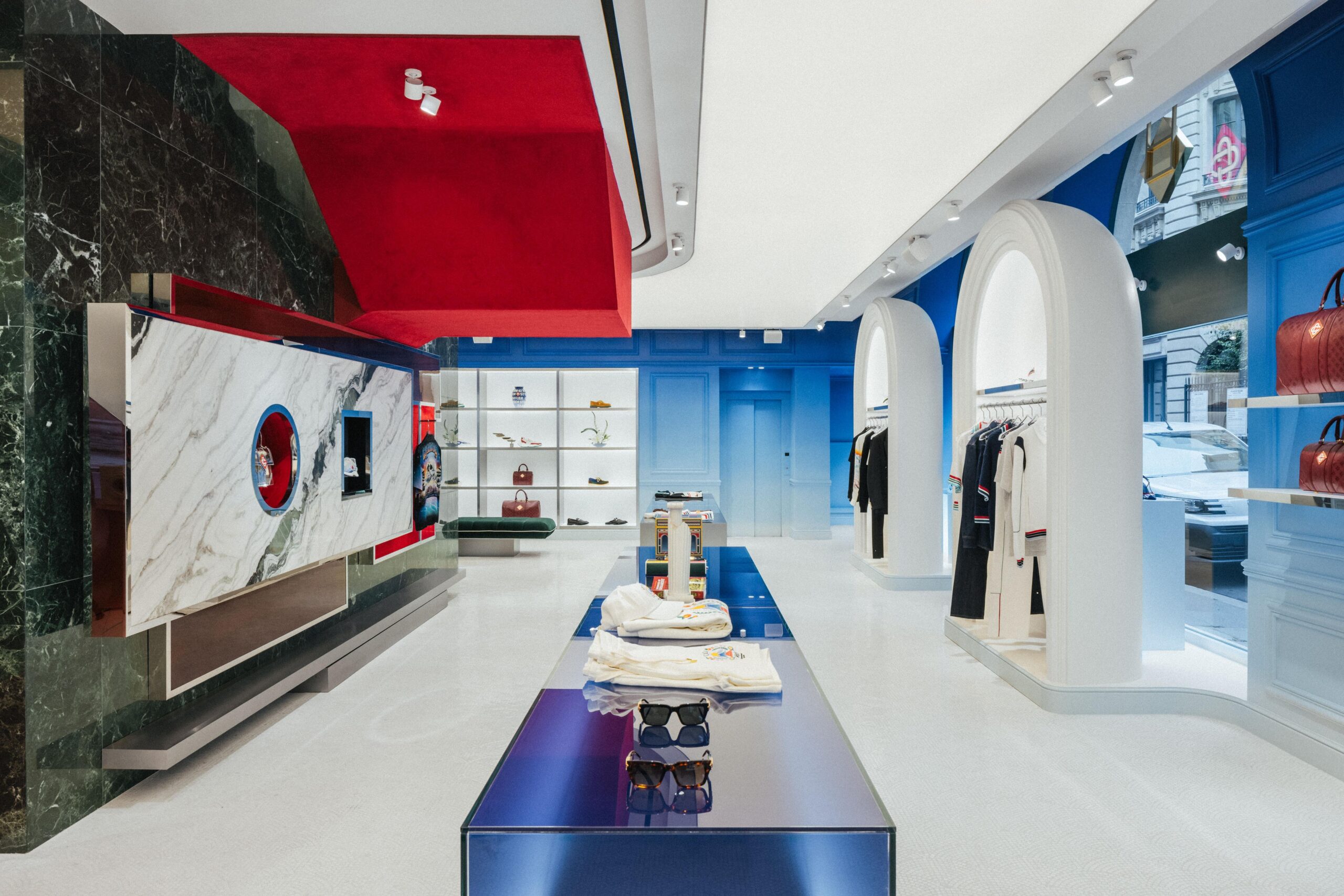
“French-Moroccan luxury fashion house Casablanca has opened its first dedicated South African retail boutique at Diamond Walk, Sandton City, in partnership with Yawa Africa, strengthening Johannesburg’s position as a destination for international luxury fashion. The boutique introduces the brand’s Pre-Fall and Autumn/Winter 2026 collections, combining expressive prints, refined tailoring, elevated sportswear and cultural storytelling inspired by Egypt, while highlighting the growing opportunities for premium fashion retail in South Africa.”
Casablanca’s Johannesburg Boutique Signals a New Chapter for Luxury Fashion in South Africa
Johannesburg strengthens its luxury fashion credentials
Johannesburg’s luxury fashion market has welcomed a significant international addition with the opening of Casablanca’s first dedicated South African boutique at Diamond Walk, Sandton City. Announced on 21 October 2026, the opening marks an important development for the French-Moroccan fashion house and reflects the continuing evolution of South Africa’s premium retail landscape.
The boutique was established through a partnership with Yawa Africa, which has worked with Casablanca for three years to introduce the brand to South African consumers. The new location gives shoppers a permanent physical destination in which to explore the label’s collections and experience its distinctive approach to contemporary luxury.
The development is important because luxury fashion increasingly involves more than purchasing expensive clothing. Consumers are also attracted to craftsmanship, distinctive design, brand heritage and shopping environments that communicate a clear creative identity. By establishing a dedicated boutique, Casablanca can present these elements together rather than relying exclusively on individual products or multi-brand retail spaces.
Sandton City provides a prominent setting for this expansion. Its Diamond Walk precinct is associated with premium retail, making it a suitable environment for brands seeking customers interested in designer fashion, accessories and exclusive shopping experiences.
For Johannesburg, the opening adds another international name to an increasingly diverse fashion landscape. For Casablanca, it creates a stronger connection with local consumers and provides an opportunity to develop a more lasting presence in the South African market.
A luxury brand shaped by French-Moroccan heritage
Founded in Paris in 2018 by creative director Charaf Tajer, Casablanca has developed a distinctive identity through its combination of French sophistication, Moroccan cultural influences, sporting references and travel-inspired imagery.
Rather than following the traditional boundaries between formal luxury clothing and casual sportswear, the brand brings these categories together. Its collections incorporate expressive prints, carefully considered tailoring, textured knitwear and relaxed silhouettes that retain a sense of refinement.
This approach appeals to consumers who want clothing that feels distinctive without sacrificing comfort. A printed silk shirt, for example, can function as a statement piece while remaining suitable for relaxed social occasions. Tailored garments and elevated sportswear can also be combined to create a wardrobe that moves between leisure, travel and contemporary city life.
Casablanca’s identity is particularly relevant in a fashion market where consumers encounter an enormous range of labels competing for attention. A recognisable design language helps distinguish a brand from competitors offering similar product categories.
The company’s French-Moroccan heritage also provides a foundation for its visual storytelling. Rather than treating clothing as an isolated product, Casablanca frequently draws on places, architecture, culture and the atmosphere of travel to create a broader narrative around its collections.
For South African shoppers, the new boutique offers an opportunity to encounter this identity directly. Customers can examine the fabrics, colours, construction and styling of individual pieces while gaining a clearer understanding of how the collections fit together.
The opening therefore represents both a retail development and an introduction to a particular interpretation of modern luxury.
A boutique designed to express the brand’s identity
The Johannesburg store extends Casablanca’s creative approach into the physical retail environment. According to the original report, the interior combines curved architectural forms with an evergreen and ivory palette, complemented by accents of yellow, rose, sky blue and red.
Sculptural lacquered displays and a hand-laid mosaic monogram add visual detail, drawing a connection between contemporary retail design and North African craftsmanship.
These features are important because a dedicated luxury boutique serves a different purpose from a conventional clothing outlet. Its environment communicates the brand’s values before customers even examine the merchandise. Architecture, lighting, materials, display arrangements and colour contribute to the impression shoppers form about the products and the company behind them.
A thoughtfully designed store can also encourage customers to spend more time exploring a collection. Rather than moving quickly between clothing racks, visitors encounter an environment in which products are presented as parts of a coherent creative vision.
For Casablanca, this approach reinforces the relationship between its clothes and its broader themes of travel, leisure and cultural expression. The boutique is intended to offer an immersive experience rather than simply a place to complete a transaction.
For the local luxury retail sector, this illustrates the importance of experiential shopping. Physical stores must offer reasons for consumers to visit when many products can also be viewed online.
An engaging retail environment, knowledgeable service and access to a curated collection can help create that additional value. Nevertheless, the success of such a strategy ultimately depends on customer response, product availability and the commercial performance of the store over time.
Egyptian inspiration shapes the latest collections
The boutique opened with Casablanca’s Pre-Fall and Autumn/Winter 2026 collections, which explore Egypt through cinematic references, historic architecture, desert landscapes and the atmosphere of Egyptian café culture.
The Pre-Fall collection introduces the destination, while the Autumn/Winter offering develops the narrative through a more expansive visual interpretation of place and history.
According to the launch report, the collections combine refined tailoring, glamorous eveningwear and elevated sportswear. Printed silk, textured knitwear, vibrant colours and intricate detailing help establish the label’s recognisable aesthetic.
References inspired by screen personalities Omar Sharif and Cher contribute to the collections’ cinematic atmosphere, connecting fashion with the glamour of film, travel and popular culture.
This method of collection development demonstrates how luxury brands can use storytelling to give products an identity beyond their immediate function. A garment becomes part of a wider creative narrative involving locations, historical references, visual imagery and a particular lifestyle.
For consumers, such storytelling can make fashion feel more personal and expressive. People may choose a piece not only because of its colour or cut, but also because its imagery and associations reflect their interests or aspirations.
At the same time, a strong narrative must be supported by product quality and wearability. Customers need garments that deliver practical value as well as aesthetic appeal.
Casablanca’s combination of sportswear and refined tailoring gives the collections flexibility across different settings. Certain pieces may suit relaxed daytime occasions, while others offer a more polished option for dinners, social gatherings or travel.
The Johannesburg boutique provides a local setting in which customers can assess these combinations and determine how the collections fit their own wardrobes.
What the opening means for South African luxury shoppers
The arrival of a dedicated Casablanca boutique expands the range of international designer fashion available through a permanent physical retail destination in Johannesburg.
For shoppers, a dedicated store offers a different experience from purchasing through an overseas website or encountering selected products at a multi-brand retailer. Visitors can explore the brand’s presentation, compare pieces and examine details in person.
The boutique also makes the brand more visible within the local fashion conversation. A permanent presence can help consumers become more familiar with its collections and design philosophy over time.
However, greater retail visibility does not automatically make luxury fashion affordable or accessible to every consumer. Designer clothing generally represents a substantial discretionary purchase, and prospective customers still need to consider prices, personal budgets, garment quality and how frequently individual items will be worn.
The opening should therefore be understood primarily as an expansion of consumer choice rather than evidence that luxury goods have become less expensive.
For shoppers who value distinctive design, the store creates another option when considering premium clothing. Those who prioritise practicality may compare the price of an item with its versatility, construction and expected lifespan.
The availability of a physical boutique can also help consumers make more informed decisions about fit and materials. Nevertheless, shoppers should check individual product prices, care instructions and return conditions before purchasing, since these details may vary.
The longer-term value of the opening will depend partly on whether Casablanca can build a loyal customer base and maintain a compelling selection of products for South African shoppers.
A successful store would need to balance the brand’s international identity with the preferences and expectations of its local market.
Yawa Africa’s role in connecting global fashion with local markets
The partnership with Yawa Africa is a central element of Casablanca’s South African expansion.
The relationship predates the boutique opening, with the two parties having worked together for three years to establish the brand in the market. The new store represents a further step in that collaboration.
International fashion houses entering a market need more than recognition abroad. They also require local knowledge, effective retail operations and an understanding of the customers they hope to serve.
A local partner can help bridge the distance between a global brand and its target audience. This involves translating the brand’s identity into a relevant retail experience while ensuring that the business operates within the realities of the local market.
For a luxury label, consistency is particularly important. Customers generally expect a store to reflect the quality, design language and service standards associated with the brand internationally.
At the same time, a South African retail presence must respond to local consumer behaviour, shopping patterns and economic conditions. The challenge is to preserve the brand’s identity while creating a sustainable commercial operation.
The Casablanca opening provides an example of how a continuing partnership can develop from introducing a label to establishing a dedicated retail destination.
Its longer-term impact will depend on factors such as customer demand, product selection, retail execution and the ability to maintain interest between collection launches.
For Yawa Africa, the boutique strengthens its association with an international fashion house. For Casablanca, it creates a more direct channel through which to engage South African customers.
African luxury fashion and the changing retail landscape
Casablanca’s arrival also comes at a time when South African designers are seeking stronger visibility within domestic and international fashion markets.
South African Fashion Week’s Autumn/Winter 2027 programme, held from 21 to 25 October 2026, brought together established designers and emerging talent across couture, tailoring, menswear, streetwear, heritage and contemporary African design.
The event emphasised craftsmanship, construction, finishing and skills development, highlighting the importance of skilled workrooms and designer-led businesses to the wider industry.
Although Casablanca is an international fashion house rather than a South African label, its Johannesburg boutique forms part of the same broader retail environment in which consumers encounter both global luxury brands and local designers.
This creates opportunities for comparison, discovery and greater engagement with fashion. International labels may attract shoppers through established identities and global visibility, while South African designers can distinguish themselves through original creative perspectives, local cultural references and specialist craftsmanship.
The presence of international brands should not be treated as proof that local designers will automatically benefit. Instead, the wider industry needs mechanisms that connect creative talent with retail space, manufacturing capacity, skilled workers and commercially viable distribution.
South African Fashion Week’s emphasis on skills and designer development illustrates one approach to strengthening those foundations.
A healthy luxury market can accommodate different business models, from global fashion houses and premium department stores to independent designer boutiques and emerging labels. The important question is whether these businesses can build sustainable relationships with consumers while maintaining quality and creative distinction.
For South African fashion, the opportunity lies in expanding consumer choice while ensuring that local talent continues to receive investment, recognition and access to commercial opportunities.
Competition, consumer expectations and future growth
Despite the significance of the opening, Casablanca faces the same fundamental challenge confronting luxury retailers worldwide: attracting customers who believe the product and experience justify the price.
Brand recognition can create initial interest, but long-term performance depends on more than a striking storefront or a compelling collection narrative.
Consumers may consider garment quality, fit, versatility, comfort, availability and customer service alongside design. They may also compare products across different brands before committing to a purchase.
For Casablanca, the task is to demonstrate how its particular combination of expressive prints, refined tailoring and leisurewear meets these expectations.
The boutique offers a platform for doing so, but its opening alone does not establish sales performance, profitability or future expansion plans. No verified financial figures were provided in the reporting reviewed for this article.
It is therefore too early to conclude that the store will transform the South African luxury market. Its immediate significance is more specific: it gives Casablanca a dedicated retail presence in Johannesburg and provides local shoppers with direct access to its collections.
Future developments may depend on how effectively the brand maintains product relevance, communicates its creative identity and responds to customer demand.
The wider luxury retail sector will also continue to face pressure to provide distinctive experiences, credible quality and products that justify discretionary spending.
For shoppers, this makes informed purchasing particularly valuable. Rather than buying solely because a brand is internationally recognised, customers can consider how an item fits their style, wardrobe and budget.
For retailers, the lesson is that reputation can open the door, but sustained customer satisfaction is necessary to keep consumers returning.
A new destination for contemporary luxury in Johannesburg
Casablanca’s first dedicated South African boutique marks a notable addition to Johannesburg’s luxury fashion offering.
Located at Diamond Walk, Sandton City, the store brings together the brand’s French-Moroccan heritage, travel-inspired storytelling and contemporary interpretation of luxury sportswear. Its opening collections, immersive interior and partnership with Yawa Africa establish a permanent point of contact between the fashion house and South African consumers.
The development also highlights the evolving relationship between international labels, local retail partners and shoppers who seek distinctive design and more engaging purchasing experiences.
For the South African fashion industry, the broader challenge is to ensure that international visibility and retail investment exist alongside opportunities for home-grown designers, skilled craftspeople and emerging creative businesses.
Ultimately, Casablanca’s local prospects will depend on customer response, the quality and relevance of its collections, and its ability to sustain a meaningful presence beyond the opening period.



