




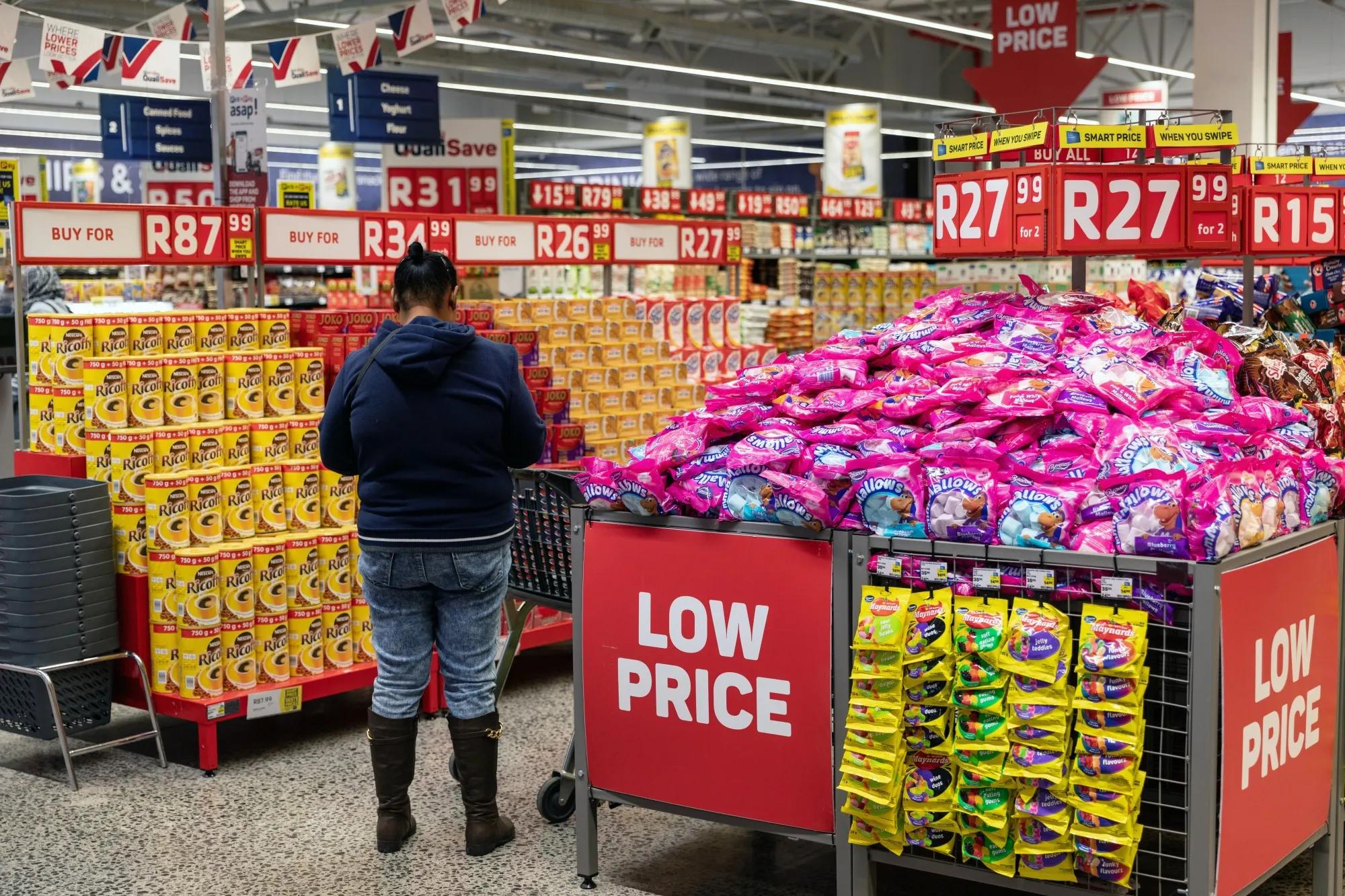
“South African grocery shoppers are increasingly comparing prices across major supermarkets as rising living costs put pressure on household budgets. A Daily Investor comparison found Checkers offering the cheapest selected breakfast basket at R727.85, compared with R784.85 at Woolworths, highlighting how price differences and competition influence consumers’ shopping decisions.”
South African Grocery Price Competition Intensifies as Households Search for Affordable Food
South Africa’s grocery retail market is experiencing intensifying competition as consumers increasingly prioritise affordability, value for money and careful household budgeting. With food, electricity, transportation and other essential expenses competing for limited household income, shoppers are becoming more selective about where they purchase groceries. A recent price comparison published by Daily Investor on 7 November 2026 highlights how differences between major supermarket chains are influencing consumer purchasing decisions and shaping competition in the country’s food retail sector.
Grocery Price Comparison Highlights Competition
The Daily Investor analysis compared the prices of a selected breakfast grocery basket across four major South African retailers: Checkers, Pick n Pay, Woolworths and SPAR. The comparison included commonly purchased household products such as maize meal, sugar, cooking oil, milk, eggs, bread, tomatoes, onions, coffee, tea and oats.
Checkers recorded the lowest basket price at R727.85, positioning the retailer as the most affordable option among the four supermarkets included in the comparison. Woolworths recorded the highest basket price at R784.85. Pick n Pay and SPAR occupied the middle positions, with their total basket prices separated by approximately R4.
The difference between the cheapest and most expensive baskets amounted to R57, representing a meaningful saving opportunity for households purchasing multiple essential products. Although the comparison does not establish that one supermarket is consistently cheaper across every product category or location, it demonstrates how consumers can potentially reduce expenditure by comparing prices before shopping.
The findings also highlight an important microeconomic principle: consumers respond to relative prices when making purchasing decisions. When products are similar in quality and availability, a lower price can encourage shoppers to switch retailers.
Household Budget Constraints Shape Consumer Behaviour
South African households operate under significant budget constraints. Consumers must allocate available income between food, transportation, electricity, housing, healthcare, education and other essential expenses.
Consequently, grocery expenditure is increasingly influenced by affordability rather than brand preference alone. Consumers may purchase store-brand products, compare promotional offers, change shopping destinations or reduce quantities purchased to manage their budgets.
According to reporting on the Competition Commission’s August 2026 Cost of Living Report, lower-income households devote approximately 40.71% of expenditure to food and non-alcoholic beverages. This substantial proportion illustrates why grocery price changes can have particularly serious consequences for financially vulnerable consumers.
When food prices increase, households with limited disposable income have fewer opportunities to absorb additional expenditure. They may reduce spending on non-essential products, substitute cheaper alternatives or postpone purchases.
These behavioural adjustments demonstrate the relationship between household income, purchasing power and consumer demand.
Price Differences Influence Retail Competition
The South African grocery market contains retailers competing through different combinations of pricing, product quality, convenience, store location, loyalty programmes and shopping experiences.
Checkers, Shoprite, Pick n Pay, Woolworths and SPAR each operate within a competitive environment where consumers can compare alternatives. Meanwhile, value-oriented retailers such as Boxer and Usave attract customers seeking affordable everyday necessities.
Retailers must therefore balance pricing decisions against operating costs, supplier relationships, distribution expenses and profitability.
A supermarket offering lower prices may attract higher customer volumes, potentially compensating for reduced margins through increased sales. Conversely, a retailer positioning itself around premium products may charge higher prices while appealing to consumers who prioritise quality, convenience or particular brands.
The Daily Investor comparison illustrates these different market positions. Woolworths remained competitive on certain branded products, despite recording the highest overall basket total. SPAR demonstrated strengths in selected fresh produce categories, while Checkers delivered the lowest total cost in the specific basket.
This suggests that consumers may benefit from comparing individual products rather than relying exclusively on a supermarket’s general reputation.
The Importance of Product Substitution
Product substitution is another important feature of South African grocery purchasing behaviour.
When the price of a preferred product rises, consumers may switch to another product that provides a similar benefit at a lower cost. For example, shoppers may choose supermarket-branded cooking oil, alternative breakfast cereals, different bread brands or less expensive packaged foods.
Such decisions reflect the concept of substitution in microeconomics. Consumers attempt to maximise satisfaction within their available budgets by selecting combinations of products that provide the greatest perceived value.
Retailers consequently have incentives to develop private-label products that compete directly with established national brands.
Private-label products can provide consumers with additional choices while allowing retailers to differentiate their offerings. Their growing relevance also reflects the importance of price transparency and value perception in purchasing decisions.
Food Prices and the Cost of Living
Although the grocery comparison focuses on retail competition, broader food-price developments remain important.
Statistics South Africa reported annual consumer inflation of 4.5% in September 2026, compared with 4.4% in August and 4.3% in July. Food and non-alcoholic beverage inflation increased to 1.2% in September, while transport costs remained a significant source of inflationary pressure.
Fuel-price increases influence food markets through transportation, distribution, agricultural production and refrigeration costs. Higher fuel expenses can increase the cost of moving agricultural products from farms to processors and retailers.
These indirect effects can influence retail prices even when agricultural commodity prices decline.
Statistics South Africa also reported that cereal products recorded annual deflation of 1.9% in September, although the category experienced a monthly price increase of 0.3%. Maize meal recorded an annual decline of 8.6%, illustrating how price movements can differ between individual products and broader categories.
Such developments demonstrate why consumers and policymakers should examine detailed price information rather than relying exclusively on headline inflation figures.
Competition Commission Concerns Over Price Transmission
South Africa’s Competition Commission has raised concerns about how changes in agricultural and production costs are transmitted through the food supply chain.
One issue highlighted in the Commission’s cost-of-living analysis is the phenomenon known as rocket-and-feather pricing. This describes situations where prices rise rapidly when input costs increase but decline more slowly when those costs fall.
For example, improved agricultural supply may reduce the cost of certain raw materials without producing an equivalent reduction in consumer prices.
The Commission’s reporting identified concerns involving maize meal, brown bread, canned pilchards, chicken and sunflower oil.
These observations raise questions about market competition, pricing transparency and the distribution of savings across agricultural producers, processors and retailers.
However, differences between producer and retail prices do not automatically establish unlawful conduct. Retail prices also reflect packaging, labour, transportation, electricity, refrigeration, distribution, financing and other operating expenses.
Competition analysis therefore requires careful examination of costs, margins, market structure and pricing behaviour.
The Growing Importance of Consumer Information
Access to accurate price information can strengthen competition by reducing information asymmetry between consumers and retailers.
When shoppers understand the prices of comparable products across different supermarkets, they can make better-informed decisions. Retailers, in turn, face stronger incentives to demonstrate value and maintain competitive pricing.
Digital shopping platforms, supermarket applications, online catalogues and price-comparison tools increasingly support this process.
Consumers can compare prices before travelling to stores, evaluate promotional offers and determine whether discounts represent genuine savings.
Nevertheless, effective comparisons require attention to product size, quality, unit prices and promotional conditions. A lower displayed price does not necessarily mean a product offers better value if its quantity is smaller.
Price per kilogram, litre or individual unit can therefore provide a more meaningful basis for comparison.
Implications for Retailers
The growing emphasis on affordability creates both opportunities and challenges for supermarket operators.
Retailers that understand consumer preferences may strengthen customer loyalty through competitive pricing, reliable product availability and efficient service.
Supply-chain efficiency is particularly important. Better inventory management, distribution planning and procurement practices can help retailers reduce operating costs while maintaining product availability.
Shoprite’s recent financial reporting has highlighted its focus on value and selling-price inflation below official food inflation. Pick n Pay’s turnaround strategy has also emphasised operational improvements, cost management and stronger customer offerings.
These developments demonstrate how retailers are responding to changing consumer behaviour and competitive pressure.
However, businesses must avoid relying exclusively on price reductions. Sustainable retail performance also depends on product quality, customer service, store accessibility and operational efficiency.
Implications for South African Households
For households, the grocery price comparison provides a practical reminder that shopping decisions can influence monthly expenditure.
Consumers may benefit from comparing prices across retailers, purchasing appropriate quantities, considering private-label alternatives and planning shopping trips around essential purchases.
At the same time, affordability should not be evaluated solely through the lowest possible price. Nutritional quality, product safety, household preferences and accessibility remain important considerations.
Lower-income households face particularly difficult choices because transportation and electricity expenses can reduce the income available for food.
Accordingly, grocery affordability is closely connected to broader social and economic challenges, including employment, wages, poverty and household financial resilience.
Conclusion
South Africa’s grocery retail market continues to demonstrate the importance of consumer choice, price competition and household purchasing power.
The Daily Investor breakfast basket comparison identified Checkers as the most affordable retailer among the four supermarkets examined, while Woolworths recorded the highest basket total. The results highlight how price differences can influence shopping decisions and create opportunities for consumers to manage household expenditure.
More broadly, rising living costs, fuel-price pressures and concerns about food-price transmission continue to shape the country’s retail environment.
As consumers become increasingly value-conscious, retailers face growing pressure to demonstrate affordability, improve efficiency and respond to changing preferences.
Ultimately, stronger competition, transparent pricing and informed purchasing decisions can contribute to better outcomes for South African consumers, particularly households facing persistent financial constraints.



