




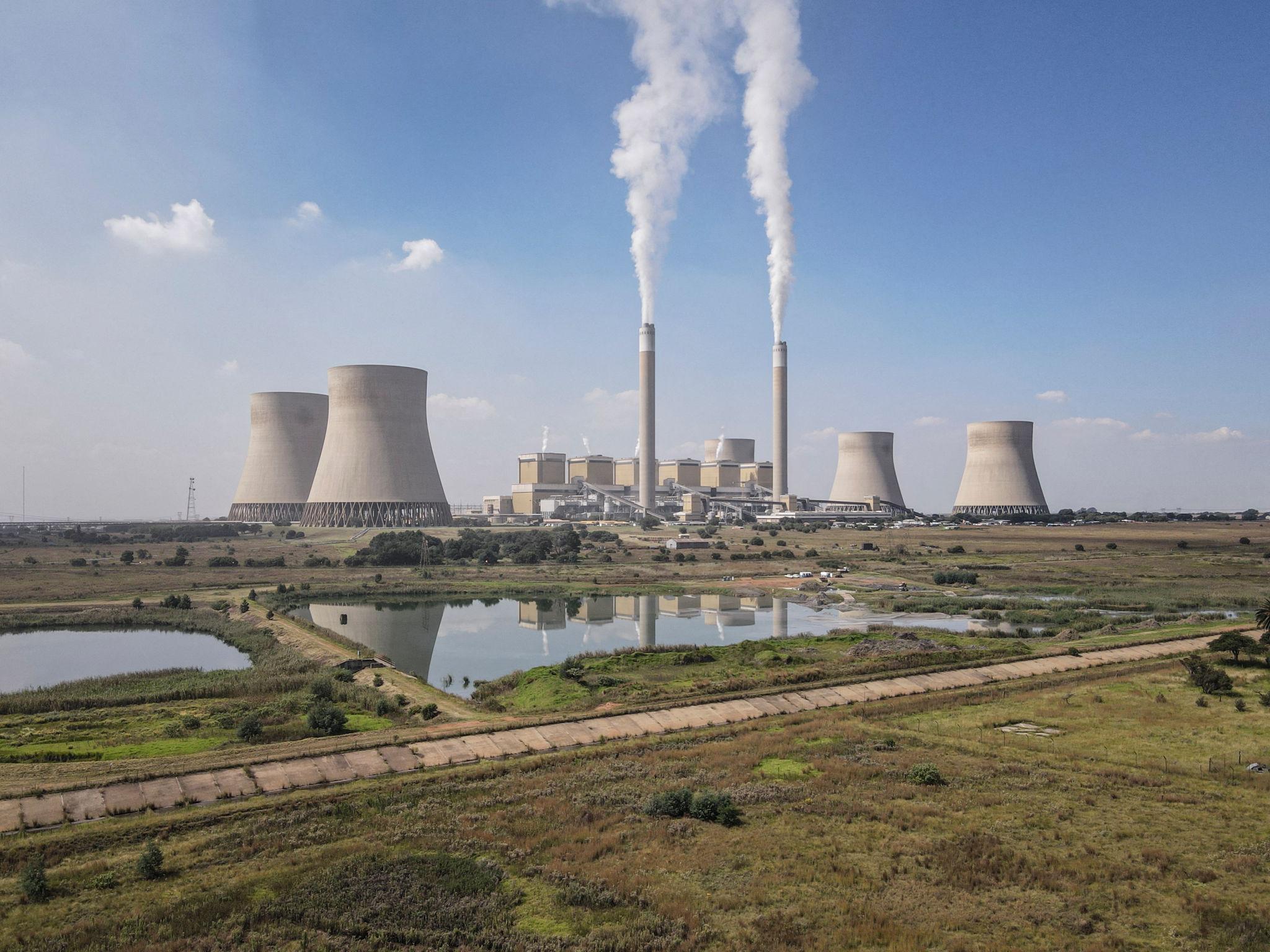
“Eskom has been given a new strategic priority: reducing the cost of electricity while improving the financial sustainability of the state-owned power utility, according to Electricity Minister Kgosientsho Ramokgopa. The plan includes reducing electricity-system losses and revenue leakage, improving procurement and maintenance, strengthening project delivery and developing three-, five- and ten-year strategies covering generation, the electricity grid and investment.”
Eskom’s New Cost-Cutting Focus Signals a Broader Shift in South Africa’s Macroeconomic Strategy
South Africa’s electricity sector has once again moved to the centre of the country’s macroeconomic debate, with the government placing greater emphasis on the cost of electricity and the long-term financial sustainability of Eskom.
The latest development came on 26 September 2026, when Eyewitness News reported that Electricity Minister Kgosientsho Ramokgopa had given Eskom’s board a new priority: bringing down the cost of electricity for households and businesses. The minister said the utility must move beyond simply restoring generation performance and concentrate on becoming financially sustainable.
The significance of the announcement extends beyond the electricity sector. Energy prices affect household inflation, business operating costs, industrial competitiveness, investment decisions, employment and ultimately South Africa’s economic growth rate. In an economy that has recently experienced weaker growth and renewed inflationary pressure, the cost and reliability of electricity are therefore important macroeconomic variables.
The announcement also comes shortly after the South African Reserve Bank raised its policy interest rate by 25 basis points to 7.25%. The central bank said inflation was running at 4.4% and warned that higher fuel prices and elevated services inflation were creating upside risks. It also reduced its 2026 growth projection to 1.2% from 1.4%, following a 0.2% contraction in economic output during the second quarter.
Electricity Costs and the Wider Economy
Electricity is an input into almost every major part of the South African economy.
Manufacturing companies require electricity to operate factories, mines depend on large amounts of power for extraction and processing, retailers need electricity for stores and distribution centres, while households depend on it for cooking, heating, refrigeration and communications.
Consequently, electricity prices can influence both production costs and consumer prices.
When electricity becomes more expensive, companies may face higher operating expenses. Businesses can respond by absorbing some of those costs, reducing other expenditures, increasing prices or delaying investment. For households, higher electricity bills reduce disposable income that could otherwise be spent on food, transport, clothing, entertainment or other services.
This makes Eskom’s financial position relevant to the broader economy.
According to Eyewitness News, Ramokgopa said Eskom needs to reduce system losses and revenue leakage, obtain better value from procurement and maintenance, and improve project delivery. The utility’s board has also been instructed to prepare three-, five- and ten-year roadmaps covering generation, the transmission grid, investment and Eskom’s position within a more competitive electricity market.
The objective is therefore not simply to generate more electricity. It is also to determine how that electricity can be generated and delivered at a cost that is sustainable for the utility, consumers and the wider economy.
Eskom’s Financial Sustainability
For years, Eskom’s financial position has been closely connected to South Africa’s public finances.
The government has provided financial support to the utility while Eskom has attempted to improve operational performance, repair ageing infrastructure and strengthen its balance sheet.
The latest strategy places greater emphasis on reducing the structural costs associated with operating the utility.
Ramokgopa said Eskom cannot rely on repeated government bailouts or sustained double-digit electricity tariff increases as its business model.
That point has macroeconomic importance because government resources are limited. Money allocated to support a state-owned utility competes, directly or indirectly, with resources that could be used for infrastructure, healthcare, education, social protection and other public priorities.
A financially stronger Eskom could therefore reduce some of the pressure on the national fiscus over time, although the outcome would depend on whether the utility can actually improve its operating and financial performance.
The Inflation Connection
The electricity story is unfolding at a particularly important time for monetary policy.
The South African Reserve Bank announced on 23 September that its Monetary Policy Committee had unanimously increased the policy rate by 25 basis points to 7.25%. The decision was effective from 25 September.
The Reserve Bank said inflation was 4.4% and identified higher fuel prices and elevated services inflation as important risks. It expects headline inflation to move above 5% later in 2026 and early in 2027 before declining as the fuel-price shock fades. The central bank currently expects inflation to return to approximately 3% toward the end of 2027.
The electricity sector can interact with these inflation dynamics.
Electricity tariffs form part of household and business costs. At the same time, electricity is an input into the production and distribution of goods and services. If energy costs rise, businesses may eventually pass some of those increases through to consumers.
That is one reason the government’s new focus on the underlying cost structure of Eskom is economically significant.
It is important, however, to distinguish between electricity prices and the broader inflation rate. Electricity is only one component of the consumer basket, and changes in its price do not automatically determine overall inflation.
Growth Is Another Concern
South Africa’s growth outlook makes the electricity issue even more important.
The Reserve Bank said the economy contracted by 0.2% during the second quarter of 2026. It nevertheless expects a rebound during the second half of the year, while projecting annual growth of 1.2%.
The central bank also continues to see medium-term growth of approximately 2%, provided global conditions stabilise and domestic reforms improve the business environment. However, it said growth risks are skewed to the downside.
Electricity-sector reforms are part of that broader structural reform discussion.
A power system that supplies reliable electricity at a sustainable cost can reduce uncertainty for businesses. Conversely, expensive or unreliable electricity can make investment decisions more difficult.
This is particularly relevant for industries that compete internationally.
Manufacturing and Industrial Competitiveness
South Africa’s manufacturing sector faces international competition from producers with different electricity, logistics and labour-cost structures.
The automotive industry illustrates the challenge. Reuters reported on 26 September that South Africa risks losing future vehicle production to Asian competitors as global automakers decide where to manufacture the next generation of electric vehicles. The industry directly employs about 113,000 people and supports another 498,000 jobs, according to the report.
The government has introduced a 150% tax deduction intended to encourage electric and hydrogen vehicle production. However, industry executives and analysts cited by Reuters identified electricity reliability, charging infrastructure, consumer demand, policy certainty and export competitiveness as additional factors influencing investment decisions.
This demonstrates why electricity policy is not isolated from industrial policy.
If electricity becomes more affordable and reliable, it can influence the operating environment for manufacturers. If electricity remains expensive, companies may face greater pressure to control costs elsewhere.
Investment and the Energy Transition
The Eskom strategy also comes as South Africa seeks new investment in energy infrastructure.
The government has said Eskom’s future strategy must cover generation, the grid and investment.
At the same time, South Africa is trying to expand investment opportunities in areas connected to its critical minerals.
Eyewitness News reported on 26 September that Trade and Industry Minister Parks Tau was seeking United States investment in projects designed to move South Africa beyond exporting raw minerals. The proposed value chains include mining, refining, processing and manufacturing, with potential applications in battery materials, hydrogen and grid infrastructure.
This creates an important connection between energy policy and industrial development.
Processing minerals domestically requires reliable infrastructure and competitive energy costs. If South Africa wants to capture more value from minerals such as platinum-group metals, manganese and chromium, electricity availability and pricing will remain part of the investment equation.
A More Competitive Electricity Market
Another significant element of the latest announcement is Eskom’s future role in a more competitive electricity market.
According to Eyewitness News, the utility’s long-term roadmap is expected to consider Eskom’s position within a more competitive energy market.
South Africa’s electricity landscape has been changing as independent power producers and new forms of generation become increasingly important.
A more diversified electricity market can potentially change how electricity is generated, purchased and distributed. However, market reform also requires investment in transmission infrastructure, regulation and system management.
The economic objective is therefore broader than simply reducing Eskom’s costs. It involves creating an electricity system capable of supporting investment while maintaining reliable supply.
The Role of System Losses and Revenue Collection
Reducing system losses and revenue leakage is another important component of the plan.
If electricity is generated but revenue is not collected efficiently, the utility’s financial position is weakened. Improving revenue collection can therefore strengthen the relationship between electricity supplied and electricity paid for.
Similarly, reducing technical losses can improve the efficiency of the electricity system.
These measures are different from raising tariffs. Tariff increases increase the amount paid by customers, while efficiency improvements seek to reduce the cost or leakage occurring within the system itself.
For households and businesses, this distinction is important because sustainable cost reductions could potentially improve the affordability of electricity without depending entirely on higher prices.
What Comes Next
The immediate challenge will be translating the government’s stated objective into measurable improvements.
The three-, five- and ten-year roadmaps requested for Eskom are intended to provide a longer-term framework for generation, transmission, investment and the utility’s market position.
For the wider economy, several indicators will be important to monitor: Eskom’s operating costs, electricity tariffs, revenue collection, system losses, generation performance, transmission investment and the pace of private-sector energy investment.
These developments will also interact with monetary policy and economic growth.
The Reserve Bank currently expects South Africa’s inflation rate to return to its 3% target toward the end of 2027, while it projects only 1.2% economic growth for 2026.
Against that backdrop, lowering structural business costs could have implications beyond Eskom itself.
Conclusion
South Africa’s latest electricity policy discussion is increasingly becoming a macroeconomic issue rather than simply an energy-sector story.
The government’s new emphasis on reducing the cost of electricity reflects the connection between Eskom’s financial sustainability, household affordability, business costs, investment and economic growth. Eyewitness News reports that the utility has been instructed to focus on reducing system losses and revenue leakage, improving procurement and maintenance, strengthening project delivery and developing long-term plans for generation, the grid and investment.
The timing is significant. South Africa has just experienced a contraction in second-quarter output, while the Reserve Bank has lowered its 2026 growth projection to 1.2% and raised interest rates to 7.25% amid renewed inflation risks.
The success of the electricity reforms will therefore be watched not only by Eskom customers but also by manufacturers, investors, businesses, households and policymakers. The central economic question is whether improvements in the electricity system can eventually translate into lower structural costs, stronger investment conditions and a more sustainable foundation for South Africa’s long-term economic growth.



