




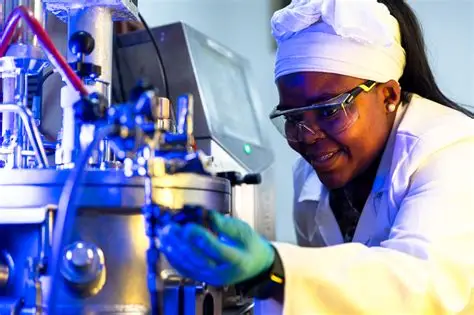
“South Africa has launched the Southern African Biomanufacturing Training Hub, funded by the European Union’s Global Gateway initiative and Germany’s KfW Development Bank. The hub will train up to 400 specialists annually in vaccine and pharmaceutical production, strengthening Africa’s health resilience and positioning South Africa as a biotechnology leader.”
South Africa has taken a decisive step in reshaping its biotechnology landscape with the establishment of the Southern African Biomanufacturing Training Hub. This initiative, backed by the European Union (EU) and Germany’s KfW Development Bank, represents a landmark investment in Africa’s scientific future. It is not only a technological milestone but also a political statement about South Africa’s ambition to lead the continent in biotechnology innovation.
Background & Context
The COVID-19 pandemic exposed Africa’s vulnerability to global supply chain disruptions in vaccines and medicines. While South Africa has made strides in local vaccine production, the continent still imports the majority of its pharmaceuticals. The EU’s Global Gateway flagship project aims to address this imbalance by investing in biomanufacturing capacity, skills development, and health technology access.
Objectives of the Training Hub
- Train 400 candidates per year in biomanufacturing.
- Offer structured programs from foundational to advanced levels.
- Focus on bioprocess development, vaccine production, quality control, and large-scale operations.
- Strengthen health security by ensuring Africa can produce its own vaccines and therapeutics.
Strategic Importance
- Health Security: Reduces reliance on imports and external supply chains.
- Industrial Competitiveness: Positions South Africa as a biotechnology hub for Africa.
- Job Creation: Expands opportunities in pharmaceutical and biopharmaceutical industries.
- Innovation Ecosystem: Encourages collaboration between academia, government, and industry.
Partnerships and Collaboration
The CSIR will manage the hub in partnership with national and international institutions, ensuring global best practices are integrated. The EU’s involvement underscores Europe’s commitment to Africa’s health resilience, while KfW’s role highlights Germany’s investment in sustainable development.
Training Infrastructure
The funding will upgrade CSIR’s existing facilities, enabling hands-on training with modern equipment. This infrastructure will support:
- Pilot-scale biomanufacturing operations.
- Good Manufacturing Practices (GMP) training.
- Specialized vaccine production modules.
Economic and Social Impact
The hub is expected to:
- Create high-skilled jobs in biotechnology.
- Strengthen Africa’s pharmaceutical independence.
- Provide a platform for regional collaboration in science and technology.



