




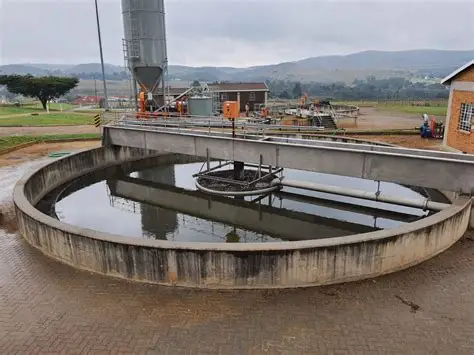
“The South African government has unveiled the National Water Access Acceleration Programme to expand clean water access, particularly in underserved rural and peri-urban communities. The initiative, launched on Mandela Day, reflects a broader policy push to tackle infrastructure backlogs and improve service delivery nationwide.”
On July 16, 2026, the South African government marked Mandela Day with the launch of the National Water Access Acceleration Programme, a flagship policy designed to address one of the country’s most pressing challenges: equitable access to clean water. This initiative comes at a time when water scarcity, aging infrastructure, and uneven service delivery have become central issues in South Africa’s governance and political discourse.
Policy Context
Water access has long been a contentious policy area in South Africa. Despite constitutional guarantees, millions of citizens—particularly in rural provinces such as Limpopo, Eastern Cape, and KwaZulu-Natal—still face unreliable or unsafe water supplies. The government’s new programme seeks to accelerate infrastructure development, streamline funding mechanisms, and strengthen partnerships with municipalities and private contractors.
Key Features of the Programme
- Infrastructure Expansion: Construction of new boreholes, reservoirs, and pipelines in underserved districts.
- Community Engagement: Local municipalities and civic organizations will be involved in planning and monitoring.
- Funding Model: A mix of national budget allocations, provincial contributions, and donor support.
- Technology Integration: Deployment of solar-powered microgrid systems to support pumping stations, reducing reliance on Eskom’s strained grid.
Political Significance
The timing of the launch on Mandela Day underscores the symbolic importance of the initiative. Mandela Day traditionally emphasizes service and community upliftment, and the government’s decision to tie this programme to the occasion signals its intent to frame water access as a moral and political imperative.
Governance Implications
The programme also reflects broader governance challenges. Municipalities across South Africa have struggled with financial mismanagement and service delivery failures. By centralizing oversight under the Department of Water and Sanitation, the government aims to bypass local inefficiencies and ensure accountability. However, critics argue that this risks undermining municipal autonomy and could create tensions between national and local authorities.
Economic Impact
Reliable water access is critical for agriculture, manufacturing, and mining—sectors that underpin South Africa’s economy. The programme is expected to boost productivity in rural farming communities and stabilize industrial operations that depend on consistent water supply. Analysts note that improved infrastructure could also attract investment, particularly in agro-processing and renewable energy projects.
Social and Public Health Dimensions
Beyond economics, the programme has profound social implications. Communities without clean water face heightened risks of disease outbreaks, including cholera and dysentery. Improved access will reduce healthcare burdens, enhance educational outcomes (as schools gain reliable water), and improve overall quality of life.
Criticism and Challenges
Despite its promise, the programme faces several challenges:
- Funding Shortfalls: South Africa’s fiscal position remains strained, raising questions about sustainability.
- Implementation Risks: Past infrastructure projects have been plagued by corruption and mismanagement.
- Climate Change: Increasing droughts and erratic rainfall patterns may undermine long-term effectiveness.
- Municipal Resistance: Some local governments may resist national oversight, complicating rollout.
Public Reaction
Civil society organizations have welcomed the initiative, emphasizing its alignment with Mandela’s vision of dignity and equality. However, opposition parties have criticized the government for “politicizing Mandela Day” and questioned whether the programme will deliver tangible results or merely serve as a symbolic gesture.
Conclusion
The National Water Access Acceleration Programme represents one of the most ambitious policy interventions in South Africa’s recent history. By tackling water scarcity head-on, the government seeks to restore public trust in service delivery and demonstrate its commitment to addressing inequality. Whether the programme succeeds will depend on effective governance, transparent funding, and resilience against climate pressures.



