




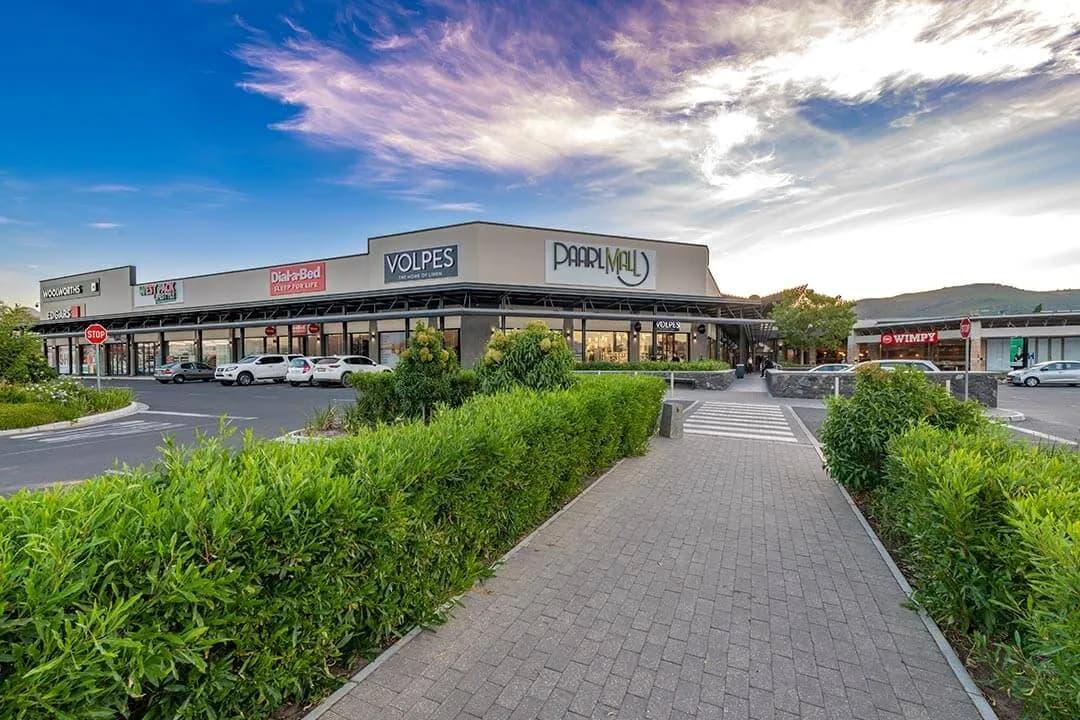
“Growthpoint Properties has completed a R263 million redevelopment of Paarl Mall in the Western Cape, adding 3,037 square metres of retail space and introducing 18 brands as it responds to strong household growth. The project, reported on 26 November 2026, highlights how South African commercial property owners are investing in established shopping centres to strengthen their competitiveness and capture changing consumer demand.”
Growthpoint’s R263 million Paarl Mall redevelopment strengthens Western Cape retail property
Growthpoint Properties has completed the R263 million redevelopment of Paarl Mall, expanding one of its established Western Cape retail assets and positioning it for the next phase of residential and commercial growth in the Drakenstein region. The project adds 3,037 square metres of retail space, increases the shopping centre’s total gross lettable area to 44,449 square metres and introduces a wider selection of national and international retail brands. The redevelopment is an important commercial property investment because it demonstrates how landlords can create additional value from existing shopping centres without relying exclusively on new developments.
The investment also reflects a broader trend in South Africa’s retail property sector, where established shopping centres are being upgraded to accommodate changing consumer expectations, residential development and demand for convenient local shopping. Rather than treating retail property simply as a collection of leased stores, landlords are increasingly focused on the quality of the shopping experience, the diversity of tenants and the resilience of their physical infrastructure.
For Paarl Mall, the redevelopment represents a significant milestone in its 21-year history. Located alongside the N1 highway, the centre has served Paarl and the surrounding Drakenstein community since 2005. Growthpoint’s latest investment builds on that established position while seeking to attract a broader customer base and strengthen the asset’s long-term performance.
Investment driven by residential growth
Growthpoint’s decision to invest in Paarl Mall was informed by research showing accelerating household formation in the surrounding area.
The company’s 2025 research identified annual household growth of 2.3% between 2017 and 2021. In the subsequent period to 2025, the rate increased to 3.4% a year. Growthpoint projects that household numbers in the mall’s catchment area could rise by a further 10% by the end of 2027. Approximately half of those households fall within the middle to upper living standards measure brackets, according to the company’s research.
These figures help explain the commercial rationale for expanding the mall. A growing residential population can increase demand for clothing, homeware, restaurants, beauty products and other retail services. For property owners, the opportunity lies in translating that demand into sustainable rental income and stronger tenant performance.
However, household growth does not automatically produce equivalent growth in retail spending. The amount available for discretionary purchases depends on employment, household income, inflation and borrowing costs. Growthpoint’s investment therefore depends not only on the number of households moving into the area but also on the ability of retailers to attract customers and convert visits into sales.
The company’s research also identified demand for a broader fashion offering and more dining and lifestyle choices. The redevelopment has been designed to respond to those preferences, potentially allowing Paarl residents to access more products and experiences locally instead of travelling to Cape Town.
New brands and expanded retail space
The redevelopment introduces 42 new, relocated and resized stores, of which 37 are already trading. The remaining five are expected to open during the first half of 2027.
Eighteen brands previously unavailable at Paarl Mall have been introduced. They include H&M, Country Road, Uniq, Cielo, Typo, Wordsworth, Saint & Summer, Cellini, Faithful to Nature and Edgars Beauty. The expanded dining offering includes Bootlegger, Ocean Basket and RocoMamas, while Growthpoint has indicated that another major international brand is yet to be announced.
The mix is significant because successful shopping centres need to attract customers for different reasons and at different times. Fashion stores can generate destination shopping trips, restaurants can extend visits beyond conventional shopping hours, and homeware and beauty retailers can broaden the centre’s appeal.
For Growthpoint, the objective is to create a more balanced retail environment rather than depend excessively on a narrow category of tenants. A diverse mix can help support foot traffic throughout the week and reduce exposure to weaknesses in individual retail categories.
The expansion also creates opportunities for existing tenants. Retailers that relocate or enlarge their stores may be able to introduce additional product ranges, improve merchandising or redesign their customer experience.
Nevertheless, the commercial success of the redevelopment will depend on whether the new stores generate additional spending rather than merely redistribute existing sales among tenants.
Redeveloping a live shopping centre
One of the project’s notable achievements is that Paarl Mall remained operational throughout construction.
Growthpoint delivered the redevelopment over nine months, undertaking construction in phases to limit disruption to shoppers and retailers. The work included two new entrances, more than 3,000 square metres of additional space, extensive interior improvements and the relocation of a substantial section of the internal mall by eight metres.
The project also involved relocating and resizing stores, upgrading two sets of bathrooms and improving lighting, ceilings and floor finishes.
Redeveloping an occupied shopping centre presents challenges that differ from those associated with constructing a new property. Retailers need to continue trading while contractors manage construction access, safety, deliveries and temporary changes to customer circulation.
The financial implications are equally important. A prolonged closure can interrupt rental income, weaken tenant relationships and inconvenience customers. Phased construction allows a landlord to improve the asset while preserving much of its ongoing commercial activity.
At Paarl Mall, the ability to keep stores trading during the redevelopment also helped maintain the centre’s connection with its surrounding community.
The project illustrates the importance of coordination between landlords, contractors, centre management and retailers. In commercial property, construction efficiency is not measured only by the completion date or capital expenditure; it also depends on how effectively the existing business is protected during the work.
Energy resilience and operating costs
The R263 million redevelopment follows an earlier R50 million investment in a hybrid electricity system at Paarl Mall.
Commissioned in 2024, the system combines solar power, battery storage, generators and electricity from the grid. It was introduced to strengthen the centre’s energy resilience and support Growthpoint’s broader sustainability objectives.
Reliable electricity is particularly important for shopping centres because tenants depend on lighting, refrigeration, payment systems, security and climate-control equipment. Interruptions can affect both trading hours and customer experience.
A hybrid system can help reduce exposure to electricity disruptions, although its actual financial benefits depend on operating costs, energy consumption, maintenance and the availability of backup capacity.
The investment also demonstrates how commercial property owners increasingly need to consider infrastructure resilience alongside conventional building improvements.
For investors, the relevant question is whether the combination of energy investment and retail expansion improves the property’s long-term net operating income. Lower disruption risks may support tenant retention, while more predictable energy arrangements can strengthen the centre’s appeal to retailers.
What the redevelopment means for investors
Growthpoint is a JSE-listed real estate investment trust, and its approach to Paarl Mall reflects a strategy of reinvesting in established assets with demonstrated demand.
The company has described the mall as a strong performer, supported by high trading densities, low vacancies and retailer interest. Its investment therefore differs from a speculative development that must establish a customer base from the beginning.
For property investors, the redevelopment offers several potential sources of value: additional rentable space, improved tenant quality, stronger rental growth and an extended competitive lifespan for the asset.
However, capital expenditure must ultimately be justified by additional income. The R263 million investment will need to produce sufficient incremental rental revenue and operating efficiencies to meet Growthpoint’s investment objectives.
The timing of store openings matters. With five stores still expected to open in 2027, the full income contribution of the redevelopment may not be immediately visible.
Investors should also distinguish between increased foot traffic and increased profitability. Higher visitor numbers are encouraging, but rental affordability, occupancy costs and tenant sales productivity will determine whether the improvements are commercially sustainable.
The company’s early indications are positive. Several retailers that expanded or upgraded their stores have reported strong trading, and management has observed increased visits from a broader customer demographic. These observations remain preliminary and should not be interpreted as audited evidence of the project’s eventual investment return.
Implications for the wider commercial property market
Paarl Mall’s redevelopment provides a useful example for commercial property owners across South Africa.
Retail landlords are increasingly required to balance physical expansion with improvements to the quality and relevance of their properties. Consumers have access to online shopping, competing retail centres and a wide variety of entertainment options. A shopping centre must therefore offer reasons for customers to visit in person.
For established centres in growing residential areas, targeted investment can be an alternative to building entirely new retail developments.
The Paarl project also shows how demographic research can inform leasing decisions. Growthpoint’s assessment of household growth and customer preferences helped shape the choice of new tenants and the allocation of space.
This approach may be particularly relevant in areas where residential development is changing the size and composition of local markets. Landlords that understand those changes can make more informed decisions about the mix of fashion, services, food and lifestyle offerings.
The lesson is not that every shopping centre should expand. Rather, capital investment should be matched to local demand, the competitive environment and the financial capacity of tenants.
Outlook for Paarl Mall
The next phase of the redevelopment will focus on completing the remaining store openings and assessing the performance of the expanded retail mix.
Growthpoint will also need to monitor whether the additional space supports sustained rental growth, whether the centre retains its existing customers and whether the new brands attract shoppers who previously travelled elsewhere.
The company’s projection of further household growth by the end of 2027 provides a positive demand outlook, but the outcome remains dependent on wider economic conditions and the actual pace of residential development.
For Paarl and the broader Drakenstein area, the redevelopment represents a substantial investment in established commercial infrastructure. It expands the range of shopping and dining options available locally while reinforcing the role of retail property as part of a growing regional economy.
The R263 million project is therefore more than a shopping centre upgrade. It is a strategic reinvestment in an existing commercial asset, designed to strengthen its competitive position, improve its resilience and participate in the long-term growth of the Western Cape.



