




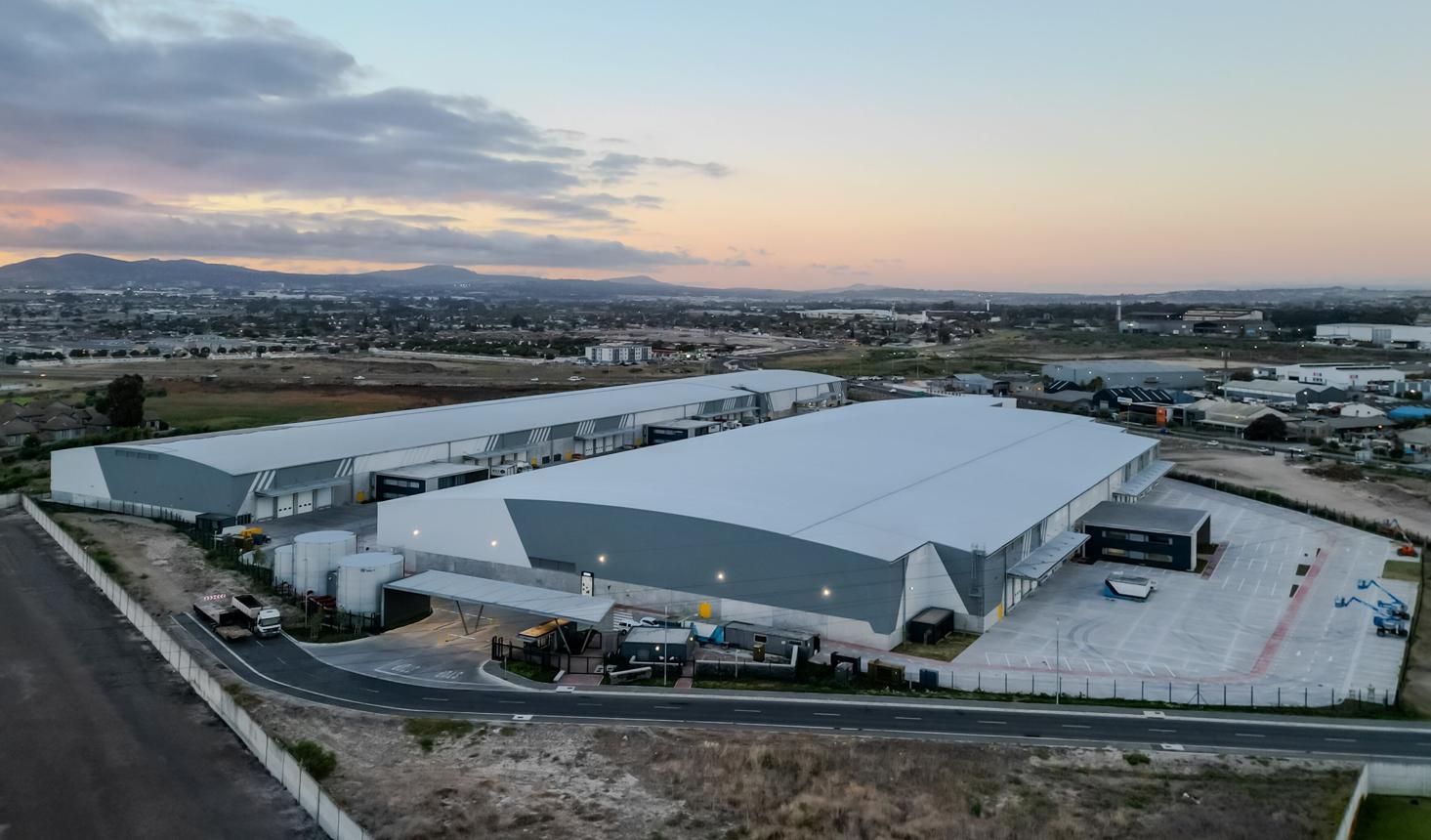
“Growthpoint Properties reported improving industrial lease renewals and a R1.5 billion development pipeline in its investor update published on 26 November 2026. The company is pursuing a higher-quality logistics portfolio while managing vacancies, tenant arrears and the risks associated with new supply.”
Growthpoint’s logistics strategy puts industrial property investment in focus
Growthpoint Properties has reported improving leasing performance across its logistics and industrial portfolio, alongside a development programme expected to deliver 105,000 square metres of additional gross lettable area over the next two years. The company’s investor update, published on 26 November 2026, places the anticipated cost of that pipeline at R1.5 billion. The announcement offers a significant indication of how a major South African property owner is positioning itself in a market where industrial demand, location and the quality of buildings increasingly influence investment decisions.
The disclosure covers the three months ended 30 September 2026 and describes a logistics and industrial portfolio that continued to lead Growthpoint’s performance. Improved tenant retention, positive rental renewal growth and higher lease escalation rates supported the result, although vacancies and arrears increased modestly. These contrasting indicators make the update important: the industrial property market is showing signs of strength, but investors cannot assume that every warehouse or industrial park will benefit equally.
Industrial leasing shows improving momentum
Growthpoint reported that its portfolio renewal success rate increased from 77.8% in June 2026 to 81.5% in September. That improvement suggests that a larger proportion of tenants whose leases came up for renewal chose to remain in their premises. For an industrial landlord, retaining tenants can protect rental income and reduce the costs associated with finding replacement occupiers.
The regional picture was not uniform. Growthpoint said stronger renewal growth in its coastal portfolios helped offset continued pressure in Gauteng. KwaZulu-Natal recorded a renewal success rate of 94.4%, up from 92.3% in June. This suggests that the province’s portfolio benefited from strong tenant commitment during the reporting period.
The distinction between coastal markets and Gauteng matters because industrial real estate is closely tied to the geography of trade and distribution. Businesses requiring access to ports, major roads, suppliers and consumer markets do not necessarily view warehouse locations as interchangeable. A property that meets one tenant’s operational needs may be less attractive to another, particularly when transport costs or building specifications differ.
Growthpoint’s figures therefore point to a market in which asset quality and location remain central to performance. The company is seeking to increase exposure to high-quality logistics warehouses and distribution facilities while rebalancing its portfolio by region and asset type. Its stated objective is not simply to own more industrial space, but to improve the overall quality and growth prospects of the assets it retains.
Vacancies remain a material concern
Despite the improvement in lease renewals, Growthpoint’s industrial portfolio vacancy rate increased from 2.9% at the end of the 2026 financial year to 3.6% in September. The increase was concentrated in a limited number of properties, illustrating how the departure of a single large tenant can affect portfolio performance.
Gauteng’s vacancy rate rose from 5.4% to 6.1%. The Western Cape moved from no reported vacancies to 0.9%, while KwaZulu-Natal increased from 0.1% to 0.2%. Although the coastal vacancy rates remained relatively low, the figures underline the need to monitor leasing conditions region by region.
The largest vacancy identified in the update was 14,151 square metres at Hilltop Industrial Park in Gauteng, following a tenant liquidation. Growthpoint said refurbishment had been completed and that it was pursuing tenant interest. Other significant vacancies included 5,550 square metres at Building 24 in Centralpoint, Midrand, and 5,386 square metres at Wadestone Industrial Park.
The company also identified 7,210 square metres associated with planned redevelopment at African Products and Corobrik. Work was under way, and the affected space was expected to be removed from reported vacancies in the following quarter.
Growthpoint forecast that the overall portfolio vacancy rate would improve to 2.1% by June 2027. That projection includes the planned demolition of vacant space at African Products and Corobrik, meaning the expected improvement should not be interpreted entirely as new leasing demand. Investors will need to distinguish between vacancies reduced through tenant occupation and those removed through redevelopment.
Development pipeline targets modern logistics space
The company’s planned R1.5 billion development programme is one of the most consequential elements of the announcement. Growthpoint expects the pipeline to add 105,000 square metres of gross lettable area over two years, with projects progressing at different stages.
Indlovu Logistics Park was reported to be 30% complete and fully let to Hisense under an eight-year lease beginning on 1 July 2027. The commitment reduces the development’s leasing risk because a tenant has been secured before completion. Growthpoint’s Chain Avenue Phase 2 development was 40% complete and intended to provide Hisense with interim accommodation under a six-month lease before its move to Indlovu.
At Growthpoint Industrial Estate, the GIE 4B project remained on programme and was supported by a seven-year lease with DPD Laser. Meanwhile, Cornubia Logistics Park was progressing towards construction, subject to final platform handover.
These projects illustrate the importance of coordinating construction schedules with tenant requirements. A pre-let warehouse can offer greater income visibility than a speculative development, but it still carries construction, delivery and tenant-credit risks. Temporary accommodation arrangements also require careful management because delays at a permanent site can affect the timing of occupation elsewhere.
Growthpoint said future expansion would be disciplined and phased, taking account of tenant demand, pre-letting, location, adaptable specifications, development yields and supply risk. That approach is particularly relevant in a market where large industrial buildings can require substantial capital expenditure and may be expensive to adapt for alternative users.
Capital recycling becomes a strategic priority
Growthpoint is also selling assets that no longer meet its investment criteria. During the first quarter, it sold five industrial warehouse properties for a combined R270.7 million. A further seven disposal transactions involving 18 individual assets were in progress, with proposed proceeds of R1 billion.
The proposed transactions should not be treated as completed sales. Their eventual proceeds and timing remain subject to execution. Nevertheless, the programme indicates how the company intends to redirect capital towards properties with stronger long-term prospects.
For the broader industrial property market, such disposals can create acquisition opportunities for investors with different operating models, financing arrangements or tenant relationships. Older industrial properties may remain commercially viable even when they no longer fit a large institutional landlord’s strategy.
The challenge for buyers is to assess whether the purchase price adequately reflects maintenance requirements, lease duration, tenant concentration and future capital expenditure. A warehouse with an attractive headline yield may deliver a weaker return if it requires extensive refurbishment or experiences prolonged vacancy.
Rental income and arrears tell different stories
The update also reported an increase in industrial portfolio arrears from R10.2 million at the end of the 2026 financial year to R12.6 million in September. Of that amount, R8 million related to trading arrears and R4.6 million was under legal recovery. Bad-debt provisions equivalent to 34.6% of arrears had been raised.
Growthpoint said a significant portion of the larger exposures had either been resolved or was subject to defined recovery actions after the quarter ended. Even so, the increase is a reminder that a signed lease does not guarantee uninterrupted rental collection.
Industrial landlords must manage tenant creditworthiness alongside occupancy. A tenant’s ability to pay depends on the health of its underlying business, including its customer contracts, operating costs and access to working capital. For logistics operators, a loss of business or a disruption to distribution volumes can affect the viability of a facility even when the building itself remains well located.
The company’s improved renewal rate and higher arrears therefore need to be read together. Strong tenant retention can support income stability, but careful credit management remains essential to convert contractual rent into dependable cash flow.
Implications for South Africa’s industrial property market
Growthpoint’s announcement is important because it combines a substantial development pipeline with a clear strategy for managing existing assets. It shows that a major landlord is prepared to commit capital to logistics infrastructure while continuing to evaluate regional demand and the risks associated with new supply.
The expected development pipeline could provide additional modern warehouse capacity for businesses involved in distribution, storage and related industrial activities. However, its economic benefits will depend on project delivery, tenant operations and the extent to which new facilities support genuine expansion rather than simply relocating existing activity.
For investors, the next important milestones will be the completion and occupation of the development projects, progress on asset disposals and the trajectory of vacancies and arrears. The company has supplied a vacancy forecast, but the market will need to see whether leasing progress and redevelopment outcomes support that expectation.
The central conclusion is that South African industrial property remains an important area of institutional investment, although performance varies significantly between regions and assets. Growthpoint’s strategy is increasingly focused on modern logistics facilities, stronger tenant commitments and disciplined capital allocation. Its latest update provides a substantial basis for monitoring the sector over the coming quarters, rather than a guarantee that the current improvement will continue uninterrupted.



