




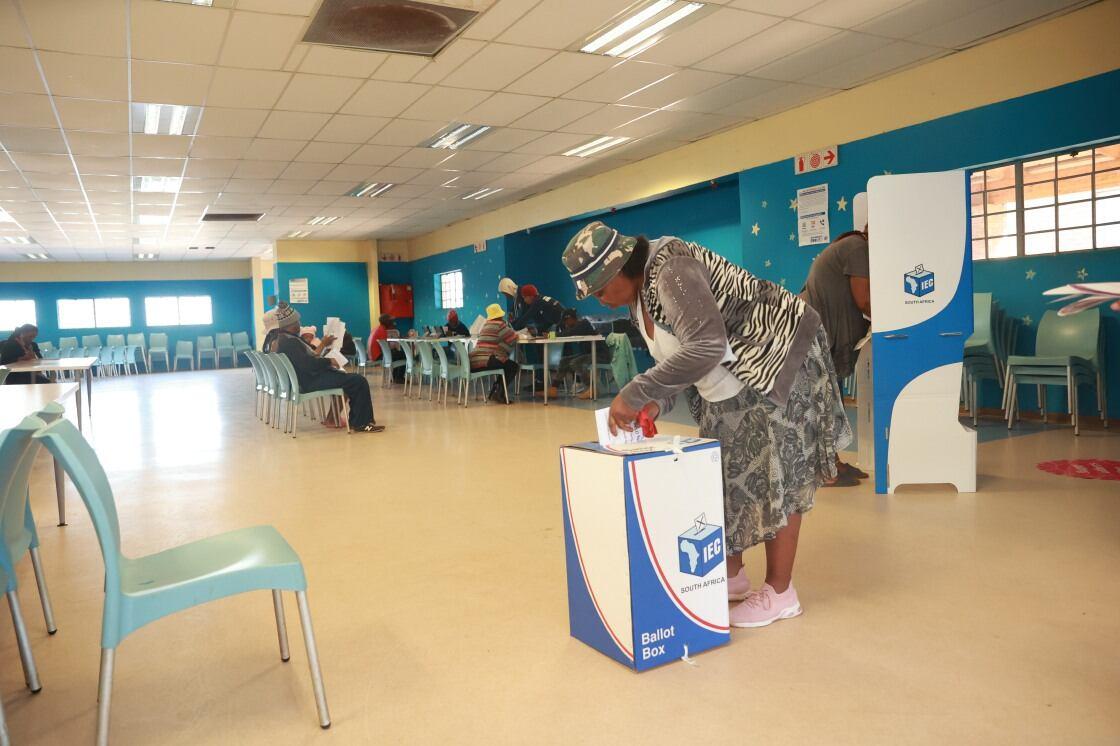
“South Africa’s Electoral Commission estimates that approximately 780,000 voters cast special votes on the first day of special voting ahead of the 4 November 2026 local government elections. Despite ballot-paper distribution delays at some voting stations, the IEC says participation was encouraging and has called on remaining approved special voters to cast their ballots on 3 November.”
IEC Reports Strong Special-Vote Participation as South Africa Prepares for Election Day
South Africa’s Electoral Commission has reported encouraging participation in the opening day of special voting ahead of the country’s 2026 Local Government Elections, with approximately 780,000 voters estimated to have cast their ballots on Monday, 2 November. The development represents an important milestone in the final preparations for Wednesday’s elections, as political parties, election officials and communities prepare for a nationwide contest that will determine municipal leadership and the direction of local service delivery.
According to the Electoral Commission of South Africa (IEC), special voting operations were conducted across the country at designated voting stations and through approved home visits. The commission expressed satisfaction with the overall participation and thanked voters, political parties, candidates and election personnel for contributing to the process.
The encouraging participation comes despite operational difficulties experienced at some voting stations during the opening day. In particular, ballot-paper distribution delays affected several voting stations in the City of Cape Town Metropolitan Municipality. The IEC acknowledged the disruption and said affected stations eventually opened and continued operating.
Special Voting Provides an Important Opportunity
Special voting is an established mechanism within South Africa’s electoral system designed to ensure that eligible registered voters who cannot conveniently reach their voting stations on Election Day have an opportunity to participate.
The arrangements accommodate approved voters who experience physical impairments, illness or other qualifying circumstances. They may vote at their registered voting stations or receive authorised home visits, depending on the arrangements approved by the commission.
This mechanism is particularly important for elderly voters, people with disabilities and individuals whose circumstances could otherwise prevent them from exercising their democratic rights.
The estimated 780,000 special votes recorded on Monday demonstrate the significant logistical responsibility involved in organising elections across South Africa’s municipalities.
The commission has encouraged approved voters who have not yet exercised their special voting rights to take advantage of the final special voting opportunity on Tuesday, 3 November.
Special voting stations are scheduled to operate from 8am until 5pm. Voters who miss their approved special voting opportunity must generally wait until Election Day and vote at the voting station where they are registered.
IEC Addresses Opening-Day Operational Challenges
Although the commission described the first day as encouraging overall, the opening of certain voting stations was affected by delays in ballot-paper distribution.
The City of Cape Town experienced particularly notable disruption, with 217 voting stations affected by delays. According to the IEC, the ballot papers had been printed, but the distribution process was not completed in time for the scheduled opening of every affected station.
The commission acknowledged the inconvenience experienced by voters and apologised for the disruption.
The delays raised questions about operational readiness and the ability of election administrators to deliver voting materials efficiently across a large and geographically diverse country.
Nevertheless, the IEC indicated that affected stations eventually opened and remained operational. In certain circumstances, arrangements were made to accommodate voters who had been inconvenienced.
The commission also expressed confidence that lessons learned during the first special voting day would help improve operational performance during the remaining special voting period and on Election Day.
These developments highlight the importance of logistical coordination in elections involving millions of registered voters and thousands of voting stations.
Election Administration and Public Confidence
The management of voting operations is central to public confidence in South Africa’s democratic institutions.
Election officials are responsible for ensuring that ballot papers are available, voting stations are properly prepared, voters receive appropriate assistance and electoral procedures are applied consistently.
Even relatively limited administrative difficulties can attract considerable public attention during election periods, particularly when voters face delays or uncertainty.
Consequently, the IEC’s response to the opening-day challenges will remain an important part of the broader assessment of electoral preparedness.
The commission has emphasised the importance of cooperation between election officials, political parties, candidates and members of the public.
Such cooperation can help minimise disruptions, protect voters and support the orderly administration of the electoral process.
The commission’s public updates are also intended to provide reassurance that operational challenges are being addressed and that voters can participate without unnecessary obstacles.
Protecting the Secrecy of the Ballot
Alongside operational preparations, the IEC has reminded voters and political representatives to respect electoral rules designed to protect the integrity of voting.
The commission has specifically warned that photographing marked ballot papers is prohibited.
Voters are required to mark their ballots privately inside designated voting compartments. The secrecy of the ballot is an essential democratic safeguard because it protects individuals from intimidation, coercion and attempts to influence their choices.
The IEC has also warned against campaigning, canvassing or intimidating voters inside voting stations.
Political parties and their supporters are expected to respect the boundaries established by electoral regulations and avoid conduct that could interfere with voters’ freedom of choice.
These reminders are especially significant during periods of heightened political competition, when supporters of different parties may be present around voting locations.
Maintaining orderly voting environments is essential to ensuring that voters can participate peacefully and independently.
Political Competition and Municipal Accountability
South Africa’s 2026 Local Government Elections are taking place against a backdrop of significant political competition and public debate about municipal performance.
Municipalities are responsible for essential services that directly affect residents’ daily lives, including water provision, sanitation, electricity distribution where applicable, roads, waste management and local infrastructure.
Consequently, local elections provide communities with an opportunity to assess incumbent administrations and determine whether political parties and candidates have delivered on their commitments.
The election campaign has placed considerable attention on service delivery, municipal governance, accountability and the management of public resources.
Political parties are competing for support across metropolitan municipalities, local municipalities and district municipalities.
The results will influence the composition of municipal councils and the political arrangements through which local governments are administered.
In municipalities where no party secures an outright majority, coalition negotiations may become important in determining governing arrangements.
These possibilities reflect the increasingly competitive and fragmented nature of South African electoral politics.
Voter Participation and Democratic Responsibility
The IEC’s special voting figures provide an indication of participation before the main Election Day, although they should not be interpreted as a prediction of the final turnout.
The remaining special voting period offers approved voters another opportunity to participate before Wednesday’s nationwide poll.
Election officials have continued encouraging eligible voters to confirm their arrangements and follow the instructions communicated by the commission.
For ordinary Election Day voting, registered voters are expected to attend their designated voting stations and comply with the applicable electoral procedures.
The commission’s broader message is that democratic participation requires both individual responsibility and institutional cooperation.
Voters must respect electoral regulations, while election administrators must ensure that the process remains accessible, transparent and properly managed.
Political parties also have a responsibility to encourage peaceful participation and respect the rights of supporters of competing political organisations.
Final Preparations Ahead of 4 November
Tuesday’s special voting operations represent the final opportunity for approved special voters before the main elections.
The IEC is expected to continue monitoring voting-station readiness, ballot-paper availability, staff deployment and the management of voter queues.
The experience gained during the opening day may assist election officials in addressing operational challenges and improving coordination.
Weather conditions, transportation difficulties and other local circumstances may also influence voting operations in particular areas.
The commission has encouraged voters to exercise their democratic rights while following official instructions and taking appropriate precautions.
The nationwide election on Wednesday will place considerable demands on electoral personnel, security services, political parties and local communities.
Successful administration will depend on effective coordination, public cooperation and the ability to respond promptly to unexpected challenges.
Conclusion
South Africa’s special voting process has recorded encouraging participation, with the IEC estimating that approximately 780,000 voters cast their ballots on the first day.
Although ballot-paper distribution delays affected some voting stations, the commission reported that the affected locations eventually became operational and expressed confidence in improving performance ahead of Election Day.
The final special voting opportunity on Tuesday provides approved voters with another chance to participate before the nationwide municipal elections.
As South Africans prepare to elect municipal representatives on 4 November, the priorities remain clear: protect ballot secrecy, maintain peaceful voting environments, ensure operational readiness and uphold the democratic rights of eligible citizens.
The election’s broader significance extends beyond political competition. Its outcome will influence municipal leadership, local accountability and the administration of essential services in communities throughout the country.
For the IEC, the immediate responsibility is to ensure that voters can exercise their democratic rights in a process that is orderly, accessible and credible.
For political parties and candidates, the challenge is to translate campaign commitments into effective municipal governance.
For voters, the elections represent an opportunity to determine who should lead their communities and how local government should respond to their priorities.



