




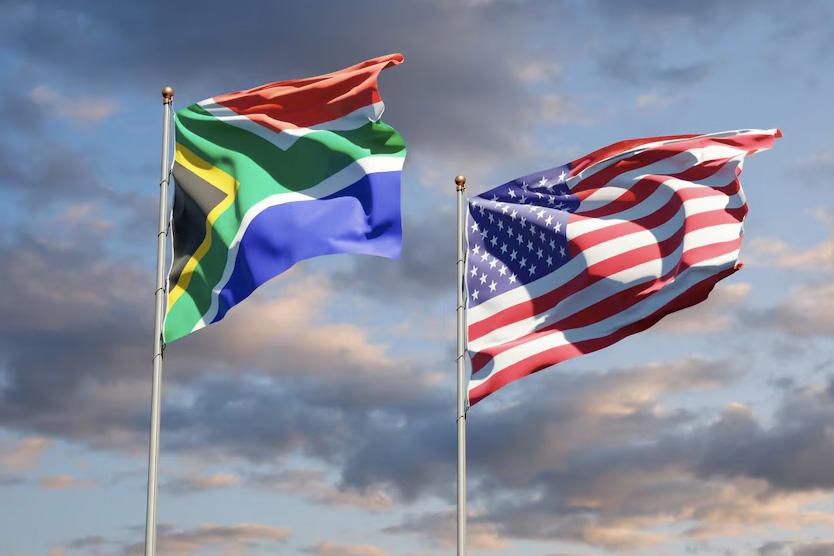
“The United States has announced plans to remove South Africa from the African Growth and Opportunity Act (AGOA), potentially ending its duty-free access to certain American markets from 1 January 2027. The decision introduces significant economic and foreign-policy challenges for Pretoria, placing trade policy, diplomatic relations and export competitiveness at the centre of South Africa’s political agenda.”
US AGOA Suspension Threatens South Africa’s Trade Policy, Export Economy and Diplomatic Relations
Introduction
South Africa faces a significant economic and foreign-policy challenge following the United States government’s announcement that it intends to remove the country from the African Growth and Opportunity Act (AGOA), potentially ending preferential duty-free access to selected American markets from 1 January 2027. The announcement represents a major development in bilateral relations and places trade policy, economic diplomacy and international market diversification at the forefront of South Africa’s political agenda.
The decision has important implications for South African policymakers, manufacturers, exporters, workers and investors. It also raises questions about the future of economic cooperation between Pretoria and Washington at a time when international trade relationships are increasingly influenced by geopolitical considerations, domestic policy disagreements and competition for strategic markets.
Washington’s Decision and Its Policy Implications
The United States administration has announced plans to suspend South Africa and Rwanda from AGOA, a preferential trade programme established in 2000 to support economic development and commercial relationships between America and eligible African countries.
The programme provides qualifying African economies with preferential access to the United States market for thousands of products. For South Africa, it has supported exports across several important sectors, including automotive components, agricultural products and manufactured goods.
According to reporting by Reuters and the Associated Press, Washington has cited concerns relating to trade barriers, human rights, corruption, national security and foreign-policy interests. However, the announcement has intensified disagreements between the two governments over the interpretation of South African domestic policies and the direction of bilateral relations.
The decision is particularly consequential because South Africa has historically been among the largest beneficiaries of AGOA. The programme has helped strengthen commercial relationships between South African businesses and American importers while supporting employment and investment opportunities.
The planned suspension therefore represents more than a change in tariff arrangements. It signals a potentially significant restructuring of the economic relationship between the two countries.
Economic Consequences for South African Exporters
The potential removal of AGOA benefits could increase the cost of South African products entering the United States market.
Without preferential access, exporters may face higher tariffs or less favourable competitive conditions depending on the products concerned and the applicable American trade arrangements.
These changes could affect the competitiveness of South African manufacturers, agricultural producers and companies supplying international customers.
The automotive sector is particularly important because South Africa has developed substantial manufacturing capabilities and export relationships involving American markets.
Agricultural industries, including citrus and wine producers, also have commercial interests that could be affected by changes in trade conditions.
Higher import costs may encourage American buyers to reconsider sourcing arrangements, potentially shifting orders towards countries with more favourable tariff treatment.
South African companies could respond by absorbing additional costs, negotiating revised contracts, improving productivity or expanding their customer base in alternative markets.
Nevertheless, these adjustments may prove difficult for smaller exporters with limited financial resources and fewer international distribution networks.
Employment and Industrial Development
The consequences of trade policy changes extend beyond companies and commercial transactions.
Export industries contribute to employment, industrial development, skills training and regional economic activity.
If exporters experience reduced demand or declining profitability, companies may reconsider production levels, investment decisions and recruitment plans.
Manufacturing communities could face particular pressure where businesses depend significantly on international markets.
Government therefore has an important responsibility to assess the potential employment consequences of the AGOA decision and develop appropriate responses.
These responses could include targeted assistance for affected industries, export diversification programmes, improved access to trade finance and support for small and medium-sized enterprises.
However, policymakers must balance such interventions against the country’s fiscal constraints and broader economic priorities.
South Africa’s Diplomatic Response
South Africa has indicated that it intends to support affected industries while continuing engagement with the United States and pursuing opportunities to diversify its export markets.
The diplomatic challenge involves protecting South African economic interests without compromising the country’s constitutional principles or independent foreign-policy positions.
Pretoria must determine whether negotiations can preserve some form of preferential access, establish alternative commercial arrangements or address specific concerns raised by Washington.
At the same time, the government must communicate clearly with businesses, workers and investors about the potential implications of the decision.
Diplomatic engagement will require coordination between trade officials, economic policymakers, diplomatic representatives and industry organisations.
The outcome could influence the future direction of South Africa’s relationship with the United States across several areas, including investment, technology, security cooperation and international diplomacy.
Trade Diversification as a Strategic Priority
The AGOA development strengthens the argument that South Africa should avoid excessive dependence on a limited number of export markets.
Market diversification could involve expanding commercial relationships with countries across Africa, Asia, Europe and the Middle East.
The African Continental Free Trade Area offers opportunities to strengthen regional trade and improve access to neighbouring markets.
However, expanding African trade requires improvements in transport infrastructure, customs administration, logistics, financing and regulatory cooperation.
South African businesses may also seek additional opportunities in Asian markets, particularly where demand for manufactured products, agricultural commodities and industrial services continues to grow.
Diversification is therefore not simply a diplomatic exercise. It requires sustained investment in competitiveness, infrastructure and commercial capacity.
Government Policy and Business Support
The government may need to strengthen its export-support policies to assist businesses navigating changing international trade conditions.
Possible interventions include export financing, trade promotion, investment facilitation, industrial support and targeted engagement with international buyers.
Policymakers should also consider whether affected industries require assistance in meeting new market requirements or adapting production processes.
Importantly, support programmes should be transparent, targeted and designed to improve long-term competitiveness rather than create permanent dependence on government assistance.
Industry consultations could help identify which sectors face the greatest exposure and which interventions would deliver the strongest employment and investment benefits.
Political Debate and Foreign Policy
The AGOA decision is likely to intensify domestic political debate about South Africa’s international relationships and economic priorities.
Different political parties may interpret the development through competing perspectives on trade diplomacy, foreign-policy independence, economic transformation and relations with Western countries.
The government will face pressure to demonstrate that its diplomatic strategy protects national interests while maintaining constructive international relationships.
The debate also raises broader questions about how South Africa should balance economic cooperation with its positions on international conflicts, human rights and global governance.
A central policy challenge will be maintaining consistency between domestic economic objectives and the country’s foreign-policy commitments.
Implications for Investors
Investors closely monitor trade-policy developments because they influence market access, operating costs and the predictability of international commercial relationships.
The AGOA announcement could affect investment decisions in export-oriented sectors, particularly where American market access is an important component of business strategy.
Companies may reconsider investment timelines, production capacity or geographical distribution if trade conditions become less favourable.
However, South Africa continues to possess important competitive advantages, including established industrial capabilities, infrastructure networks, financial institutions and access to regional markets.
Government efforts to strengthen policy certainty, improve logistics and address electricity and infrastructure constraints could help mitigate some of the potential effects.
The Importance of Policy Certainty
Businesses require predictable regulatory and commercial environments to make long-term investment decisions.
Uncertainty surrounding trade arrangements can complicate production planning, employment decisions and financial commitments.
South African policymakers should therefore communicate clearly about negotiations, market diversification initiatives and support measures.
Transparent engagement with exporters and investors could help reduce uncertainty while ensuring that government responses reflect practical business conditions.
Policy certainty will be especially important for sectors with long investment cycles, such as automotive manufacturing and industrial production.
Conclusion
The planned removal of South Africa from AGOA represents a significant policy challenge with implications for trade, employment, investment and international relations.
The development highlights the importance of maintaining competitive export industries while diversifying commercial relationships and strengthening diplomatic engagement.
South Africa’s response will require coordinated action across government, business and international partners.
Ultimately, the country’s ability to navigate the changing trade environment will depend on policy consistency, economic competitiveness, institutional effectiveness and the development of sustainable alternative markets.
The AGOA announcement should therefore be understood not only as a bilateral trade dispute but also as an important test of South Africa’s broader economic strategy and international positioning.
As negotiations and policy responses develop, exporters, workers and investors will closely monitor whether South Africa can preserve important commercial relationships while building a more diversified and resilient economy.



