




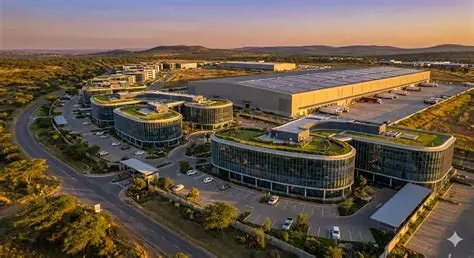
“South Africa’s commercial property sector is entering a new growth phase, driven by industrial real estate with record-low vacancies and strong rental growth. Offices are stabilizing through adaptive reuse, while retail nodes regain traction as consumer confidence improves.”
South Africa’s commercial real estate market is experiencing a remarkable rebound in August 2026. After years of pandemic-driven uncertainty, the sector is showing resilience across industrial, office, and retail segments, reshaping investor sentiment and creating new opportunities for both domestic and international stakeholders.
Industrial Real Estate: The Backbone of Recovery
- Vacancy rates have dropped to 3.8% nationally, the lowest in history.
- Rental growth surged by 8.4% year-on-year for 500m² spaces.
- Demand is driven by logistics, warehousing, and last-mile distribution, reflecting global supply chain resilience and e-commerce expansion.
- Developers such as Fortress Real Estate Investments raised R1.35 billion to expand logistics projects in Cape Town’s industrial corridors.
- Industrial hubs in Durban, Cape Town, and Johannesburg are becoming magnets for both domestic and international investors.
- This boom is fueling job creation and infrastructure upgrades, including road, port, and rail improvements.
Industrial property has become the cornerstone of South Africa’s recovery, positioning the country as a logistics hub for Africa.
Office Market Recovery
- National office vacancies dropped to 12.1% in Q2 2026, the lowest since early 2020.
- Cape Town leads the recovery, attracting professional services and hybrid teams seeking A-grade office space.
- Johannesburg faces oversupply challenges, but conversions of older stock into mixed-use developments are easing vacancy rates.
- Adaptive reuse strategies are reshaping urban landscapes, creating vibrant live-work-play environments appealing to younger professionals.
Offices are evolving beyond traditional workplaces into hubs of collaboration, lifestyle, and innovation—critical for attracting tenants in a hybrid work era.
Retail Nodes Stabilizing
- Shopping centers are seeing increased foot traffic, driven by pent-up demand and stabilization of household incomes.
- Developers are investing in lifestyle centers that combine retail, dining, and entertainment.
- Malls in Cape Town and Durban report steady increases in tenant occupancy.
- Challenges remain in lower-income areas, but overall trends are positive.
Retail investors are cautiously optimistic, with consumer confidence slowly improving and lifestyle-driven retail formats gaining traction.
Investor Sentiment and Future Outlook
The rebound is reshaping investor sentiment:
- Domestic investors are re-entering the market with confidence.
- International stakeholders are eyeing South Africa’s industrial corridors as gateways to African trade.
- Infrastructure upgrades are reinforcing long-term sustainability.
The outlook for 2026 suggests continued growth, with industrial property leading, offices adapting, and retail stabilizing.
Conclusion
South Africa’s commercial real estate sector is proving resilient, with industrial property driving recovery, offices adapting to hybrid work, and retail regaining momentum. This resurgence is not only reshaping urban landscapes but also reinforcing South Africa’s role as a key player in African trade and investment.



