




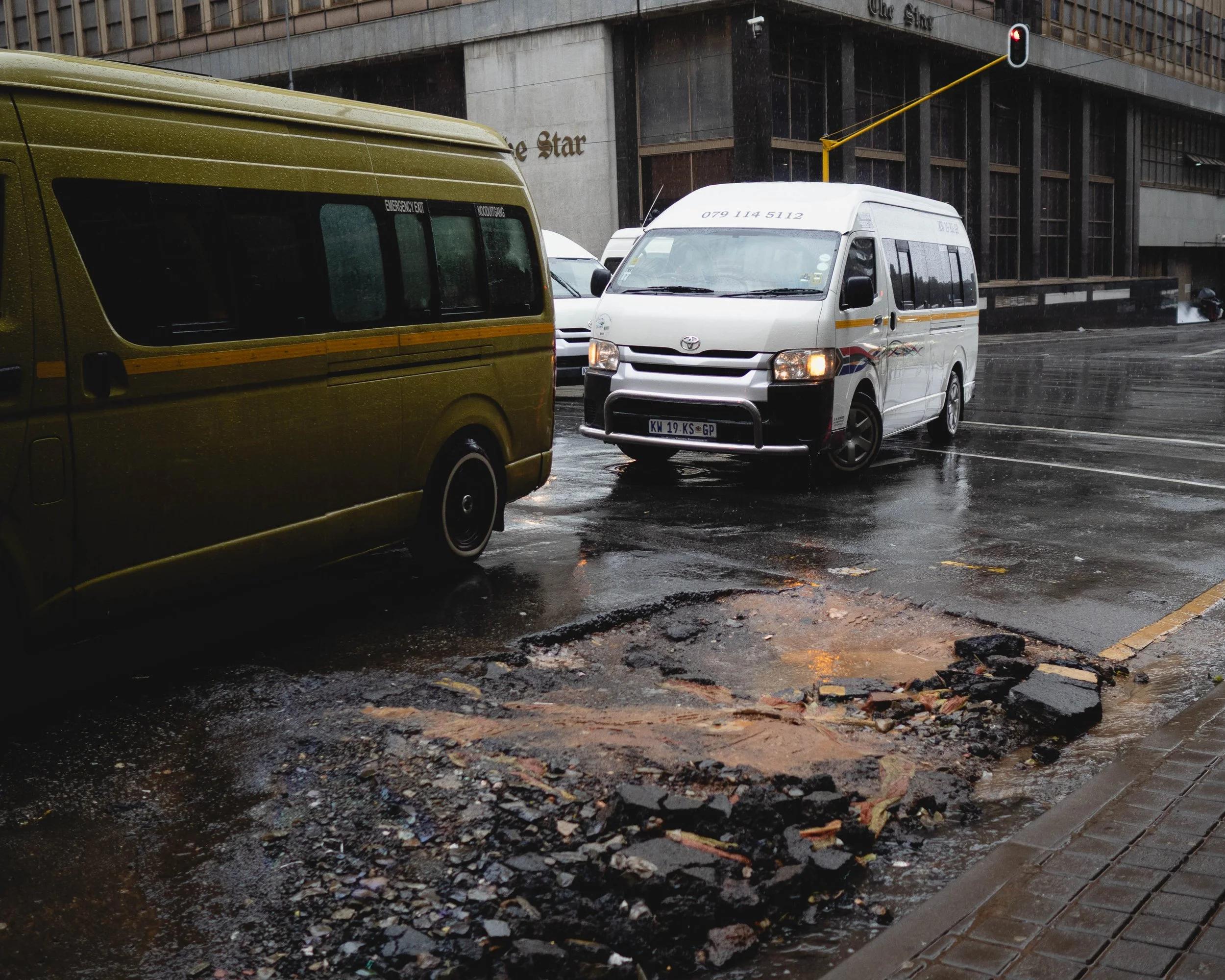
“Johannesburg’s deteriorating infrastructure, including damaged roads, unreliable municipal services and a substantial maintenance backlog, is increasing pressure on the city’s transport environment as South Africa approaches its local elections. The situation highlights the importance of improving road maintenance, municipal accountability and infrastructure investment to ensure safer, more reliable journeys for residents, commuters and visitors.”
Johannesburg’s Infrastructure Crisis Raises Fresh Concerns Over South Africa’s Road Transport and Urban Travel Future
Deteriorating roads, municipal infrastructure failures and growing commuter frustrations put pressure on Johannesburg’s transport network
JOHANNESBURG, SOUTH AFRICA – 1 November 2026
Johannesburg’s deteriorating municipal infrastructure is raising fresh concerns about the reliability of road transport, commuter mobility and the overall travel experience in South Africa’s largest metropolitan economy. With local government elections approaching on 4 November 2026, the condition of the city’s roads and essential services has become an increasingly important issue for residents, businesses, motorists and public transport users.
A report published by The Guardian on 1 November highlights growing public frustration with Johannesburg’s deteriorating infrastructure. Among the concerns are damaged roads, potholes, unreliable water and electricity supplies, waste management problems and weaknesses in municipal service delivery. These challenges illustrate the wider difficulties facing urban infrastructure management in South Africa.
Although the report examines municipal infrastructure more broadly, its findings have significant implications for transport. Roads are essential to the daily movement of workers, schoolchildren, tourists, commercial vehicles, emergency services and public transport operators. Consequently, when municipal infrastructure deteriorates, the effects extend beyond individual neighbourhoods and influence the functioning of the wider urban economy.
Johannesburg’s road infrastructure under increasing pressure
Johannesburg is one of South Africa’s most important economic centres. Its road network connects residential communities with commercial districts, industrial areas, shopping centres, educational institutions, healthcare facilities and neighbouring municipalities.
Every day, thousands of vehicles depend on these connections to move people and goods throughout the metropolitan area. Private motorists, minibus taxis, buses, delivery vehicles and freight operators all rely on roads that must remain safe, accessible and properly maintained.
However, deteriorating municipal infrastructure creates additional challenges for these transport users. Damaged road surfaces and potholes can increase vehicle maintenance expenses, affect journey times and create hazards for motorists and cyclists.
For commuters, the consequences can be particularly frustrating. A journey that should take a predictable amount of time may become more difficult when road conditions deteriorate or traffic management infrastructure fails.
These problems also affect businesses that depend on reliable transportation. Delivery companies, logistics providers, retailers and service businesses need predictable road conditions to manage operating costs and meet customer expectations.
The Guardian’s report identifies a substantial infrastructure backlog in Johannesburg, estimated at approximately R220 billion. This figure illustrates the scale of the investment and maintenance challenge facing the metropolitan municipality.
The backlog raises important questions about how local authorities will prioritise infrastructure improvements, secure funding and ensure that existing roads and public facilities receive appropriate maintenance.
How deteriorating roads affect daily commuters
Road infrastructure is fundamental to the accessibility of urban public transport.
South Africa relies heavily on minibus taxis, buses and other road-based services to connect communities with employment opportunities and essential services. In Johannesburg, these transport options are especially important for residents who do not own private vehicles.
When roads are poorly maintained, public transport operators may experience additional vehicle wear, higher maintenance expenses and delays. These costs can ultimately affect passengers through longer journeys and potentially higher operating expenses.
Potholes and damaged surfaces also create safety concerns. Motorists may need to make sudden manoeuvres to avoid road damage, increasing the possibility of collisions, particularly in congested urban areas.
Cyclists and pedestrians can face additional risks when road surfaces are uneven or when damaged infrastructure affects pedestrian crossings and roadside accessibility.
For people travelling at night, inadequate street lighting and poorly maintained road infrastructure can make certain journeys more difficult.
These issues demonstrate why road maintenance should be regarded as an essential public service rather than simply a construction activity.
Municipalities need effective systems to identify infrastructure damage, respond to complaints, schedule repairs and monitor the quality of completed work.
Infrastructure problems extend beyond potholes
Johannesburg’s infrastructure challenges cannot be understood by examining road conditions alone.
The city’s transport environment depends on several interconnected municipal systems, including electricity, traffic signals, street lighting, drainage, waste management and public transport facilities.
For example, functioning traffic signals are important for managing intersections and reducing conflict between vehicles and pedestrians. When electricity failures affect traffic lights, intersections can become more difficult to navigate, particularly during busy commuting periods.
Similarly, inadequate drainage can contribute to water accumulation on roads during heavy rainfall. Standing water may conceal potholes, reduce visibility and create dangerous driving conditions.
Poor waste management can also affect transport infrastructure when rubbish blocks drainage systems or accumulates alongside busy roads.
These connections demonstrate the importance of coordinated municipal planning. Repairing a road without addressing underlying drainage or utility problems may result in repeated maintenance costs.
Johannesburg therefore needs infrastructure programmes that consider the entire urban environment rather than treating individual service failures as isolated problems.
The financial challenge facing local government
One of the most significant challenges associated with infrastructure recovery is financing.
Large metropolitan road networks require continuous investment. Roads deteriorate through regular use, heavy vehicle movements, weather exposure and ageing construction materials.
Municipal authorities must therefore balance immediate maintenance requirements with long-term infrastructure development.
The Guardian reports that only 15% of South African municipalities received clean audits in the 2024–25 financial year, while approximately two-thirds were financially distressed. Johannesburg’s infrastructure backlog further illustrates the pressure facing local government.
These figures raise questions about municipal financial management, procurement, project implementation and accountability.
Infrastructure investment is most effective when funding is supported by transparent procurement processes, competent project management and measurable maintenance targets.
Municipalities also need to ensure that infrastructure projects are completed to appropriate engineering standards. Poor workmanship and inadequate maintenance planning can increase long-term costs.
For Johannesburg, restoring public confidence will require more than announcing new projects. Residents need to see practical improvements in the condition of roads, functioning traffic systems and the reliability of essential municipal services.
Implications for tourism and business travel
Johannesburg is an important gateway for domestic and international travellers visiting South Africa.
The city connects visitors with business districts, hotels, shopping destinations, cultural attractions and transport facilities. It also serves as a starting point for journeys to other parts of Gauteng and the wider country.
Reliable road infrastructure is therefore important to the tourism industry.
Visitors frequently depend on taxis, shuttle services, rental vehicles, buses and private transfers to reach accommodation and attractions.
When roads are damaged or traffic management becomes unreliable, visitors may experience longer journeys and additional travel uncertainty.
Business travellers can also be affected. Companies operating in Johannesburg need reliable transportation to move employees, customers, equipment and goods between different locations.
For tourism operators, transport reliability contributes to the overall quality of the visitor experience. Accommodation providers, tour operators and transport companies all benefit from infrastructure that supports predictable journeys.
Although the infrastructure concerns reported on 1 November do not establish that specific tourist routes are closed, they highlight the importance of monitoring road conditions and allowing sufficient travel time.
The importance of public transport integration
Improving Johannesburg’s transport future will also require stronger coordination between different public transport services.
Road infrastructure, bus networks, minibus taxis and passenger rail services form part of a larger mobility system.
A well-connected transport network allows commuters to move between different services without unnecessary delays or excessive costs.
Johannesburg has previously highlighted initiatives involving public transport, pedestrian mobility and traffic signal improvements during its 2026 Transport Month programme. These initiatives illustrate the importance of considering road users beyond private motorists.
The city must continue strengthening the relationship between road maintenance and public transport planning.
Improved pedestrian facilities, accessible bus stops, safe crossings and functioning traffic signals can make urban travel more convenient.
Furthermore, better integration between transport operators can improve access to employment, education and commercial opportunities.
For residents living far from major economic centres, dependable public transport can make a substantial difference to household budgets and daily productivity.
Political accountability and the future of Johannesburg’s roads
The approaching local elections have placed municipal service delivery under increased public scrutiny.
The Guardian’s report connects Johannesburg’s infrastructure difficulties with broader concerns about municipal leadership, financial management and political instability. It also describes public dissatisfaction with deteriorating services across different communities.
Road infrastructure is likely to remain an important consideration for voters because its condition is visible in everyday life.
Residents experience road maintenance failures when travelling to work, taking children to school, accessing healthcare or running businesses.
Consequently, municipalities need to demonstrate that infrastructure commitments translate into measurable improvements.
Political parties and municipal administrations will face pressure to explain how they intend to address infrastructure backlogs, improve financial accountability and strengthen service delivery.
However, successful infrastructure recovery requires sustained planning beyond election campaigns.
Road rehabilitation programmes often involve engineering assessments, procurement, budgeting and construction schedules that extend over several years.
Long-term progress therefore depends on stable institutions, professional municipal management and consistent oversight.



