




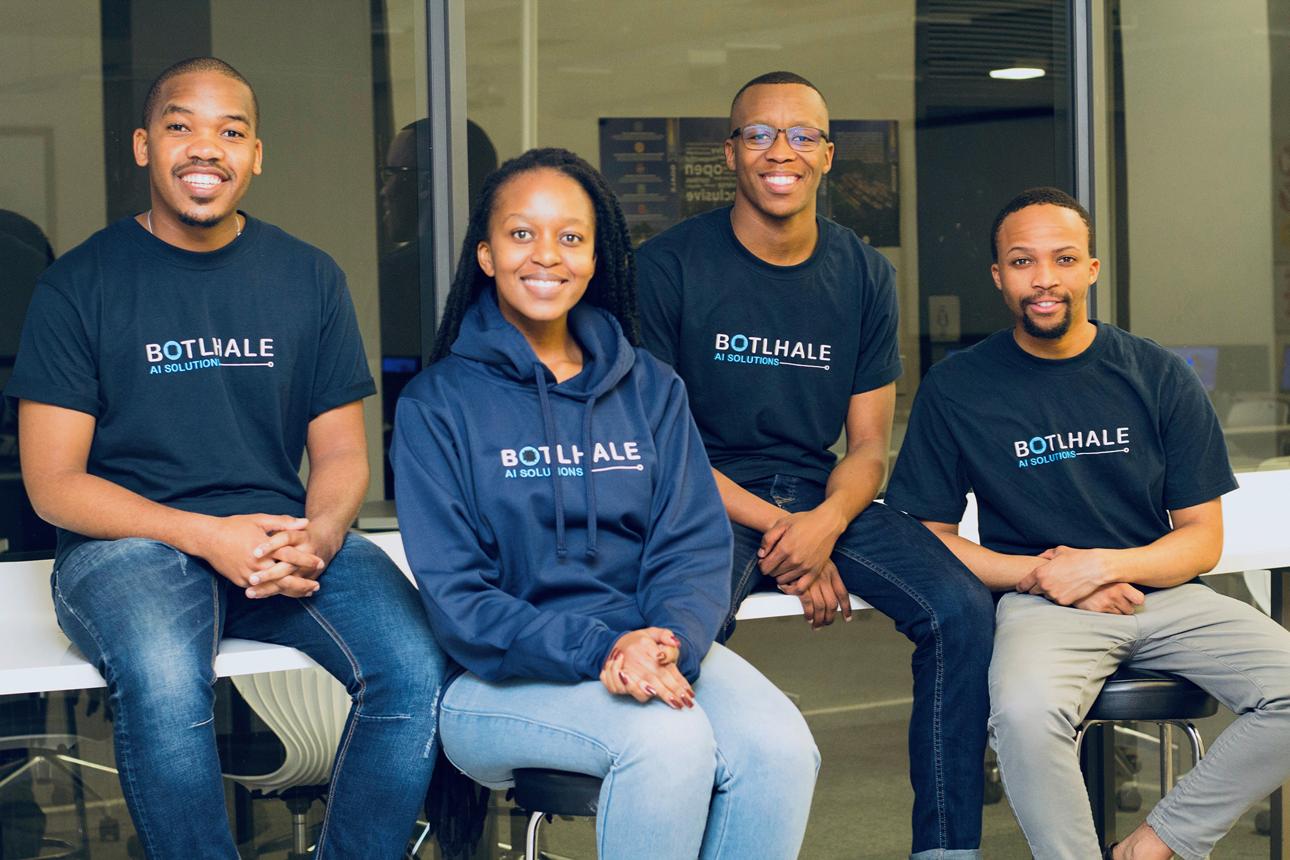
“Meta has launched a R12.2 million artificial intelligence funding initiative covering South Africa, creating a new opportunity for businesses and entrepreneurs working in the technology and innovation sectors. The initiative highlights the growing importance of AI investment in supporting entrepreneurship, developing digital solutions and strengthening opportunities for African businesses.”
South Africa’s entrepreneurship sector is receiving renewed attention as international technology companies increase their investment in artificial intelligence, digital skills and business innovation. Meta’s announcement of a R12.2 million artificial intelligence grant programme covering South Africa and six other countries represents an important development for entrepreneurs seeking opportunities in the rapidly expanding technology industry.
The initiative, known as the AMET AI Impact Grant, is designed to support start-ups and developers building solutions using artificial intelligence tools and wearable technologies. South Africa is among seven participating countries, alongside Egypt, Kenya, Nigeria, Saudi Arabia, Türkiye and the United Arab Emirates.
The announcement was made on 24 November 2026 during the opening of the AMET AI and Wearables Summit in Istanbul. The programme is expected to operate in 2027, although Meta has not yet published detailed application procedures or explained how the funding will be distributed among participating countries.
For South African entrepreneurs, the development creates an opportunity to consider how artificial intelligence can support business creation, improve productivity and help locally developed technology compete in international markets.
1. Understanding Meta’s R12.2 million funding initiative
The AMET AI Impact Grant forms part of Meta’s broader efforts to encourage artificial intelligence development across Africa, the Middle East and Türkiye.
The R12.2 million programme is intended to support businesses and developers using AI technologies to develop practical applications. Its geographical coverage is particularly significant because it connects South African innovators with a wider regional technology ecosystem.
However, entrepreneurs should understand that the announced R12.2 million represents the programme’s overall funding figure, not an individual allocation confirmed for South Africa.
The distribution of funding, qualifying criteria, application deadlines and selection procedures have not yet been announced.
This distinction is important for small businesses preparing to pursue the opportunity. Entrepreneurs should avoid assuming that funding is automatically available or that every applicant will receive financial assistance.
Instead, business owners can use this announcement as an opportunity to prepare their business proposals, develop working prototypes and identify problems that AI-powered products could solve.
A competitive application is likely to benefit from a clear explanation of the product, its intended customers, its commercial potential and the measurable impact it could deliver.
2. Artificial intelligence creates opportunities for new businesses
Artificial intelligence is changing the way businesses operate across several industries. Entrepreneurs can now explore applications that automate repetitive activities, analyse information, improve customer service and support more efficient business decisions.
In South Africa, these opportunities extend beyond established technology companies.
Small businesses can investigate AI applications in agriculture, education, healthcare, financial services, logistics, retail, manufacturing and professional services.
For example, an agricultural technology start-up could develop digital tools that help farmers interpret information about weather conditions, crop performance and irrigation requirements.
An education entrepreneur could build an application that provides personalised learning support to students. Similarly, a small financial technology company could investigate automated customer assistance and financial information services.
These possibilities demonstrate that artificial intelligence entrepreneurship does not necessarily require developing an entirely new AI model.
Businesses can also create value by applying existing technologies to specific local challenges, provided they have the appropriate technical, legal and commercial foundations.
The opportunity is therefore not limited to large technology companies with substantial research budgets. Smaller enterprises can participate by identifying underserved customers and developing solutions that respond to their needs.
3. Meta’s AI Impact Hub focuses on education and business skills
Alongside the grant announcement, Meta introduced the AI Impact Hub, a regional initiative intended to expand access to artificial intelligence education and resources.
The company aims to reach more than five million people across Africa, the Middle East and Türkiye over the next three years.
The target audience includes students, developers, entrepreneurs and people working in small and medium-sized businesses.
The hub will provide three learning pathways: AI Academy, AI Literacy and AI for Small and Medium-sized Businesses.
These learning areas are important because access to technology alone does not guarantee successful entrepreneurship.
Business owners also need to understand how to apply digital tools, identify commercial opportunities and manage the risks associated with technology.
AI Academy can help developers strengthen their understanding of building AI applications. AI Literacy focuses on improving general understanding of artificial intelligence, while AI for Small and Medium-sized Businesses addresses the potential use of AI within business operations.
For South African entrepreneurs, these resources could contribute to a more digitally capable business environment.
A small enterprise that understands automation, digital marketing and customer data analysis may be better positioned to improve its operations and compete with larger businesses.
Nevertheless, training must translate into practical business results. Entrepreneurs need opportunities to test products, attract customers and generate revenue rather than simply accumulate certificates.
4. South African innovation receives regional recognition
One particularly relevant development highlighted at the Istanbul summit was the inclusion of dpclVR, a South African AI-powered virtual laboratory assistant.
The project is designed to guide learners through physics and chemistry experiments in an immersive digital environment.
Its intended users include schools and technical and vocational education and training institutions.
This example illustrates how local entrepreneurs can use artificial intelligence to address challenges in education, especially where access to practical science facilities is limited.
Science education often requires equipment, laboratory space, trained personnel and appropriate safety arrangements. These resources may be difficult for some educational institutions to obtain.
Digital laboratory experiences could provide additional learning opportunities by allowing students to explore experiments through immersive technology.
Such applications do not necessarily replace physical laboratories or practical instruction. Instead, they can complement existing teaching methods and make certain learning experiences more accessible.
For entrepreneurs, this example demonstrates the importance of developing technology around identifiable social and commercial needs.
South Africa has opportunities to build businesses that combine software development, artificial intelligence, education and local knowledge.
The commercial sustainability of these solutions will depend on whether schools, colleges, educational organisations and other customers are willing and able to adopt them.
5. Regional examples demonstrate the potential of AI entrepreneurship
The Istanbul summit also presented technology projects from other participating countries.
Nigeria’s Dawn AI Study uses Meta’s Llama model to develop personalised learning pathways for school-age children.
Saudi Arabia’s Safqah is an AI-powered procurement platform designed to convert Arabic requests into structured orders for restaurants and cafés.
Türkiye’s Atria Sense is developing wearable technology to support communication for deaf and hard-of-hearing users.
Meanwhile, the UAE’s SimerSense uses artificial intelligence to help users, particularly older adults, identify potential social engineering scams.
These examples show that artificial intelligence entrepreneurship can serve different markets and customer groups.
They also demonstrate the value of developing products that respond to local languages, business practices and social challenges.
South African entrepreneurs can draw lessons from these projects when identifying opportunities in their own communities.
For instance, locally developed AI applications could support multilingual customer service, small-business administration, fraud awareness and access to educational resources.
The important consideration is that technology should solve a genuine problem. A business cannot become sustainable simply because it uses artificial intelligence.
It needs a clearly defined customer base, a reliable product, appropriate pricing and a strategy for attracting and retaining users.
6. AI awards provide additional opportunities for innovators
The AMET AI Awards 2026 are another component of the regional programme.
The awards offer more than R1.75 million in prizes across seven categories.
These include Wearables Innovation of the Year, AI Builder of the Year, Emerging Innovator of the Year, Startup of the Year, AI for Accessibility and Inclusion, AI for Social and Economic Impact, and People’s Choice.
Six awards will be decided by a regional jury, with external experts forming the majority of the judging panel. Privacy, safety and fairness will be considered during the evaluation process.
The People’s Choice award will be determined by registered summit attendees.
For emerging entrepreneurs, competitions of this nature can provide recognition, networking opportunities and exposure to potential partners.
They can also encourage businesses to improve their products and communicate their commercial value more effectively.
However, awards and recognition should complement a wider business development strategy. Entrepreneurs still need to build sustainable revenue models and demonstrate that customers are willing to pay for their solutions.
7. Funding access remains an important challenge for South African entrepreneurs
Although Meta’s initiative represents a positive development, access to finance remains a significant issue for many South African small businesses.
Technology entrepreneurs often face additional financial requirements because product development may involve specialist employees, computing infrastructure, research, software development and cybersecurity.
Businesses may also need money to test their products, acquire customers and maintain operations while building a sustainable revenue stream.
These expenses can make it difficult for early-stage companies to compete against established international businesses.
Consequently, funding programmes need to be accompanied by appropriate business support.
Entrepreneurs benefit from mentorship, technical assistance, market access, investor networks and opportunities to work with established organisations.
South Africa’s wider entrepreneurship environment also requires cooperation between government, financial institutions, universities and private companies.
A combination of public and private investment could help businesses move from initial ideas to commercially successful products.
The Meta announcement is therefore relevant not only because of the financial assistance involved, but also because it reflects the growing importance of building stronger technology ecosystems.
8. What South African start-ups should do to prepare
South African entrepreneurs interested in artificial intelligence funding opportunities should begin preparing before application details become available.
The first step is identifying a business problem that can be addressed through technology. A strong business idea should explain who experiences the problem, why existing solutions are insufficient and how the proposed product will provide measurable value.
The second step is developing a working prototype. Demonstrating an actual product can help entrepreneurs communicate their ideas more effectively to potential investors and funding organisations.
Businesses should also prepare essential documentation, including:
-
A comprehensive business plan.
-
A clear description of the proposed AI product.
-
Financial projections and estimated operating costs.
-
Information about the intended customers and market.
-
A product development and implementation strategy.
-
Evidence of the founding team’s experience and capabilities.
-
An explanation of expected employment and economic benefits.
Entrepreneurs should also consider data protection, cybersecurity, intellectual property and responsible AI development.
These considerations are particularly important for businesses handling personal, financial, educational or medical information.
9. The importance of responsible AI development
The growth of artificial intelligence presents opportunities, but it also introduces challenges that entrepreneurs must address.
Businesses developing AI products need to consider data privacy, accuracy, transparency and potential discrimination.
An AI application that produces unreliable information could damage customer confidence and expose a business to reputational and legal risks.
Similarly, companies collecting personal information must understand their responsibilities under South Africa’s Protection of Personal Information Act (POPIA), where applicable.
Responsible technology development should therefore be incorporated into business planning from the beginning.
Entrepreneurs should establish appropriate safeguards, explain how their products use information and provide human oversight where automated decisions could significantly affect customers.
The attention given to privacy, safety and fairness in the AMET AI Awards demonstrates the importance of these issues within the regional innovation ecosystem.
For South African businesses, responsible AI development can become a competitive advantage by strengthening trust among customers, investors and commercial partners.
10. Potential economic benefits for South Africa
A stronger artificial intelligence entrepreneurship ecosystem could contribute to South Africa’s wider economic development.
Technology start-ups have the potential to create skilled employment, develop locally relevant products and expand the country’s participation in international markets.
They can also support productivity improvements across existing industries.
For example, small manufacturers could use AI applications to improve production planning, while retailers could explore demand forecasting and inventory management.
Agricultural enterprises could investigate technologies that improve resource management, while financial services businesses could develop tools that simplify customer interactions.
These opportunities could help smaller companies become more productive and competitive.
There is also potential for South African entrepreneurs to develop products for other African markets.
Businesses that understand local languages, infrastructure conditions and customer needs may be well positioned to build solutions that can expand across borders.
However, achieving these benefits will require sustained investment in digital infrastructure, education, research and entrepreneurship support.
It will also require stronger connections between universities, established companies, investors and emerging businesses.
11. What the initiative means for the future of entrepreneurship
Meta’s announcement comes at a time when South Africa is placing greater emphasis on innovation and small-business development.
The government has also been discussing ways to improve access to technology and early-stage finance.
At the Presidential MSME and Cooperatives engagement in Sandton on 26 November, President Cyril Ramaphosa highlighted the need to address barriers involving finance, markets, infrastructure and technology.
He also discussed mobilising public and private resources to improve access to computing power for smaller businesses and supporting partnerships with universities to establish artificial intelligence centres of excellence.
Mail & Guardian+1
These developments suggest that technology entrepreneurship is becoming an increasingly important part of the country’s economic development discussions.
Nevertheless, announcements and funding commitments must translate into accessible opportunities for businesses.
South Africa needs an environment in which entrepreneurs can register companies efficiently, access appropriate finance, acquire skills and secure customers.
It is equally important that opportunities reach entrepreneurs outside major economic centres.
Businesses operating in townships, rural communities and smaller towns should have opportunities to participate in digital innovation.
If funding, training and business support are made accessible to a broader range of entrepreneurs, artificial intelligence could contribute to a more inclusive economy.
Conclusion
Meta’s R12.2 million AMET AI Impact Grant represents an important regional development for South African entrepreneurs interested in artificial intelligence and digital innovation.
Its inclusion of South Africa alongside six other countries provides an opportunity for local developers and start-ups to participate in a growing regional technology ecosystem.
The accompanying AI Impact Hub, with its target of reaching more than five million people, also highlights the importance of digital education and practical business skills.
However, the programme’s actual impact will depend on how funding is distributed, which businesses qualify and whether entrepreneurs can convert technological innovation into sustainable commercial activities.
For South Africa, the opportunity extends beyond securing grants. It involves developing a generation of entrepreneurs capable of building competitive technology businesses, creating employment and solving local problems.
The country’s long-term success will depend on turning innovation into practical economic activity, ensuring that smaller enterprises can participate and building partnerships that support business growth.
With the right combination of finance, skills, infrastructure and market access, South African entrepreneurs could become increasingly influential participants in Africa’s expanding artificial intelligence economy.



