




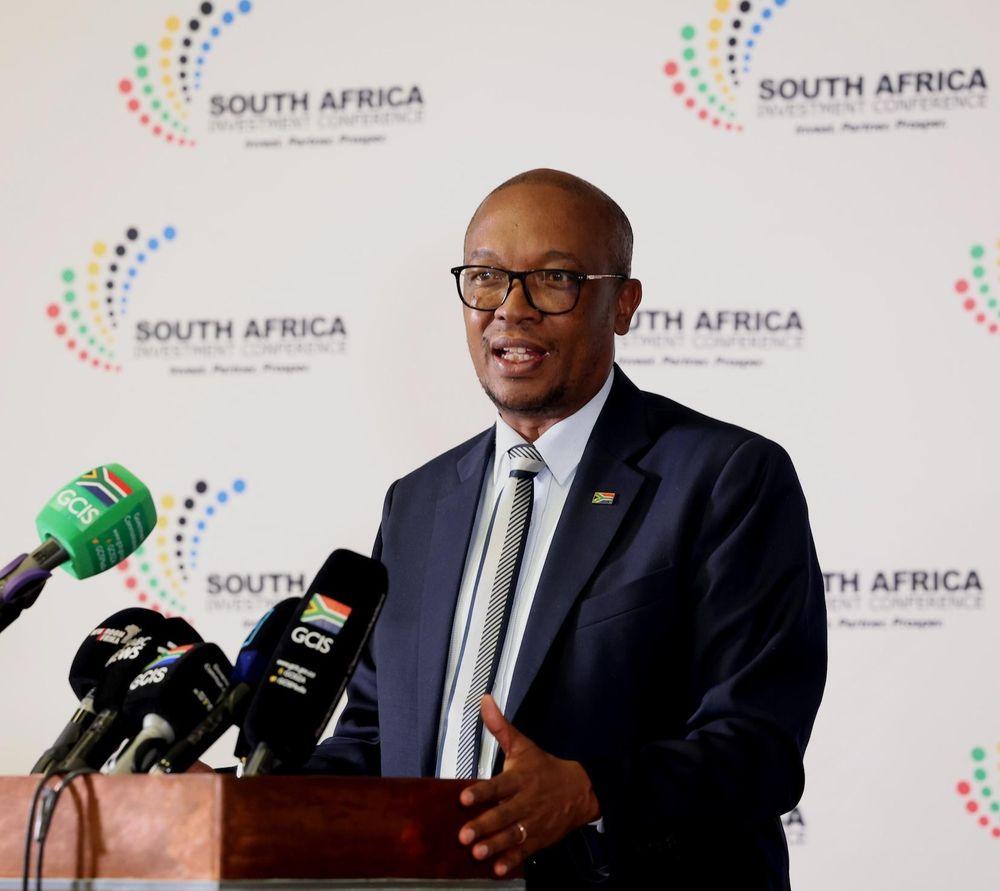
“South Africa has launched a renewed Foreign Economic Representatives programme to strengthen international commercial relations, attract foreign direct investment and help local companies access new export markets. The initiative forms part of the government’s Butterfly Strategy, which targets 27 priority markets and aims to expand trade opportunities, strengthen manufacturing, support small businesses and create sustainable employment.”
South Africa strengthens international trade strategy through new foreign economic representatives
Introduction: A renewed approach to international trade
South Africa is intensifying its efforts to expand international trade, attract foreign investment and strengthen its position in the global economy through the deployment of a new generation of Foreign Economic Representatives (FERs).
The initiative, led by the Department of Trade, Industry and Competition (DTIC), represents an important development in the country’s efforts to improve its commercial diplomacy and establish stronger relationships with international markets.
Trade, Industry and Competition Minister Parks Tau officially sent off the first group of newly appointed representatives on 24 November 2026. He emphasised that their responsibilities would extend beyond traditional diplomatic engagement to include securing export opportunities, facilitating investment agreements, identifying international business partnerships and supporting South African companies seeking opportunities abroad.
The government believes that stronger international commercial relationships are essential for expanding domestic production, improving economic growth and addressing unemployment.
South Africa faces a challenging international economic environment characterised by changing trade policies, geopolitical tensions, shifting supply chains and increasing competition for foreign investment. Consequently, the country is seeking to diversify its trading relationships and reduce its dependence on a limited number of international markets.
The new programme is intended to translate these objectives into measurable economic outcomes.
The Foreign Economic Representatives programme
The newly introduced Foreign Economic Representatives programme is designed to strengthen South Africa’s commercial presence in strategic international markets.
According to the DTIC, the representatives will identify opportunities for South African exports, promote investment opportunities and help businesses establish relationships with international buyers and investors.
Their responsibilities will also include understanding the commercial conditions of their assigned markets, identifying potential barriers to trade and helping South African companies navigate international regulatory requirements.
The initiative is particularly important because successful international trade requires more than diplomatic agreements. Businesses need reliable market information, established commercial networks, suitable distribution partners and a clear understanding of foreign regulations.
Foreign Economic Representatives are expected to help bridge these gaps.
Minister Tau explained that the representatives would be responsible for converting international relationships into tangible economic benefits.
He emphasised that the country’s international economic engagement should result in investment secured, export agreements concluded and jobs created within South Africa.
This approach reflects a stronger focus on measurable commercial performance rather than simply counting diplomatic meetings and international engagements.
The Butterfly Strategy and market diversification
The deployment of the representatives forms part of South Africa’s broader Butterfly Strategy, which seeks to diversify the country’s international economic partnerships.
The strategy recognises that relying too heavily on particular trading partners can expose exporters to significant risks when international political or economic conditions change.
South Africa therefore wants to strengthen its relationships across Africa, Europe, Asia, North America, South America and other emerging economic regions.
The government has identified 27 priority markets for targeted commercial engagement.
It also intends to strengthen relationships with regional and international economic groupings, including the Association of Southeast Asian Nations (ASEAN), MERCOSUR and Eurasian markets.
Africa remains a central component of the strategy because neighbouring countries provide important opportunities for South African manufacturers, agricultural producers, service providers and other exporters.
Expanding trade within the continent could also strengthen regional production networks and encourage businesses to participate in cross-border value chains.
The African Continental Free Trade Area (AfCFTA) provides an important framework for achieving these objectives.
By improving access to African markets, South African businesses could potentially increase sales, develop new distribution networks and expand production to serve a larger customer base.
However, achieving these benefits will require continued improvements in transport infrastructure, customs procedures, regulatory coordination and access to trade finance.
Why South Africa needs stronger international trade relationships
International trade is an important contributor to South Africa’s economic development.
The country exports a wide range of products, including minerals, agricultural commodities, manufactured goods, automotive products, chemicals and processed food.
These exports generate foreign currency, support domestic industries and contribute to employment.
However, international market access cannot be taken for granted.
Changes in tariffs, trade agreements, import regulations and international political relationships can affect the competitiveness of South African products.
The government’s diversification strategy is therefore intended to reduce the risks associated with concentrated export markets.
The withdrawal of South Africa’s preferential benefits under the African Growth and Opportunity Act (AGOA), expected to take effect on 1 January 2027, illustrates the importance of maintaining multiple international trading relationships.
The South African government has indicated that approximately US$1.7 billion in exports entered the United States under AGOA in 2025.
Although this represented approximately 1% of South Africa’s total global exports, individual industries and businesses could experience considerable consequences from losing preferential access.
The government has therefore been encouraging exporters to explore alternative markets while continuing diplomatic engagement with Washington.
China, India, the European Union, the United Kingdom, African markets and other international destinations are among the opportunities being pursued.
Attracting foreign direct investment
One of the most important responsibilities of the newly appointed representatives will be attracting foreign direct investment.
Foreign investment can provide South Africa with the capital required to establish factories, modernise production facilities, develop infrastructure and introduce advanced technologies.
It can also create opportunities for local suppliers, improve industrial productivity and strengthen the country’s ability to compete internationally.
However, the government is emphasising that investment quality matters as much as investment quantity.
Tau has called for productive investment that expands domestic manufacturing capacity, strengthens local supply chains, transfers technology and skills, and creates sustainable employment.
An international company purchasing an existing business may change ownership without necessarily increasing the country’s production capacity.
By contrast, investment in a new manufacturing facility can generate additional industrial activity, employment opportunities and demand for locally produced inputs.
The representatives will therefore be expected to identify international companies that are expanding operations, considering relocation or searching for suitable locations for new production facilities.
They will also help potential investors understand South Africa’s investment incentives, special economic zones, industrial parks and available business partnerships.
The objective is to make South Africa a more attractive destination for companies seeking access to African markets and established industrial capabilities.
Supporting small and medium-sized enterprises
Small and medium-sized enterprises (SMEs) are expected to be important beneficiaries of the initiative.
Although large corporations often have the financial resources to establish international offices, smaller businesses face substantial barriers when attempting to enter foreign markets.
These challenges include the cost of market research, international marketing, product registration, regulatory compliance, transportation and identifying reliable overseas customers.
A small manufacturer in Ekurhuleni or an agricultural processor in the Eastern Cape may produce competitive products but lack the resources needed to establish an international commercial network.
The Foreign Economic Representatives programme seeks to address this imbalance.
The representatives will provide market intelligence, facilitate introductions to prospective buyers and assist businesses experiencing international trade barriers.
This support could be particularly valuable for businesses involved in agroprocessing, food production, clothing, textiles, machinery, chemicals and specialised manufacturing.
Greater access to international markets could help smaller companies increase production, improve revenue and employ additional workers.
Nevertheless, the programme’s success will depend on whether these services become accessible to businesses outside established corporate networks.
Transparent application processes, clear eligibility requirements and measurable support outcomes will therefore be important.
Cooperation between government institutions
The programme will require cooperation between several government institutions.
The DTIC will work with InvestSA and the Department of International Relations and Cooperation (DIRCO) to coordinate investment promotion and commercial diplomacy.
This collaboration is important because attracting international investors often involves several stages.
Potential investors first need information about available opportunities. They then require introductions to relevant institutions, information about regulations and incentives, and assistance navigating the investment approval process.
Similarly, exporters need assistance identifying buyers, understanding foreign market requirements and addressing customs or regulatory obstacles.
Coordination between government departments could reduce delays and make the country’s trade promotion activities more effective.
The representatives will also need to maintain communication with South African businesses and industry associations to understand the practical challenges exporters encounter.
Such communication can help government identify recurring trade barriers and address them through diplomatic and institutional engagement.
The importance of export diversification
South Africa’s export diversification strategy is becoming increasingly important as global trade relationships evolve.
A country that depends heavily on a small number of export destinations can become vulnerable when those markets introduce new tariffs, restrictions or political conditions.
Diversification gives exporters more opportunities to sell their products and reduces the potential impact of disruptions in individual markets.
South Africa has significant opportunities in agricultural exports, mineral resources, automotive manufacturing, chemicals, processed foods and industrial products.
However, entering new markets requires more than identifying countries with strong consumer demand.
Exporters must understand local product standards, import procedures, distribution systems, competition and purchasing power.
The new representatives are expected to provide the international market intelligence needed to support these decisions.
The government will also need to ensure that South African products are competitive in terms of quality, pricing, reliability and delivery.
International buyers increasingly expect suppliers to meet environmental, safety, traceability and sustainability requirements.
Consequently, improving domestic production standards will be an important part of the country’s export development efforts.
Challenges facing the programme
Despite its potential, the Foreign Economic Representatives programme will face several challenges.
The first is competition.
South Africa competes with numerous countries seeking the same international investment opportunities and export customers.
Other emerging economies are actively promoting manufacturing incentives, infrastructure development and favourable business conditions.
The representatives will therefore need to communicate South Africa’s competitive advantages clearly.
The second challenge concerns domestic infrastructure.
Investors consider electricity reliability, transport networks, port efficiency, logistics costs and regulatory certainty when deciding where to establish production facilities.
International promotion cannot compensate for persistent operational problems within the domestic economy.
The third challenge is ensuring that international investment benefits the wider economy.
Investment agreements should encourage local supplier participation, workforce development and technology transfer.
Without these connections, foreign investment may generate fewer domestic benefits than expected.
Another challenge is ensuring that smaller businesses receive meaningful support.
The programme must avoid concentrating its benefits among large exporters that already have established international operations.
Finally, the government will need to demonstrate that the representatives can deliver measurable outcomes within reasonable timeframes.
Measuring success through jobs, investment and exports
Minister Tau has made it clear that the programme’s performance will be assessed through tangible economic outcomes.
These include investment secured, export agreements concluded, international trade barriers removed and employment opportunities created.
This approach creates an important accountability framework.
The government should monitor the value of new export contracts, the number of companies assisted, the amount of productive investment attracted and the number of jobs associated with supported projects.
It should also assess whether the programme is helping South African businesses enter markets that were previously difficult to access.
Regular reporting would help businesses and the public understand whether the initiative is producing measurable results.
The representatives should also be evaluated on the quality of investment attracted, particularly projects that increase local manufacturing capacity and strengthen industrial supply chains.
Conclusion: An important opportunity for South African trade
South Africa’s renewed Foreign Economic Representatives programme represents an important effort to strengthen the country’s international trade position.
By expanding commercial diplomacy, attracting productive foreign investment and helping local companies enter international markets, government hopes to create new opportunities for economic growth and industrial development.
The initiative comes at an important time as South Africa faces changing international trade relationships and prepares to adjust to the anticipated loss of AGOA benefits.
Its success will depend on the ability of the representatives to convert diplomatic relationships into commercial agreements and investment projects.
It will also require reliable domestic infrastructure, competitive production costs, effective government coordination and greater participation by small and medium-sized enterprises.
Ultimately, South Africa needs more than international trade agreements. It needs stronger export businesses, expanded manufacturing capacity, improved access to international customers and investment that creates sustainable employment.
If effectively implemented, the new programme could become an important instrument for achieving these objectives and positioning South African businesses more competitively in the global economy.



