




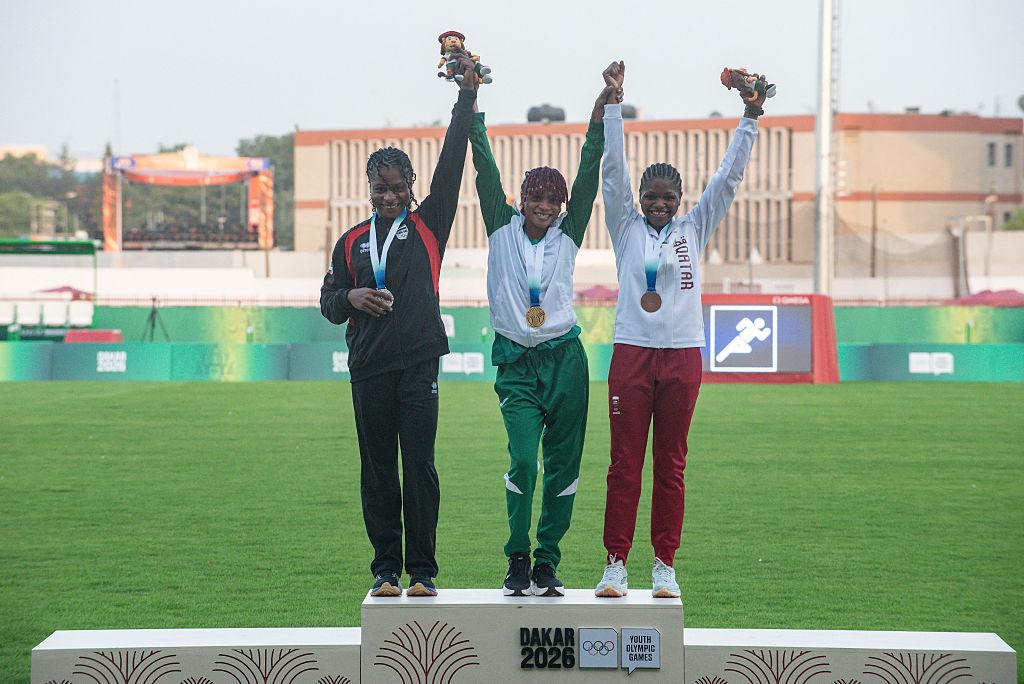
“South African shot-putter Darius Botha won bronze at the 2026 Youth Olympic Games in Dakar, Senegal, after throwing 19.23 metres, contributing to a memorable athletics performance by Team South Africa. His medal came alongside gold for high jumper Matao le Roux and bronze for hurdler Enrique Bosch, helping South Africa equal its best-ever Youth Olympic medal total of nine.”
Darius Botha Claims Youth Olympic Shot-Put Bronze as South Africa Celebrates Historic Athletics Success in Dakar
South African athletics continued to make headlines at the 2026 Youth Olympic Games in Dakar, Senegal, after Meyerton shot-putter Darius Botha secured a bronze medal in an impressive international performance. The 17-year-old athlete delivered a throw of 19.23 metres at the Iba Mar Diop Stadium, adding another achievement to his growing collection of medals and contributing to an outstanding day for Team South Africa.
Botha’s podium finish formed part of a remarkable athletics campaign for South Africa at the Games, which are taking place from 31 October to 13 November 2026. The competition represents a historic moment for African sport because Senegal is hosting the first Olympic event on the African continent.
The South African athletics team has demonstrated its ability to compete against international opposition, with several young athletes delivering outstanding performances across different disciplines. Botha’s bronze medal was accompanied by gold for high jumper Matao le Roux and another bronze for hurdler Enrique Bosch, making the day’s athletics results particularly memorable for the national team.
Botha delivers a medal-winning performance
Botha’s 19.23-metre throw was sufficient to secure third place in the shot-put competition, placing him among the leading young athletes in the discipline at the international event.
The Meyerton athlete expressed pride in representing South Africa and winning a medal at an Olympic competition hosted in Africa for the first time. However, his reaction also revealed the determination that continues to drive his development as an athlete.
Although delighted with the achievement, Botha acknowledged that his performance was not entirely representative of his capabilities. He believed there was potential for a stronger throw, suggesting that his technical execution could have been improved during the competition.
Nevertheless, the ability to secure an international podium finish despite technical challenges demonstrated his competitive resilience.
Botha’s achievement is significant because international youth competitions provide athletes with opportunities to develop experience against competitors from different countries, training backgrounds and sporting systems.
For a developing shot-putter, such exposure can contribute to improvements in technique, confidence and competitive preparation.
The bronze medal also offers an important foundation for Botha’s future athletic ambitions. At 17, he remains in a developmental stage of his sporting career, with considerable opportunities to refine his technique, increase consistency and pursue higher distances in subsequent competitions.
South Africa celebrates three athletics medals
Botha was one of three South African athletics medallists celebrated during the competition’s latest round.
High jumper Matao le Roux delivered the standout performance by winning gold after clearing 2.16 metres. The 17-year-old athlete from Caledon demonstrated composure and technical ability, clearing the winning height on his first attempt.
His performance placed pressure on Chinese competitor Sen Liu and ultimately secured the gold medal for South Africa.
The high-jump victory was particularly encouraging for the country’s athletics programme because it demonstrated the potential of young South African athletes to compete successfully in technically demanding international disciplines.
Meanwhile, Enrique Bosch secured bronze in the men’s 110-metre hurdles after clocking 13.45 seconds.
Bosch reportedly experienced difficulties involving his starting block, making his podium finish particularly impressive given the circumstances surrounding his race.
The hurdles competition requires athletes to combine explosive acceleration, technical precision and rhythm over a series of barriers. Even minor disruptions at the start can influence an athlete’s performance throughout the race.
Bosch’s ability to finish among the medal winners despite those challenges reflected his competitive determination.
Together, the three medals demonstrated South Africa’s strength across field events and track disciplines, reinforcing the importance of maintaining a broad development programme rather than concentrating exclusively on one category of athletics.
A historic milestone for Team South Africa
The latest athletics results helped South Africa increase its medal tally at the Youth Olympic Games to nine, equalling the country’s best-ever performance at the competition.
South Africa previously secured nine medals at the inaugural Youth Olympic Games in Singapore in 2010.
Matching that achievement in Dakar represents a significant milestone for the national sporting delegation, particularly because additional athletics competitions remained scheduled after the latest medal-winning performances.
The possibility of improving the country’s previous record provided further motivation for athletes preparing to compete during the remaining days of the Games.
The nine-medal tally also reflects contributions from athletes across several sporting disciplines, highlighting the breadth of South African participation at the international event.
However, athletics has been particularly prominent in the country’s medal campaign, with the performances of Botha, Le Roux, Bosch and other competitors contributing to an encouraging national sporting narrative.
The results also demonstrate how youth competitions can provide opportunities for emerging athletes to establish themselves internationally before progressing towards senior championships.
South African athletics benefits from international exposure
The Youth Olympic Games offer athletes an opportunity to experience international competition in an environment that combines sporting performance with youth development.
For South African athletes, competing in Dakar provides valuable exposure to different approaches to training, competition preparation and performance management.
Such experiences can become particularly important when athletes transition from junior competitions into senior athletics.
International competitions also provide coaches with opportunities to evaluate athletes under pressure, identify technical improvements and develop more effective preparation strategies.
Botha’s shot-put performance, for example, provides an opportunity to examine the technical elements that influence throwing distance, including rotational or glide technique, strength, release angle and coordination.
Although the reported performance secured bronze, the athlete’s own assessment that his technique was not completely satisfactory suggests areas for future development.
That combination of achievement and self-evaluation is particularly valuable in developing athletes who aspire to compete at higher levels.
The importance of developing young field-event athletes
South Africa’s success in Dakar also highlights the importance of supporting field-event disciplines.
Shot-put, high jump and hurdles require specialised training programmes, equipment, technical instruction and access to experienced coaching.
Athletes in these disciplines frequently begin developing their competitive abilities through school athletics, regional competitions and national championships.
Consistent investment in these pathways can help identify promising athletes early and provide them with opportunities to improve.
Botha’s bronze medal illustrates the potential rewards of such development.
His achievement could encourage other young athletes to pursue field events, particularly shot-put, where international success requires a combination of strength, explosive power, balance and technical precision.
Similarly, Le Roux’s gold medal in the high jump demonstrates the importance of supporting athletes who specialise in technically complex events.
The success of Bosch in the hurdles further reinforces the value of developing speed, coordination and technical discipline across track athletics.
Megan Nieman advances to the 400-metre final
South Africa’s athletics campaign also received encouragement through Megan Nieman’s qualification for the women’s 400-metre final.
Nieman secured her place in the final after winning her semi-final in 1:00.56, positioning herself among the athletes competing for another potential medal.
The 400 metres is a demanding event that requires athletes to balance speed, endurance and tactical awareness over one lap of the track.
A successful performance in the semi-final can provide confidence ahead of the final, although athletes must still manage their energy levels and execute their race plans effectively.
Nieman’s qualification was therefore another positive development for South African athletics, particularly as the team continued pursuing additional medals.
Other South African athletes were also scheduled to compete in the remaining athletics programme.
Jacobus van der Merwe was listed for the javelin, Milan Blignaut for the high jump and Lara Stander for the 1500 metres.
Their participation offered further opportunities for the country to strengthen its athletics results before the Games concluded.
Dakar provides a historic setting for African sport
The 2026 Youth Olympic Games are particularly significant because Senegal is hosting the first Olympic event on African soil.
The event represents an important moment for African sport, providing a platform for athletes from the continent to compete internationally while showcasing the region’s ability to organise major sporting competitions.
For South African athletes, competing in Dakar carries additional significance because it places their performances within a broader continental sporting celebration.
The Games also provide opportunities for young athletes to experience international sporting culture and interact with competitors from different backgrounds.
Such experiences can contribute to the development of sporting confidence, cultural understanding and international friendships.
South Africa’s athletics medals have therefore become part of a wider story about youth sport, African sporting development and the importance of creating opportunities for emerging athletes.
South Africa looks towards the remaining competitions
With athletics action continuing during the final stages of the Youth Olympic Games, Team South Africa still had opportunities to improve its medal tally.
Botha’s bronze, Le Roux’s gold and Bosch’s bronze had already established a memorable chapter in the country’s athletics campaign.
Nieman’s qualification for the 400-metre final and the scheduled participation of additional athletes provided further reasons for optimism.
The performances also demonstrated that South Africa’s emerging athletes possess the ability to compete successfully in international environments.
Nevertheless, sustaining such progress requires continued support beyond individual competitions.
Athletes need access to quality coaching, facilities, competition opportunities, medical support and structured development programmes to maintain their progress throughout their careers.
The results in Dakar provide encouragement, but the longer-term objective remains developing athletes who can transition successfully into senior international competition.
Botha’s bronze adds to an encouraging future
For Darius Botha, the bronze medal represents a significant achievement in his young athletics career.
Winning an international medal while competing at the first Olympic event hosted on African soil provides a memorable sporting milestone.
His performance also offers an important lesson about the relationship between achievement and continued improvement.
Despite reaching the podium, Botha recognised that his technical execution could have been better, demonstrating the ambition to improve beyond his immediate result.
That mindset could prove valuable as he continues developing his shot-put ability.
South Africa’s athletics success in Dakar has already delivered encouraging results, while the remaining competitions offered further opportunities for the country’s young athletes to demonstrate their potential.
The combination of Botha’s bronze, Le Roux’s gold and Bosch’s bronze helped South Africa equal its best-ever Youth Olympic medal tally of nine.
As the Games approached their conclusion, the performances provided a compelling reminder that investment in youth athletics can produce meaningful international achievements.
For South African athletics, Dakar 2026 has become more than a medal-winning campaign. It has offered a glimpse of the emerging talent capable of shaping the country’s future in track and field.



